Physical Address
304 North Cardinal St.
Dorchester Center, MA 02124
Physical Address
304 North Cardinal St.
Dorchester Center, MA 02124
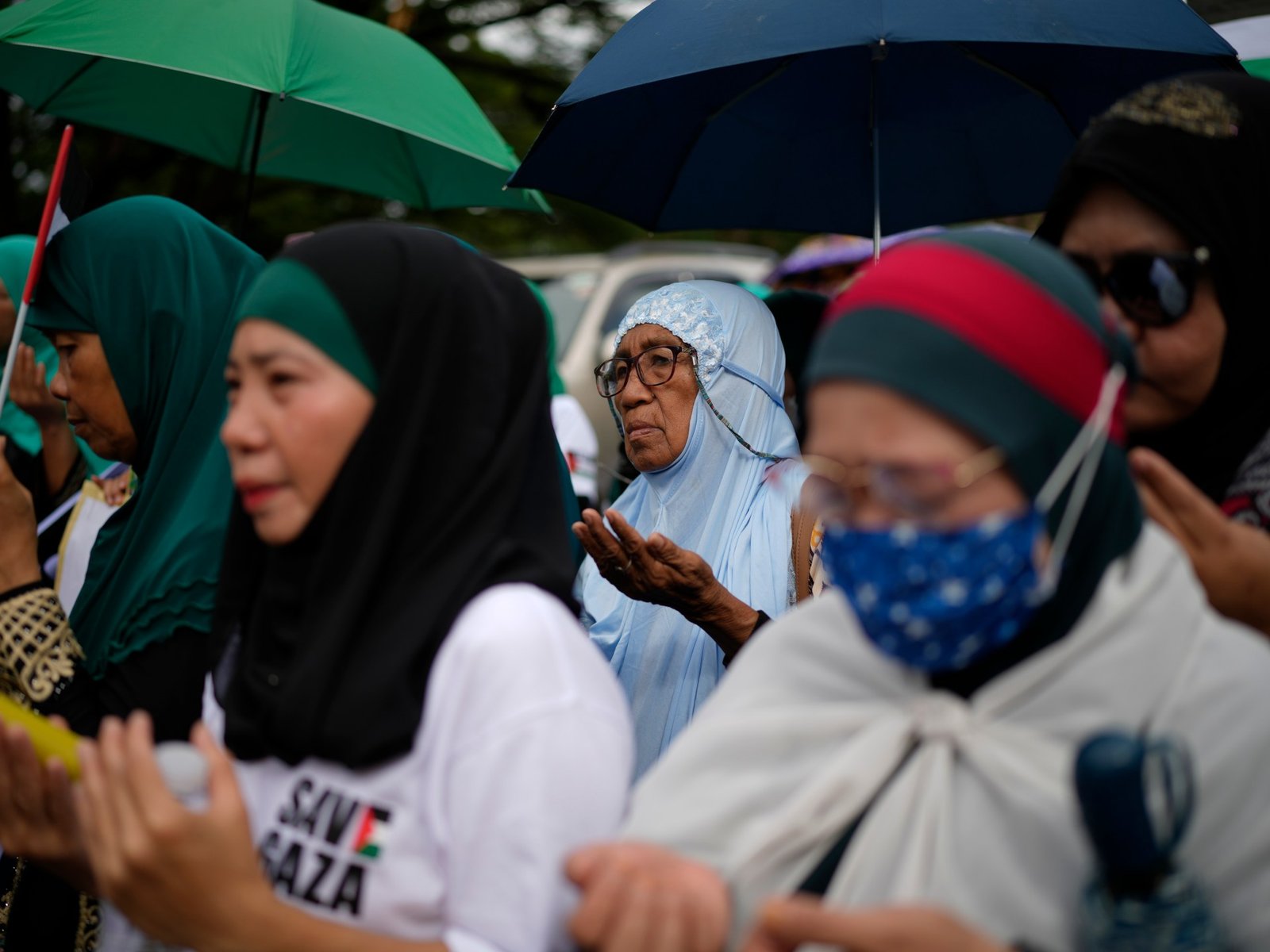
The US-Israel war on Iran and the closure of the Strait of Hormuz have affected the entire world. In Southeast Asia, the economy has stalled due to the lack of oil, petroleum gas and other important products that are often exported through the crisis.
The Philippines was the first country to declare a state of emergency due to the disaster, but this did little to reduce the deficit. The country has repeatedly protested against rising prices.
But the impact of the Iran war was not limited to the social environment. The conflict has also affected Muslim groups in the country, especially in the Bangsamoro Autonomous Region. It has deepened disunity among local Muslim scholars, threatening sectarian unity.
When the war broke out, people reacted quickly on television and in public. In general, two camps emerged. One camp supported Iran’s retaliation against the United States and its goal of the infrastructure of neighboring countries. For example, a member of the Muslim community wrote in an online article that the prayers of Muslims regarding Gaza are being answered through Iran’s power and retaliation against Israel; another wrote that Tehran is instrumental in restoring the broken dignity and respect of Muslims.
The other camp opposed Iran, saying that it is a Shia country and therefore hostile to Sunni communities. An expert in these camps had the idea that the Shia are the same as the Zionists, describing the former as a subtle enemy and the latter as an open one.
This fluctuating of conflicting views is not unusual among Bangsamoro Islamic scholars. Visible divisions emerged after the Abraham Accords establishing diplomatic relations between Israel and several Arab countries. Such disunity has never been seen in the Middle East political landscape. This also led to differences on the issue of Palestine.
It is important to note here that the Philippines has a long history of cooperation with Palestine. Demonstrations organized by Muslims and non-Muslims, from rural areas to foreign countries, have been frequent.
However, after the settlement, there were unprecedented statements from some Bangsamoro experts who portrayed the Palestinian empowerment as an Iranian attack. They said that the Palestinian opposition was allied with Iran and therefore they were rebels and a political tool of Shia power.
After Hamas attacked Israel on October 7, 2023, the conflict escalated. Some scholars have adopted Western media and pro-Zionist narratives. They presented the uprising as a single event and ignored the decades of oppression of the Palestinians by the Israeli colonial rule. One camp supported the Palestinian resistance.
Although Islamic scholars are involved in this disagreement, this is not just a theological dispute but a manifestation of political and religious interference.
In the post-colonial era, it is natural for politics and religion to interact in different ways. However, in the context of the Bangsamoro, where central authority remains weak, external forces and major politico-theological practices from the Arab world are being introduced into local affairs.
This is mainly because some scholars, who are associated with the anti-Iranian environment, were trained in other Gulf countries. This reflects the local context, reflecting the tendency for students educated in formal institutions to adopt nationalistic attitudes when they return to their home countries.
This ongoing issue has major internal implications.
First, the interweaving of religion and politics as practiced by Islamic scholars and the majority of people who follow the social order creates a direct impression among their followers that these scholars have a reliable influence on geopolitics, even if they do not.
This is contrary to the principle of the Qur’an to seek guidance from the people of the message, “ahl al dhikr”. This principle points to the distribution of knowledge: that no one person has absolute control over all knowledge.
Second, the debate has created a deep divide among Islamic scholars in the post-conflict region. Since the 1970s, Muslims in the southern Philippines have been struggling to fight for independence, and now they are going through a crisis that calls for community strength and unity. This polarization undermines the formation of a unified identity in an already polarized political environment.
Third, some scholars take their opposition to extremes, calling them “deviant”. This kind of thinking can lead to great change.
In order to overcome this problem, there are several points that need to be considered.
First, the differences between the discussions should be resolved on moral grounds, not by criticizing others with whom we disagree because they differ from you politically. It is wrong to say that a person is a “deviant” because of having a different political opinion.
Second, when answering the question of Palestine and the US-Israeli wars in the Middle East, it is important to remember our history. The Bangsamoro has a long history of fighting against oppression and injustice. Staying committed to our humanity means resisting injustice everywhere else in the world.
Third, a divisive discussion on foreign affairs can destroy the social cohesion and thinking necessary for the future of unity and self-determination.
Muslim communities in the Bangsamoro should not fall because of the issues of division and put their beliefs in Islam and their history and history.
The views expressed in this article are those of the author and do not reflect Al Jazeera’s influence.



