Physical Address
304 North Cardinal St.
Dorchester Center, MA 02124
Physical Address
304 North Cardinal St.
Dorchester Center, MA 02124
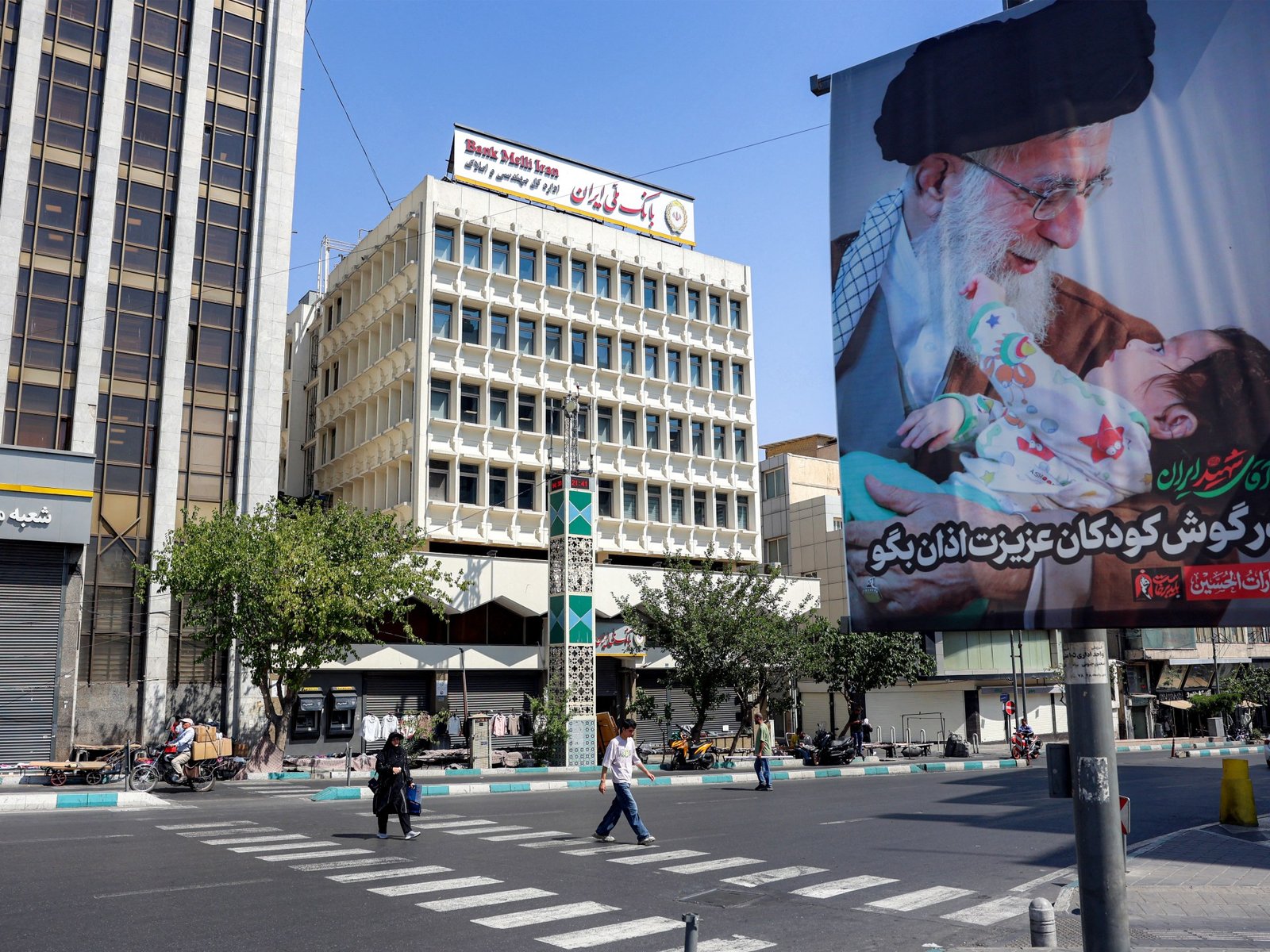
Qatari Prime Minister and Foreign Minister Sheikh Mohammed bin Abdulrahman bin Jassim Al Thani met United States Ambassador Steve Witkoff and US President Donald Trump’s son-in-law Jared Kushner are in Doha as they try to restart direct talks between Tehran and Washington.
The US and Iran signed a memorandum of understanding (MoU) on June 17, extending their 60-day deadline, where they agreed to continue detailed negotiations on their differences – with the future of the Strait of Hormuz, Iran’s frozen economy, long-term peace and Tehran’s nuclear program among the issues on the table.
But two weeks have seen new tensions rise between the US and Iran over the passage of ships through the Strait of Hormuz, the US bombing of Iran, Iran’s attack on US military bases in Kuwait and Bahrain, and the continued Israeli attack on Lebanon.
And although Washington said it would hold direct talks with Tehran in Doha, the latter has rejected this.
Here’s what’s new in the discussion:
US Vice President JD Vance told Fox News that the Trump administration is “in a good place” regardless of how the talks go.
The US “obviously” wants the talks to go well, Vance said, but added that his country was “in a much stronger position” than Iran even if they failed. He insisted that Tehran’s nuclear and military programs had been “destroyed” and warned that Trump had made it clear that any attack by Iran on naval vessels in the Strait of Hormuz would trigger a US military response.
Vance said Iran would be “changed forever” if the peace talks succeed.
The US vice president also said technical talks with Iran are continuing on other issues included in the MoU.
Meanwhile, the Wall Street Journal reports that Trump, recently presented with several options to restart the war with Iran, told his advisers that he prefers to give opportunities for negotiations, and was ready to extend the agreement for 60 days if there is a need to discuss Iran’s nuclear program.
Tehran has refused to hold direct talks with the US in Doha, and many Iranian leaders are absent.
Instead, Iran said it would hold direct talks in the US-Iran talks with the Qatari mediator to discuss establishing a deal with the US and freeing Iran’s frozen economy. This week, Iranian President Masoud Pezeshkian said Iran expects $6bn of frozen Iranian currency to be released by the US as a first step.
On Wednesday, Iranian negotiators are expected to be in Doha to discuss with Qatari officials the financial and other aspects of the MoU, Iranian Foreign Ministry spokesman Esmaeil Baghaei said on Tuesday.
Meanwhile, Vance described Iran’s refusal to accept technical talks as a “Persian style of communication”.
“There was a planned discussion, a technical discussion, that we’ve talked about before. That’s actually happening tomorrow,” Vance said in an interview with The Michael Knowles Show podcast that aired Tuesday.
He said he found Tehran’s public statements “interesting and disappointing”, saying Iranian officials were rejecting peace talks while accepting technical talks.
“They will say, ‘No, no, there are no peace talks going on, but there are technical talks between the United States and Iran about a peace agreement,'” Vance said. “It’s a Persian way of speaking and a Persian device that I don’t understand.”
Alex Vatanka, a senior fellow at the Middle East Institute, said growing skepticism among Iran’s leadership about the deal could explain Tehran’s weakness in engaging in public talks with Washington so far.
“In the last two weeks or so, we’ve seen a backlash within the Iranian government. People were saying, ‘This MoU sounds good on paper, but where is this?'” he told Al Jazeera.
“Where are the frozen assets that need to be released? Does Iran control the Strait of Hormuz? Why is Israel still in Lebanon?”
Vatanka said that the time has come to follow the path described in the document that was signed on June 17.
Therefore “it is not surprising that officials like Araghchi or Ghalibaf hesitate to appear in Doha and stand in front of the cameras because, at home, it could be a problem for them,” he said, referring to Iran’s Foreign Minister Abbas Araghchi and the Speaker of the Consultative Assembly Mohammad Bagher Ghalibaf.
Scott Uehlinger, a US national security expert, said that Washington is using direct talks with Iran in Doha to resolve disputes over the Strait of Hormuz despite the lack of direct talks.
“I think the main point of the American negotiators is to try to use the current negotiations, which have already been planned, as a way to solve the problems in the future,” Uehlinger told Al Jazeera.
A former CIA official said the challenges stemmed from Iran’s “espionage strategy” to control the Strait of Hormuz. “The U.S. is trying … to clarify Iran’s exact role in the crisis, according to the MoU, and other things that could be included in a future agreement,” Uehlinger added.



