Physical Address
304 North Cardinal St.
Dorchester Center, MA 02124
Physical Address
304 North Cardinal St.
Dorchester Center, MA 02124
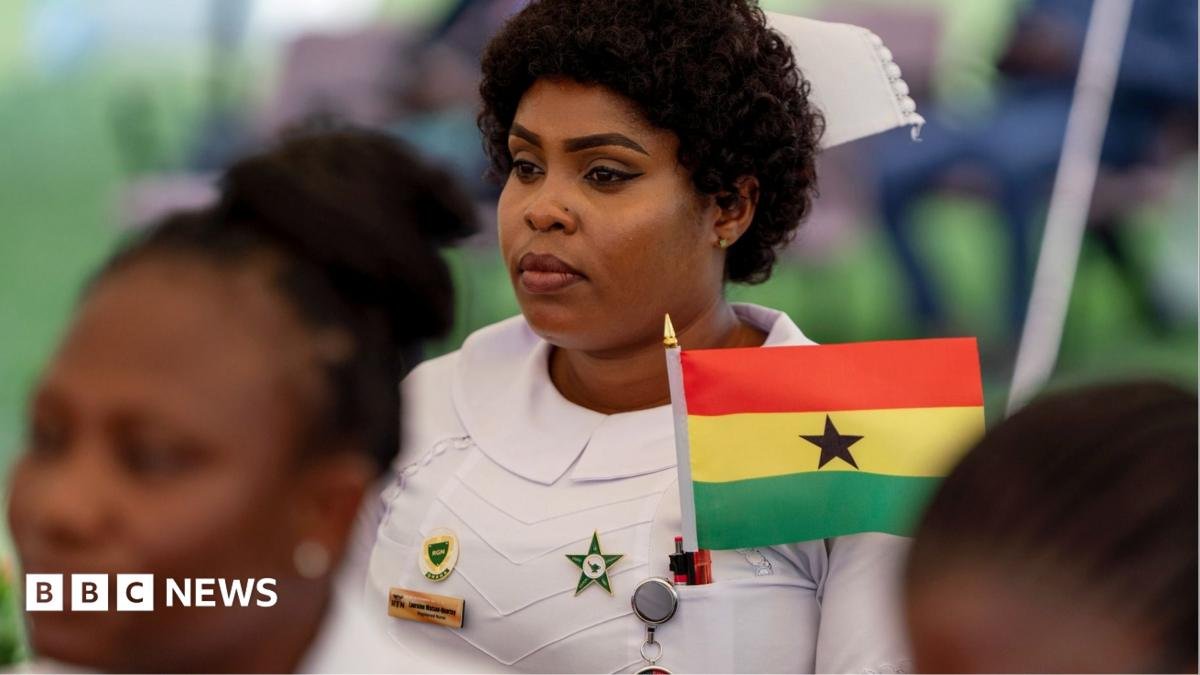
A Kenyan court initially blocked the country’s agreement. Legal challenges to patient privacy protection followed.
The Director General of the Ghana Information Protection Commission, Arnold Kawarpuo, told the BBC that the government in Accra had opposed the deal for the same reasons.
“We had concerns around the scope and breadth of data required,” he said.
“We were the ones generating the information and passing it on to the US authorities, and there were no countermeasures in terms of protecting Ghana’s information and Ghana’s sovereignty.
“And from our perspective, we had no control over what happened to that information once it left Ghana’s borders.”
Zimbabwe cited concerns about requests for medical information that could potentially be shared with US pharmaceutical companies as its reason for rejecting the deal.
There was no guarantee that drugs or vaccines made from the pathogen would be available to their people, a government spokesman said. He pointed out that there was a system where members of the World Health Organization could exchange information and benefit from any treatment that would be given in future epidemics.
African countries have previously shared medical information with USAID and PEPFAR, America’s flagship program to prevent HIV and AIDS.
The US insists that sharing data and samples is key to continued scientific progress and mutual cooperation.
And a State Department spokeswoman said the requested material was the same aggregated and de-identified data that had been used for years to fight infectious diseases.
Nelson Aghoho Evaborhene, a PhD fellow in global health management at Roskilde University in Denmark, says the context has changed.
“It was an unequal relationship, but it was politically very tolerable” because they could sell it to the local population as an important need to improve health services.
“But now it has changed significantly, because it is more about the volume of transactions.”
Many African countries have also learned from Covid, where the race to find a vaccine has proven the value of pathogen data, but the continent has struggled to get doses to its population.
“I think one of our biggest opportunities as Africa is to have access to valuable information to help build a global health security ecosystem,” said Agri Aluso, executive director of the Resilience Action Network Africa (RANA).
Rana joins more than 50 civil society organizations in signing an open letter warning that US policies are not driven by African national or regional interests, South Africa shares.
“Truthfully, no self-respecting people on earth should accept (two questions).” South Africa’s health minister, Dr. Aaron Mosoledi, told the BBC..
“If there’s any outbreak or epidemic in their area[the US]they’re going to get pathogens.”
“They also provide them with genomes for life. But the US is going to fund them for five years.”
The debate over health diplomacy has come into sharper relief in recent weeks following the outbreak of a new Ebola outbreak in the Democratic Republic of Congo.



