Physical Address
304 North Cardinal St.
Dorchester Center, MA 02124
Physical Address
304 North Cardinal St.
Dorchester Center, MA 02124
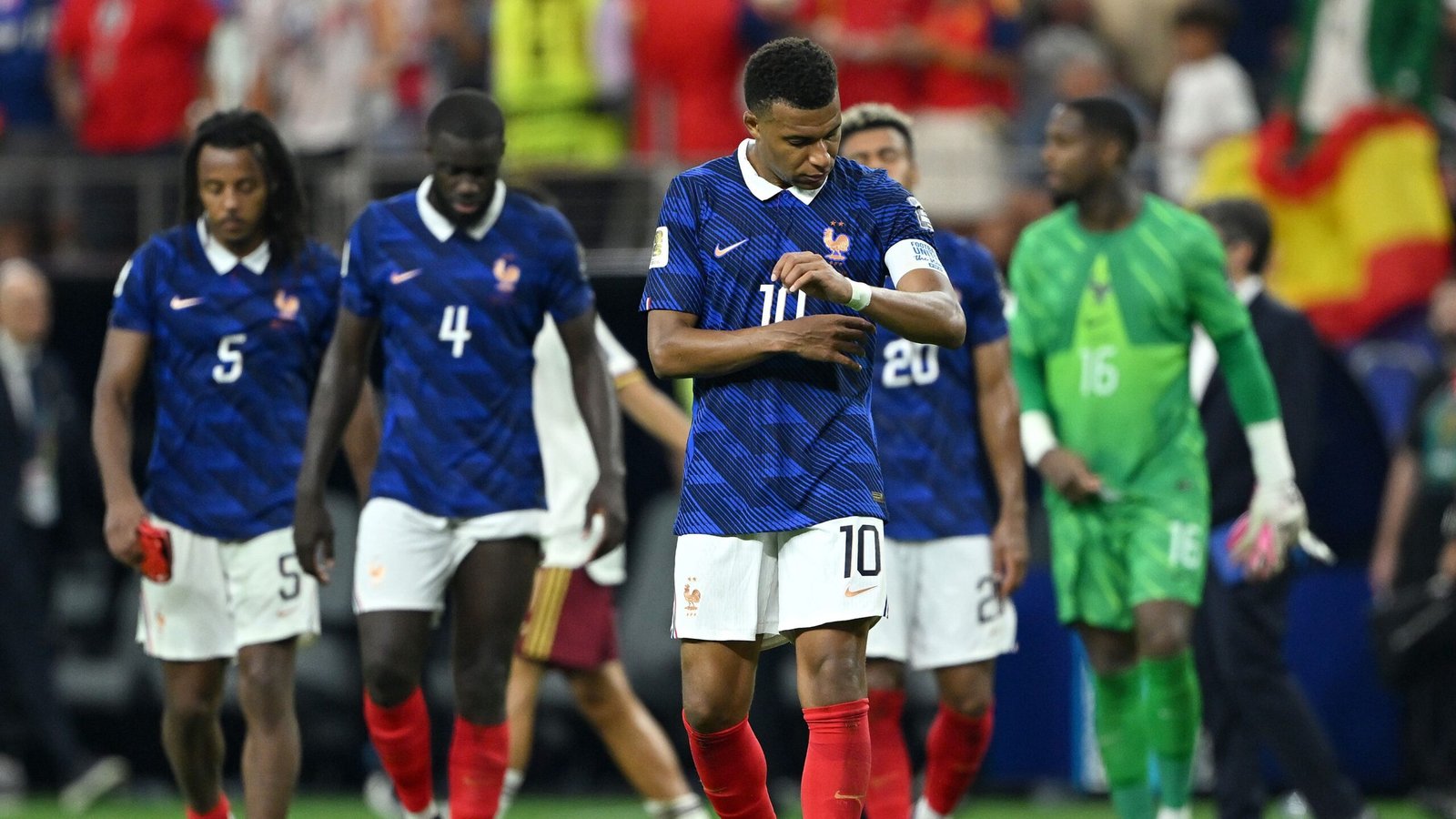
“We don’t want to play.” England and France are in a “half-finished” confrontation.
The third-place match at the World Cup never had the same status as the final, but for decades it remained one of the most controversial matches in the tournament, even among its participants.
As France and England face off early tomorrow morning, Sunday, for the bronze medal at the 2026 World Cup, controversy has reignited over the feasibility of staging the match, at a time when many see it as adding nothing to the two teams dreaming of the title, while the International Football Federation is committed to the preservation of the sport (FIFA).
The two European teams will meet to decide the third-placed team after each of them lost in the semi-finals. France could not withstand Spain, and England fell into the trap of Argentina’s remontada.
The coach of the English national team, the German Thomas Tuchel, admitted that the players of both teams do not feel any excitement to play the match.Emphasizing that everyone hoped to be in the final instead of fighting for the third place.
Tuchel said after the defeat against Argentina in the semi-finals. “None of our players, even the French, wanted to play this match. Everyone wanted to play in the final.”
On the other hand, “L’Equipe” newspaper quoted the statements of a member of the technical staff of the French national team.Do you think the players want to play this match? Of course notThis team came here for another purpose. “They hate having to play.”
These statements reflect the prevailing view in the teams’ camps as the match comes days after the loss of the crowning dream, which makes the morale motivation limited compared to the competition for the trophy.
Despite ongoing criticism, FIFA does not appear to be considering scrapping the match, which has been a fixture of the tournament since 1934, with the exception of the 1950 World Cup, which was played in a final group format.
Although the European Cup of Nations has discontinued the third-place match since 1980, FIFA still considers it an important element of the tournament’s programme.
There are clear economic reasons behind FIFA’s commitment to the game, according to a report released by the network RCC: French, in third place, represents an additional source of income, whether from ticket sales, television broadcast rights or advertising revenue.
The match also gives the host stadium an opportunity to organize a new public event, while the broadcast channels achieve a high level of viewership, especially since it is played immediately before the final, making it a prelude to the final match.
6 of 7.. “Farewell jinx” threatens Deschamps against England
The profit is not limited to FIFA, as teams also benefit from the financial difference between third and fourth place.
The bronze medalist gets $29 million compared to $27 million for the fourth-place finisher, a difference of $2 million. This is a bonus that is an additional incentive for national federations, especially considering the high costs they incur during the tournament.
The match awards bronze medals to the winner, similar to the Olympic system, which gives it symbolic value, even if it is far from the glamor of the final match.
The match takes on added importance at the world ranking level as it gives more points than friendlies and can affect the ranking of teams, which is further reflected in the qualifiers and the draw for upcoming international tournaments.
A number of analysts believe that the best thing this match can offer is to give an opportunity to players who did not get enough minutes during the tournament.
Many believe that the inclusion of substitutes gives them an opportunity to gain international experience and rewards players who have been part of the national team’s journey throughout the tournament without making a significant appearance.
Despite the criticism, third-place matches throughout history have witnessed unforgettable moments and been the setting for many records to be broken.
French forward Kylian Mbappe has the chance to finish the tournament as the top scorer for the second time in a row, as he is currently tied with Lionel Messi with 8 goals, and the Argentinian captain has the advantage in assists according to the statistics of the tournament.
The English couple Harry Kane and Jude Bellingham, with 6 goals each, still have a chance to fight for the top scorers.
The third-place match had previously witnessed the highest numbers recorded in World Cup historyMost notable is the record of France’s Just Fontaine, who scored four goals against West Germany in 1958 to take his tally to 13 in one tournament, a tally that still stands today. Turkey’s Hakan Sukur also scored the fastest goal in World Cup history after 11 seconds in the 2002 third-place match, according to FIFA statistics.



