Physical Address
304 North Cardinal St.
Dorchester Center, MA 02124
Physical Address
304 North Cardinal St.
Dorchester Center, MA 02124
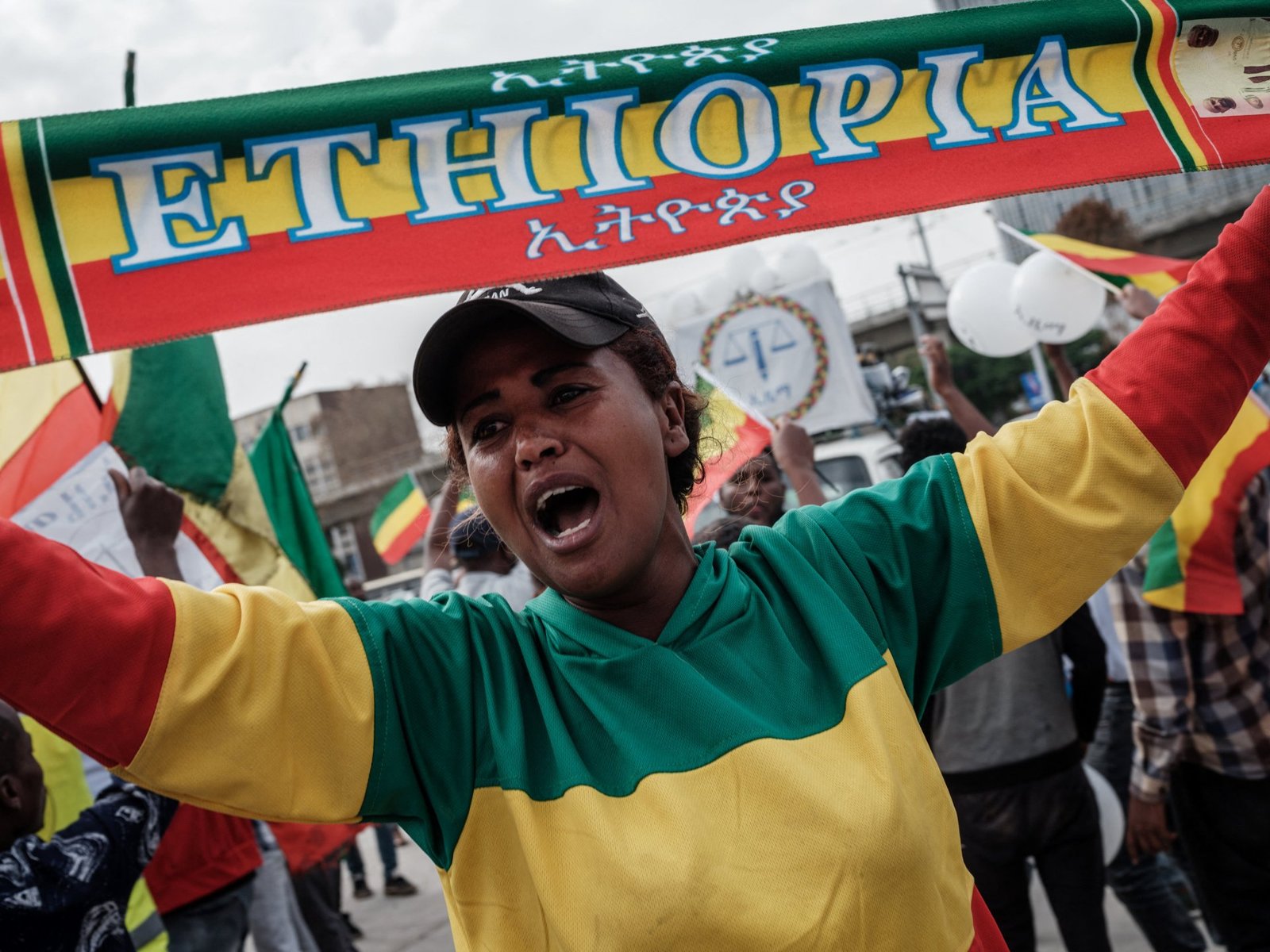
Addis Ababa, Ethiopia Ethiopia will hold elections on June 1, 2026, with Prime Minister Abiy Ahmed’s ruling Prosperity Party (PP) expected to win.
Divided opposition and violence in some parts of the country could prevent millions of people from voting.
In the capital Addis Ababa, the ruling party has closed major streets, including Meskel Square in the city center, to hold large rallies for supporters, while opposition parties say they are banned from holding similar rallies.
Henok Gebre-Selassie, a 29-year-old government office porter, attended a rally this week after being picked up from his job in the morning, despite his deep doubts about the leadership. He also said that he felt that he would be discriminated against if he did not join his colleagues who were forced to attend because of concern for their jobs.
“This government has waged endless wars while hunger is still a big problem, yet it is focusing on building parks and skyscrapers, while pushing many of us out of the city where infrastructure is still poor,” said Henok.
Ethiopia’s electoral commission says more than 50 million people have registered to vote out of a population of at least 130 million, but critics dispute the figures, saying many parts of the country are still affected by regional conflicts such as Amhara and Oromia, and long-term instability following the Tigray conflict.
Several of the country’s most populous regions, including Amhara, Oromia, Gambella and Tigray, have been destabilized following a civil war that ended in 2022, killing nearly 600,000 people and displacing millions.
“The elections are symbolic in order to give legitimacy to those in power,” Kjetil Tronvoll, a professor at Oslo New University College and an expert on Ethiopia, told Al Jazeera.
“A multi-party election in Ethiopia has never been a real contest with real potential to change the government, not even under the Ethiopian People’s Revolutionary Democratic Front (EPRDF) or under the PP,” he said.
“With the exception of Tigray, the problem is much bigger than it appears on the surface,” Tronvoll said, adding that it reflects Ethiopia’s political and regional problems.
“It is the result of the federal government not controlling the regions and the erosion of the local governments on the political institutions in the region,” he said.
Many opposition voices have been pushed out of politics, with armed groups operating in Amhara, Oromia and other regions.
Tigray did not take part in the election, as the Tigray People’s Liberation Front (TPLF), a banned but popular political party in the region, is consolidating its rule, sparking fears of renewed fighting with the federal government and widespread instability in the Horn of Africa.

Opposition parties have said that they are taking part in order to keep their licenses which they fear that if they boycott they may be cancelled.
Opposition leader Mistresilasie Tamerat, 23, who is the leader of the Ethiopian People’s Revolutionary Party (EPRP), says she has been repeatedly denied permits and places to hold meetings, a story reported by the Ethiopian Human Rights Commission (EHRC).
“I believe that democracy is possible in Ethiopian politics, but not tiredness and honest debate,” he told Al Jazeera.
For him and other dissidents and journalists who appear to have no ties to the government, the risks include arrest and detention, and many are forced to flee the country.
Most of Ethiopia’s journalists and journalists have been warned not to misrepresent the upcoming election, while the media watchdog is under scrutiny for its actions against journalists, including the expulsion of journalists and restrictions affecting outlets such as The Economist and The Africa Report.
This week, the International Federation for Human Rights (FIDH) said that the government must “take immediate and long-term measures to protect human rights defenders, restore public space, and ensure that the election complies with Ethiopian law and international human rights”.
Ethiopia is now ranked 145 out of 180 countries in Reporters Without Borders’ 2025 Press Freedom Index, with Eritrea, North Korea and Iran near the bottom of the rankings.
Addis Standard, the most critical online publication, has been stripped of its license, while The Reporter, the country’s largest newspaper, has been warned to link to government news.
The government has invited only a handful of election monitors, mainly from the African Union and the Intergovernmental Authority on Development, which critics say have little power to monitor electoral fairness.
A few days before the vote, Addis Ababa was quiet.
There are less political signs than the ruling party and less political activity is visible, which shows the feelings that come from the double inflation and the number of refugees who are fleeing the lack of security elsewhere in the country.
Even music known to be anti-government, including music by popular artist Teddy Afro, is absent from public spaces and radio stations, residents say.
For Yosef Asnake, a 41-year-old public school teacher, the election is the last thing on his mind.
Speaking at a cafe in Addis Ababa, he asked why the government was spending so much money on what he called public cooperation instead of a truly competitive election.
“Is the purpose of voting to waste my time when the government wins in every way?” he asked, “while troubling issues such as war, conflict and hunger continue to be ignored?”



