Physical Address
304 North Cardinal St.
Dorchester Center, MA 02124
Physical Address
304 North Cardinal St.
Dorchester Center, MA 02124
FIFA’s new rule between criticism and increased offensive efficiency
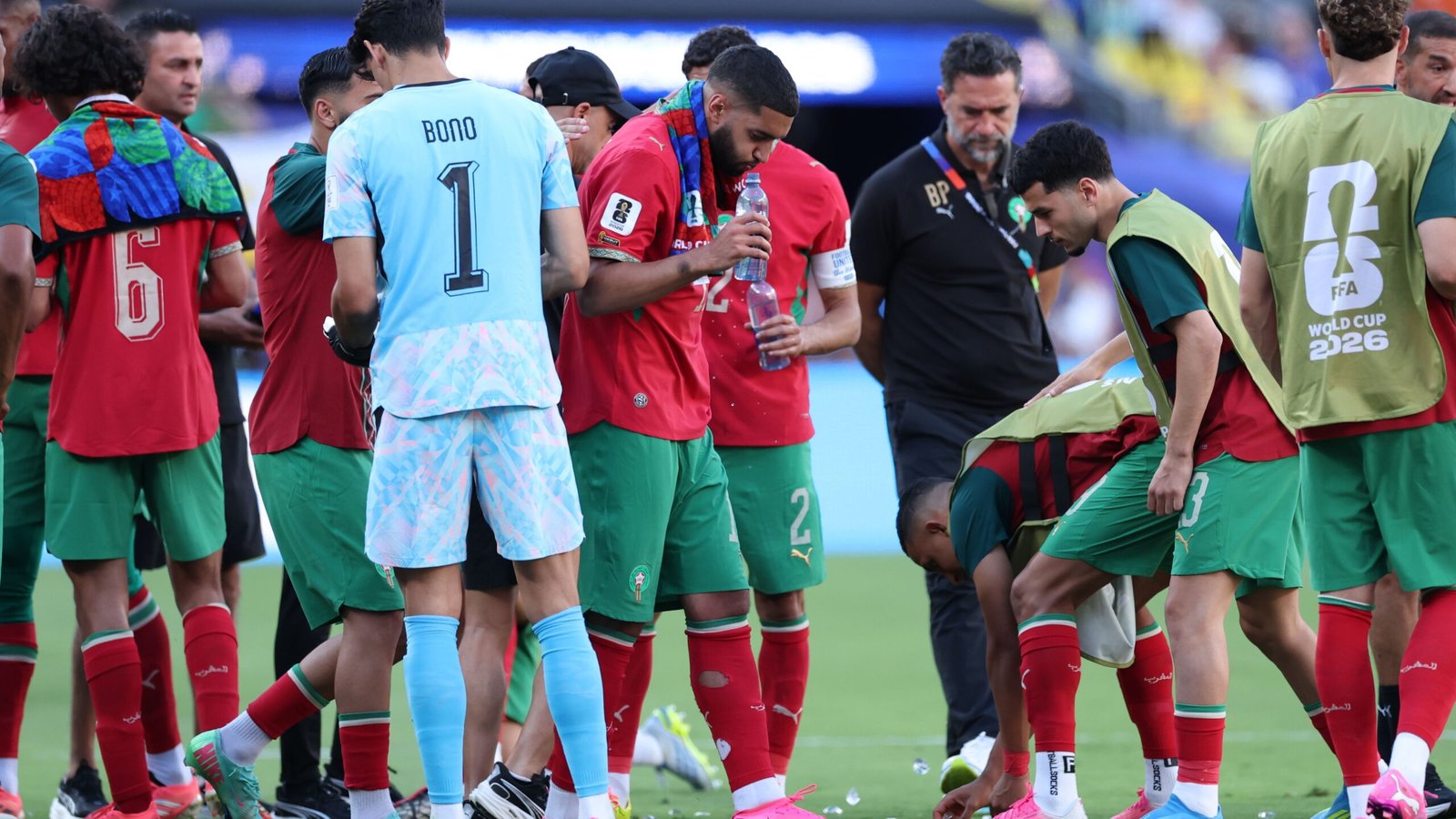
Water breaks have become one of the most controversial issues at the 2026 World Cup, after they became a regular feature of every match in the tournament so far, amid growing questions about their impact on the flow and rhythm of games.
The players get a 3-minute break in each half to drink water and deal with the harsh weather conditions, in addition to receiving technical instructions from the training staff.
This measure was implemented to protect the safety of the players, especially after the extreme heat waves that North America witnessed during the recent tournaments. However, some observers questioned the need to apply it to all matches, especially those played in air-conditioned stadiums.
Critics believe that these breaks can give broadcast channels an extra opportunity to show advertisements, while others believe that they directly affect the format of matches, as they can stop the momentum of a team enforcing its offensive control, causing it to lose momentum after play resumes.
Despite the criticisms, the cooldowns contributed to a significant increase in offensive tempo, especially after the first-half break, according to the numbers.Opta“.
In the tournament matches, 33 goals have been scored in the first half so far, 14 of which were scored before the water break and 19 after it.
The number of shots also increased, from 115 before the stoppage to 170 between the water breaks and the end of the first half.

It didn’t stop there, as the Expected Goals (xG) increased from 11.6 to 17.0 after the break, reflecting a clear increase in attacking threat.
The figures also showed an increase in the number of entries into the penalty area, from 251 to 300, and touches inside the area from 214 to 282, in addition to crosses after the restart from 145 to 181.
More than 3 goals in one game… The 2026 World Cup surpasses the 68-year-old record.
The statistics show that 26 of the 48 teams taking part in the tournament had more shots on goal after the water break than before, while only 11 countries surpassed the number of shots before the break, while 11 other countries kept the same number at both times.
While this data does not provide conclusive evidence that the water break is the direct cause of the increase in offensive efficiency, it does reveal a noticeable change in match format after the break that will continue to be monitored throughout the remainder of the tournament.
As this system continues to operate until the end of the World Cup, it seems that teams are required to adapt to a new reality that could become as influential a tactical element as its physical impact on the players.



