Physical Address
304 North Cardinal St.
Dorchester Center, MA 02124
Physical Address
304 North Cardinal St.
Dorchester Center, MA 02124
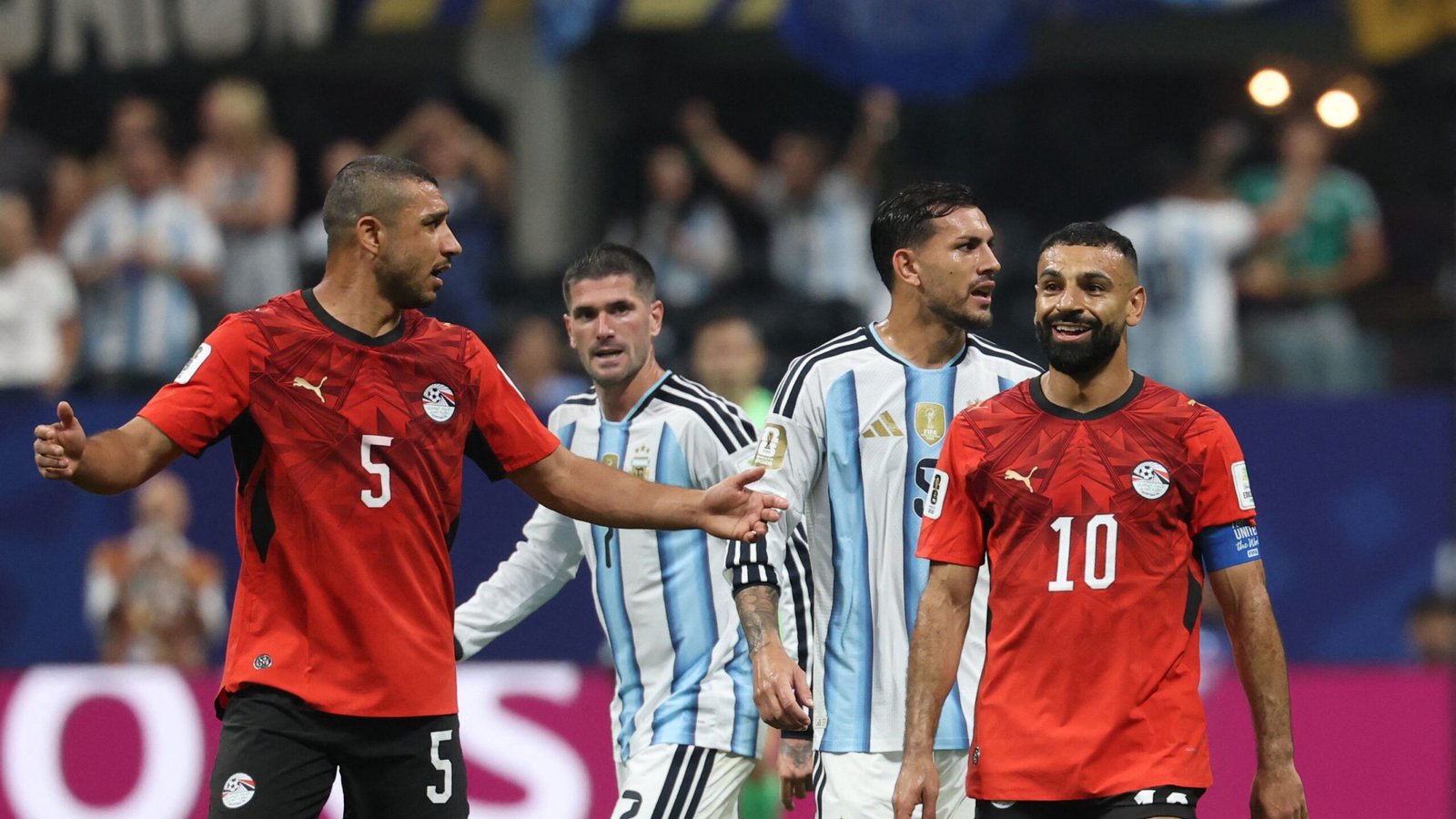
The technical staff and players protested against the French referee’s decision
The new arbitration analysis justified the decision of the French referee Francois Letxer, who served the match between Egypt and Argentina, not to award a penalty to the “Pharaohs” captain Mohamed Salah.
Archive VAR, which specializes in the analysis of refereeing cases, confirmed that the referee’s decision not to award a penalty before Argentina’s third goal was correct in the match between the two teams in the 2026 FIFA World Cup Round of 16.
The account, via the ‘X’ platform, explained that Argentina’s Nico Gonzalez managed to legally play the ball first before making contact with Egyptian star Mohamed Salah in the penalty area.
He noted that the contact that occurred after Gonzalez interfered with the ball was not a foul requiring a penalty kick, and therefore no foul that could be reviewed by Video Assistant Referee (VAR) technology.
He added that the validity of the decision also means that there was no foul at the start of the attack, which ended with Argentina’s third winning goal, so that the goal remains valid from an arbitration point of view.
Egypt’s technical staff and players protested against the decision of the French referee, demanding a penalty, which means canceling Enzo Fernandez’s fatal goal.
The Egyptians’ protests began after the referee disallowed Mostafa Zico’s goal earlier in the match due to a similar foul by Alessandro Martinez on Marwan Attia.
Egypt took a two-goal lead into Tuesday night’s match and came close to pulling off one of the World Cup’s biggest surprises, knocking off the reigning champions.
But the last quarter of an hour witnessed a brutal scenario as the African giants conceded 3 goals in a row to leave the tournament with their heads held high after a 2-3 loss.



