Physical Address
304 North Cardinal St.
Dorchester Center, MA 02124
Physical Address
304 North Cardinal St.
Dorchester Center, MA 02124
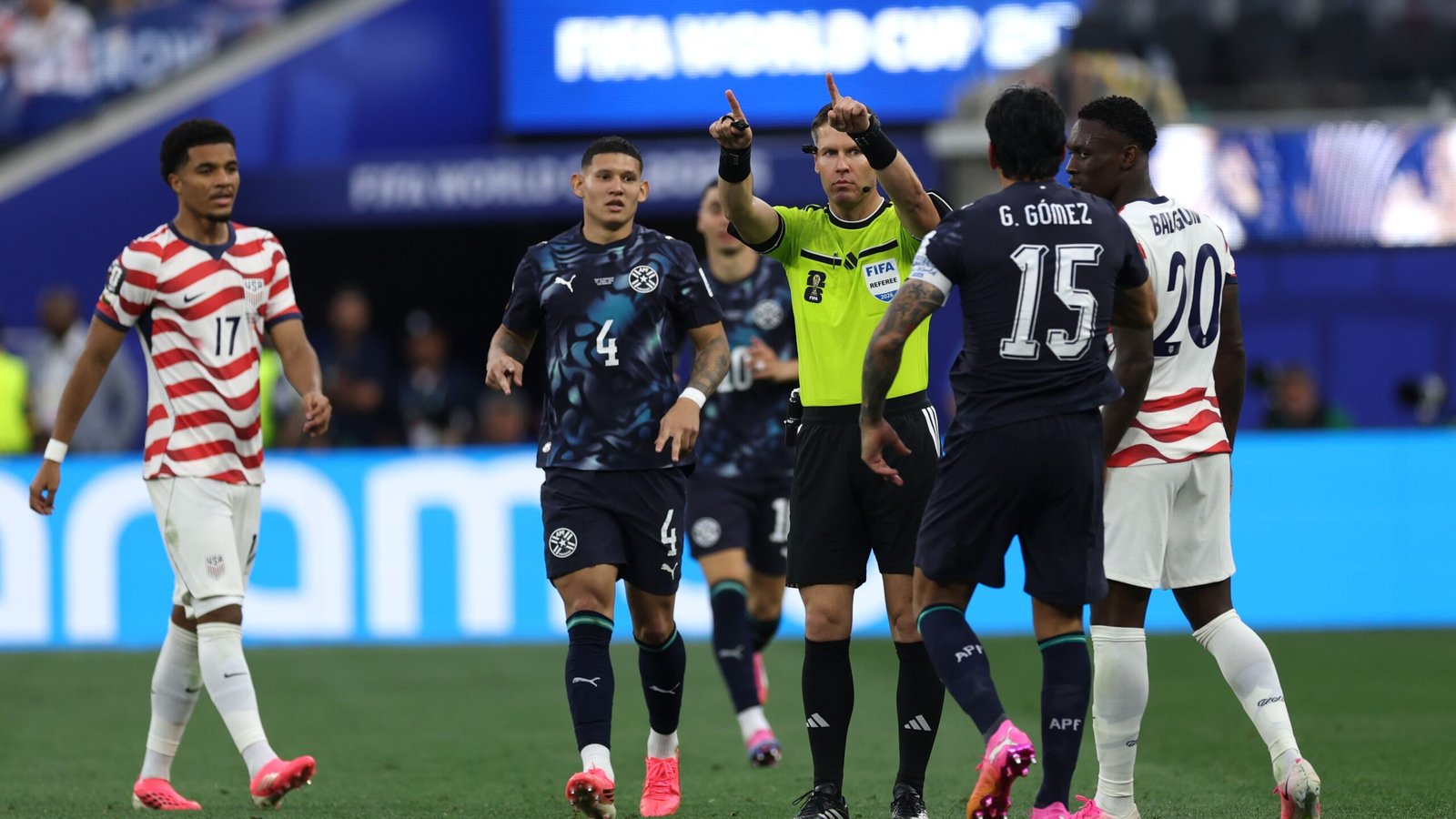
The America-Paraguay game will see the new rule applied for the first time
One of the arbitration cases between the United States and Paraguay at the 2026 World Cup sparked a wave of controversy after interference from the video technology room led to the referee’s decision in what some experts considered a violation of established protocol.
The match saw Dutch referee Danny McKeel yellow card USA defender Tim Reim for a tackle on Miguel Almiron.
After play resumed, the referee received a signal from the video technology room, where Spanish referee Carlos del Cerro Grande was present, to review the shot due to a “player identification error”, which is one of the cases in which the protocol allows video technology to intervene.
But the surprise came after watching the footage, because the decision was not limited to correcting the identity of the penalized player, but the foul was canceled in the first place and the foul counted in favor of the American team, and the Paraguayan player was penalized for acting to commit the foul.
This change has surprised a number of observers and arbitration experts, who have held that a review of a “mistaken identity” case does not give the videographer the authority to change a technical decision regarding the nature or direction of the violation.
Former international referee Ituralde Gonzalez strongly criticized the incident, stressing that a review of mistaken identity should be limited to the identification of the penalized player and not lead to a change of the entire arbitration decision.
Gonzalez said through the Spanish newspaper “AS”. “A case of mistaken identity allows for a review of only the identity of the offending player, but it does not give the right to change the technical decision. Where did they get this explanation from?’
He added: “It seems we don’t need any more referees. The technical justification they give is that if a warning is caused by an authentication error, the game can be stopped and the case reviewed, and they relied on that. But that’s a very broad interpretation of the law.”
Gonzalez concluded by describing the incident as “one of the mistakes of the World Cup”, referring to the great controversy that the refereeing decision raised during the match.
The incident has reignited the debate about the limits of video technology interference in major games, as the organizing authorities seek to ensure maximum accuracy and consistency in refereeing decisions at the 2026 World Cup.



