Physical Address
304 North Cardinal St.
Dorchester Center, MA 02124
Physical Address
304 North Cardinal St.
Dorchester Center, MA 02124
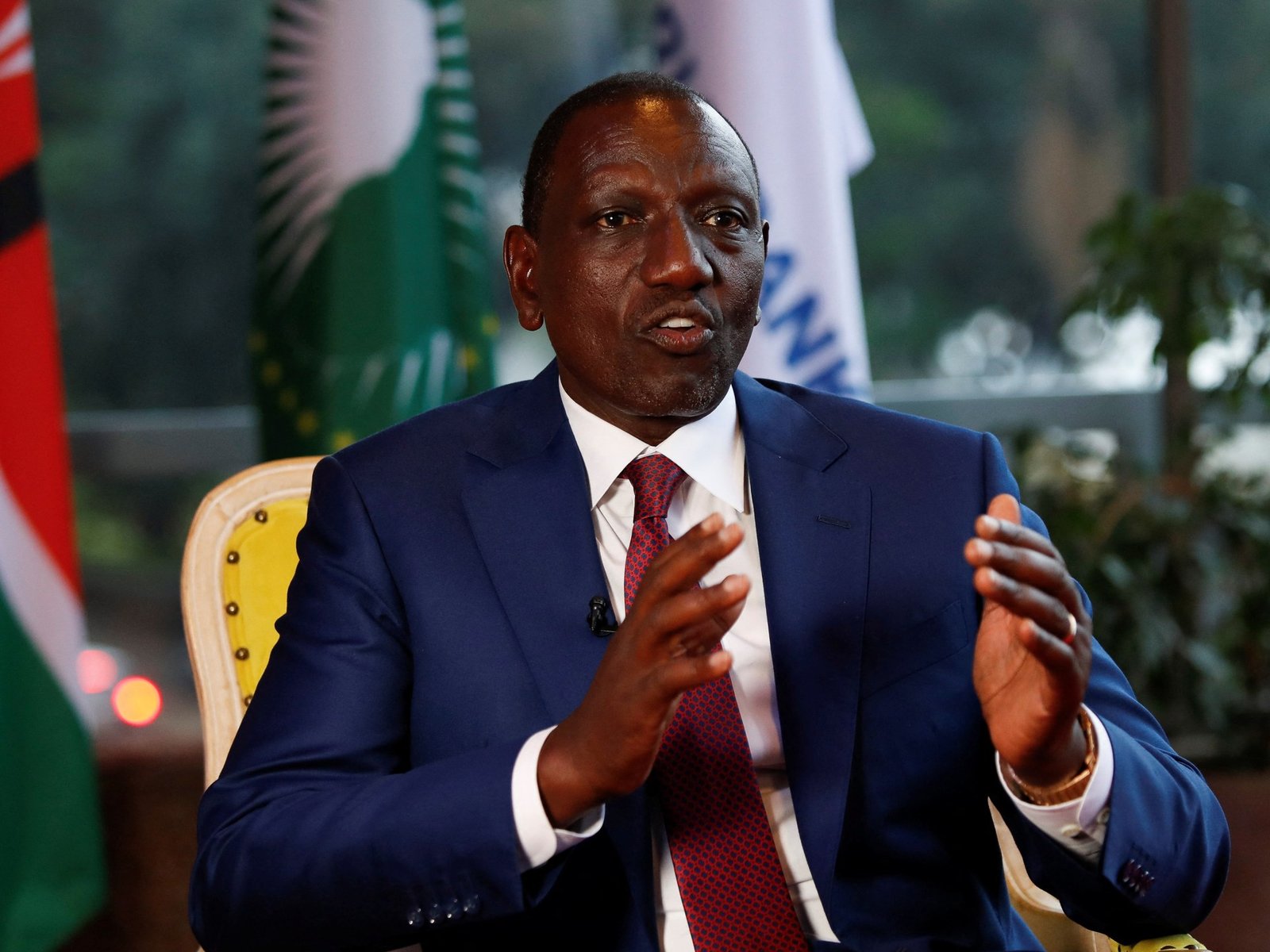
Kenya is hosting the Africa Forward 2026 summit in partnership with France, the first of its kind to be held outside a Francophone country.
The conference, which brings together African leaders and business leaders from across the continent and beyond, has drawn criticism at home and abroad.
Since President William Ruto took office, Kenya has opened itself up to cooperation with the West, positioning itself as the most stable and accessible country in the region.
However, French colonialism continues to haunt Paris because it has relinquished power in several former colonial countries in West Africa.
In response, French President Emmanuel Macron turned to Kenya, a country known for its openness to European countries.
So, what are the benefits and losses on both sides of the Kenya-France partnership?
France and Kenya signed a defense cooperation agreement in April 2026. Before this, 800 French soldiers arrived in the coastal city of Mombasa in Kenya to participate in exercises with the Kenya Defense Forces (KDF).
After the signing of the agreement, critics warned that Kenya could fall due to neo-colonial power, referring to France’s history of unequal cooperation in West Africa.
The renewed five-year agreement includes cooperation in maritime security, intelligence, peacekeeping and humanitarian assistance and disaster management. France has already sent 600 troops to Kenya, where officials say they will provide training to KDF personnel.
The agreement provides for French military protection in Kenya and requires disputes to be resolved through diplomatic channels rather than Kenyan courts.
It also allows people convicted in France to be imprisoned in France and also gives power to Paris over crimes committed by its soldiers in Kenya.
Critics say the agreement favors France over Kenya and protects Paris’s interests in the Western Indian Ocean, an area vital for shipping, military bases, and counter-terrorism operations.
They have also warned that although Kenya has quickly accepted security cooperation agreements with five countries, China, Zimbabwe, the Czech Republic, Ethiopia, and France, it may be at risk of being affected by neo-colonial regimes, which may disrupt its economy and politics and seriously disrupt the country’s governance.
France has also been accused of insulting African leaders, with Macron criticized for saying that African leaders in the Sahel forgot to say thank you to France.
“None of them (Sahel countries) would be an independent country if the French army did not enter the region,” Macron told the French ambassador in Paris in January 2025.
Speaking to Al Jazeera, Kenyan politician Nelson Koech, who is also the chairman of the National Assembly Departmental Committee on Defense, Intelligence, and Foreign Relations, denied that France has been granted protection.
“It is not true… we have said that crimes like murder should be tried in Kenya,” he said.
“It does not mean that because the French had bad relations with West Africa, we cannot have a partnership with them. France continues to support Kenya, not only in this partnership but also in various projects in this country,” said Koech.
Koech also said that the security cooperation agreement does not mean that the French soldiers sent to Kenya will stay in the country forever. However, sources in the parliament told Al Jazeera that France has been interested in increasing the number of troops in Kenya.
For France, Kenya offers political stability, economic opportunities, and access to the Western Indian Ocean. In Kenya, the agreement promises investment, infrastructure development, security cooperation, and international expansion.
France is currently the fourth largest trading partner in the world. According to the Kenyan government, Kenya is the largest buyer of French goods in East Africa. Today, France is one of the biggest investors in Kenya, having invested 1.8 billion euros ($2.1bn) in the past decade.
By 2026, at least 140 French companies are operating in Kenya, up from 40 in 2013, showing a growing interest in the Kenyan economy. In March 2026, Business France East Africa, a French organization that promotes business between French and East African companies, in collaboration with the French Chamber of Commerce in Kenya, launched a business directory to help French investors find opportunities in Kenya.
France is also the fifth largest source of foreign investment in Kenya, supporting nearly 46,000 direct jobs.
In Kenya, the military and defense cooperation with France complements existing agreements with countries like the UK and the US, both of which have bases in Kenya. It appears to be beneficial to Kenya’s counter-terrorism operations against threats such as al-Shabab
Critics say that while French businesses have access to the Kenyan market and French citizens have free access to Kenya, Kenyan citizens are not given the same access, questioning whether the deal is fair.
Patricia Rodrigues, director of Africa at the management company Control Risks, told Al Jazeera that African and European officials are looking for an equal and mutually beneficial cooperation.
“Neither side wants to be free from the influence of the other,” he explained. “The goal is to develop good economic relations in the face of the economic crisis and the situation in the world. Both sides want to abandon the model that prioritizes the export of raw materials from Africa for export and away from the aid-based relations that make people dependent.”
Rodrigues added that France, led by Macron, is keen to strengthen relations with East and South Africa after facing anti-French attitudes in West Africa, especially in the Sahel. Kenya’s position as the capital of East Africa makes it an ideal entry point for France in the region, he said.
“For Kenya, the military and security cooperation with France complements the existing cooperation with countries like the UK and the US, both of which have bases in Kenya. It seems to be beneficial for Kenya in the fight against terrorist threats such as al-Shabab,” said Rodrigues, referring to the Somali army.
The France-Kenya meeting is expected to signal a major change in the relationship between the two countries and, possibly, in the dialogue between France and Anglophone Africa.
Thanks to France’s growing economy, expanding military alliances, and deepening diplomatic ties, both countries seem determined to strengthen ties at a time when global powers are competing for influence in Africa.
However, the meeting could escalate the debate about authority, accountability, and whether the relationship is truly balanced. Since 2024, Kenya has experienced political unrest, with citizens protesting President Ruto’s controversial policies, including crackdowns on protests and restrictions on press freedom.

If Kenya were to allow French troops to remain in the country on a permanent basis, this could escalate tensions, as the government prepares for protests ahead of the country’s budget season.
Kenyan politician Caleb Hamisi told Al Jazeera that the security agreement leaves Kenya vulnerable as a proxy in international conflicts, and has become deeply unpopular with Kenyans.
He also pointed to the risk that foreign troops in the country could involve Kenya in military activities or conflicts that serve the interests of other powers, not Kenya’s interests.
“Kenya has been suffering a lot because of the international military relations with countries that often show it as a proxy, therefore, it can be damaged in the war,” said Hamisi.
According to him, the presence of French troops in West Africa created a security threat with little benefit to France, with little known benefit to the host country. He also said that the parliament should carefully review the conflicting clauses in the old defense agreements with the major powers.
“It is appropriate for the drafters of the agreement and the Kenyan judge (negotiator) to consider the contradictions in the previous DCAs (security defense agreements) with the major military countries before submitting Kenya to the international agreement,” Hamisi told Al Jazeera.
The success of the agreement will depend on whether future agreements will benefit, be transparent, and respect the interests of Kenya, instead of creating another chapter of foreign influence in Africa, seen as an agreement.



