Physical Address
304 North Cardinal St.
Dorchester Center, MA 02124
Physical Address
304 North Cardinal St.
Dorchester Center, MA 02124
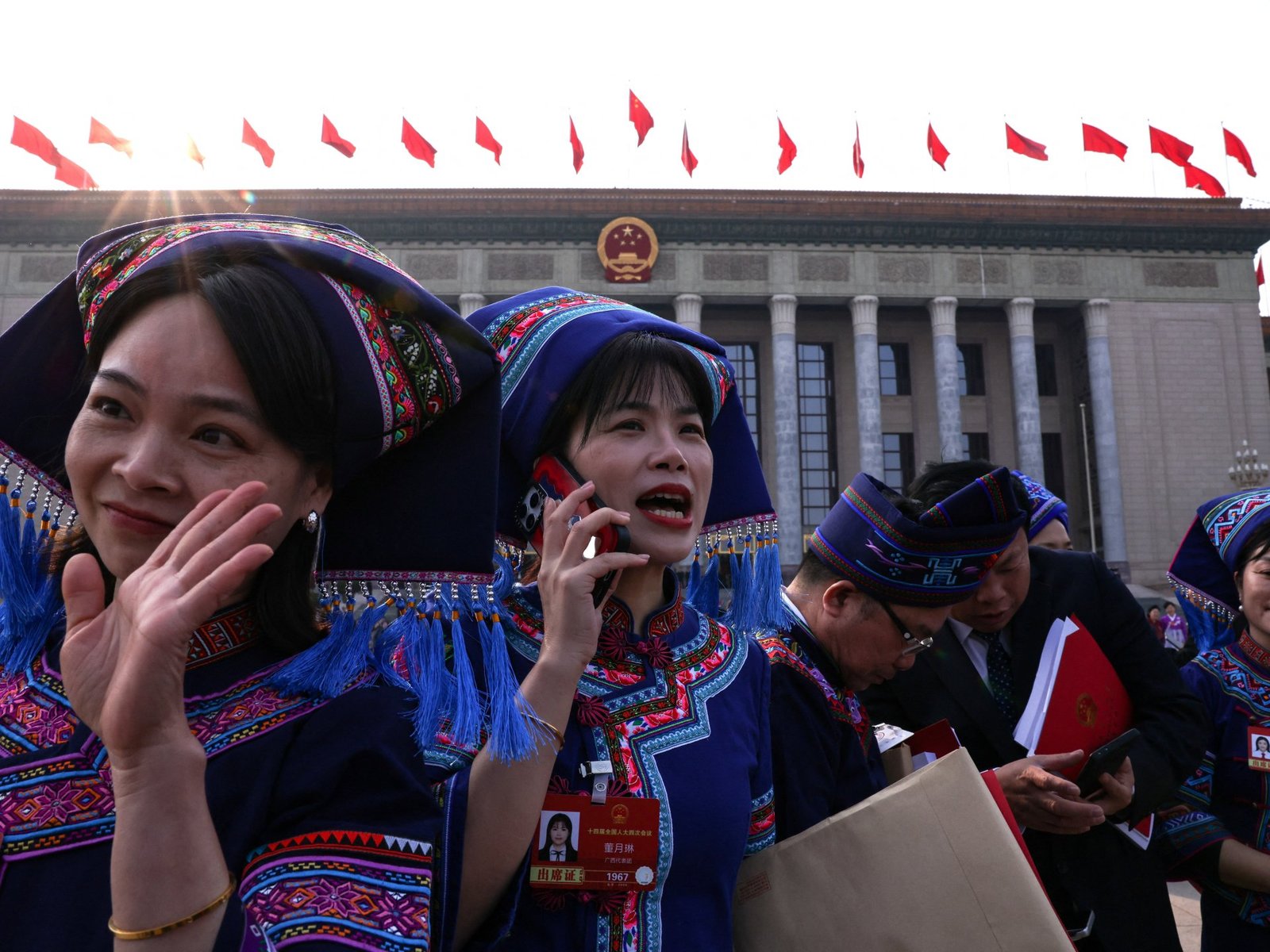
Instead of promoting ethnic unity, activists say the Law on the Promotion of Ethnic Unity and Progress would condone international oppression.
Published on 2 Jul 2026
China has said it has the right to prosecute foreigners and organizations that disrupt its ethnic unity as Beijing seeks to expand its reach abroad.
Passed in March by the National People’s Congress, the “Law on the Promotion of Ethnic Unity and Progress” went into effect on Wednesday.
list of 4 itemsend of series
The law has already been criticized by human rights watchdogs such as the United Nations Special Rapporteurs on Minority Rights and Cultural Rights, who say the law has been used to justify pressure on regions such as Tibet and Xinjiang, instead of promoting unity among ethnic groups.
Article 63 of the law has attracted international attention in expanding China’s legal reach overseas. It states that “organizations and individuals outside China that commit crimes aimed at (China) that disrupt ethnic unity and progress or create ethnic divisions should be prosecuted according to the law”, according to the translation.
Amnesty International has said that Article 63 can be used to justify the repression of foreign citizens and activists, who are targeted by China’s unofficial “police” and academic or cultural groups.
“Peacefully advocating for the rights of minorities in China by anyone, anywhere would be seen as undermining ‘ethnic harmony’,” Amnesty’s Deputy Regional Director Sarah Brooks said this week.
Brooks said that “unity” in this context did not mean “cooperation between different communities” but cooperation with Beijing’s politics.
Zhou Jianshe, deputy director-general and spokesperson of the State Council Information Office Press Bureau – a government agency in charge of implementing China’s international policies – responded to the controversy last week.
Zhou said Article 63 was a “lawful, legitimate, necessary, and effective law” and Western media tried to distort and taint the law as an example of “long-arm rule”.
Beyond international rights groups, the law has also raised concerns in Taiwan as a possible tool to oppose or persecute its citizens abroad. In a statement on Wednesday, Taiwan President William Lai Ching-te urged citizens to be cautious when traveling or staying in China after the ban takes effect.
Mr. Lai also said that Taipei will continue to monitor the situation and give instructions to officials overseas.
Taiwan, a self-governing democracy claimed by Beijing, shares cultural and historical ties with China despite the country’s increasing influence over the past 20 years.
Beijing views Taiwan’s government as “isolationist” and cut ties with officials in 2016 following the election of President Tsai Ing-wen.
Taipei stepped up its travel warnings in 2024 after China ruled that Taiwanese “liberation activists” could be tried in absentia and sentenced to death if found guilty of promoting secession from China.




