Physical Address
304 North Cardinal St.
Dorchester Center, MA 02124
Physical Address
304 North Cardinal St.
Dorchester Center, MA 02124
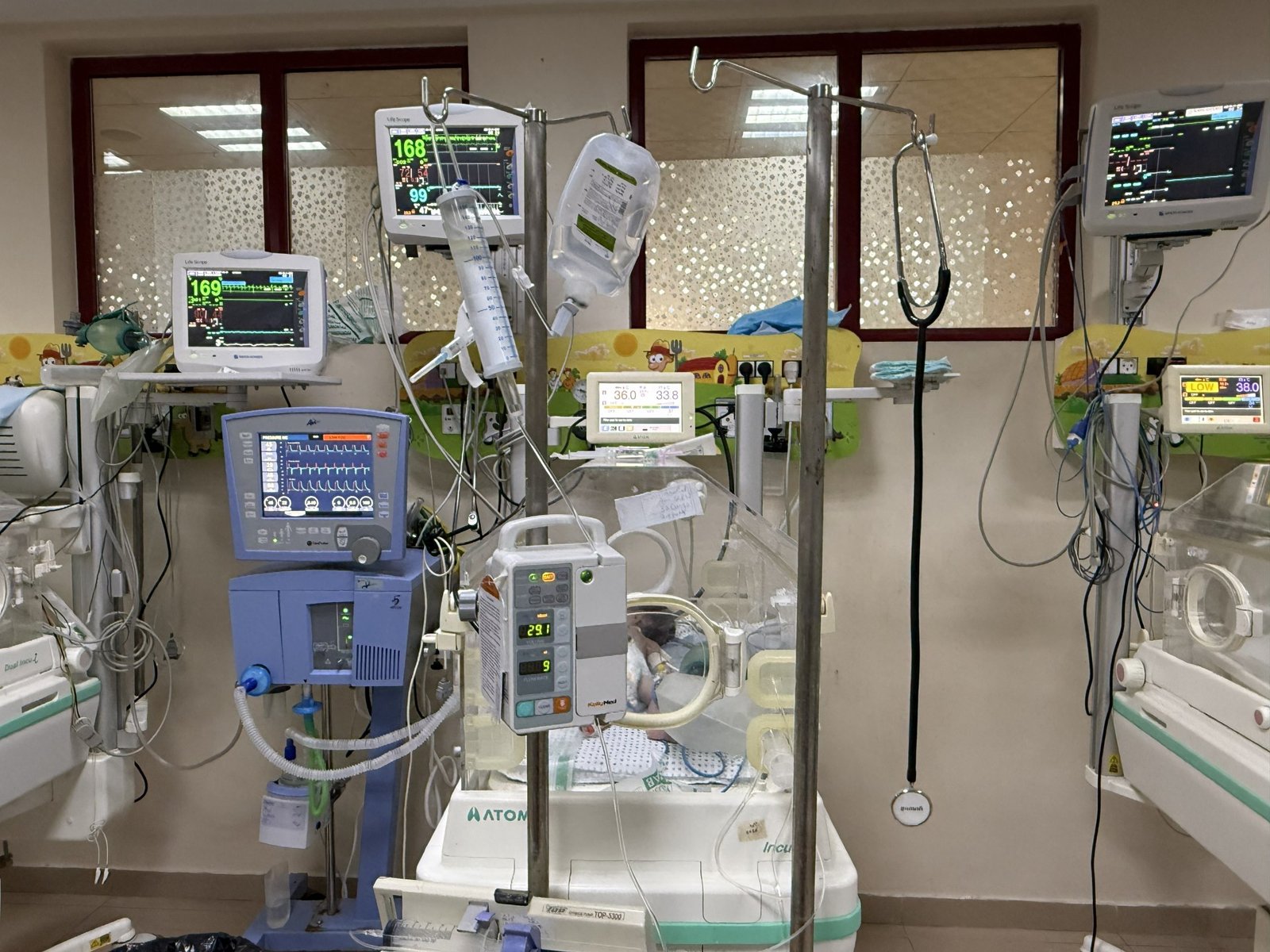
Noor Salem, 30, stands by an incubator in a neonatal intensive care unit in central Gaza, where her son, Yazan Al-Khalidi, lies on tubes and lights.
He watches her small body behind the quartz glass, following her slow breathing and the little movements she makes.
Yazan was born eight months into Noor’s womb, his body looks bluish in the first period of life.
This required immediate transfer to the neonatal intensive care unit Al-Aqsa Martyrs Hospital in Deir el-Balah, when it became known that Yazan was born with her breathing problems.
Instead of being able to hold her baby the first time after birth, Noor is now forced to sit by the incubator and wait for Yazan to change.
Yazan is Noor’s second child, having lost her first child at birth famine in Gaza in 2025, caused by Israel’s ongoing genocide.
When she was pregnant with Yazan, she endured a lack of basic necessities and the fear of losing another child.

She said: “I was scared the whole time I was pregnant because I had already lost my baby.”
“When he was born, I saw that he didn’t move or cry like other babies, I was very scared, I didn’t know what would happen to him.
Noor waits for daily updates from the doctors, hoping that Yazan will overcome his health problems and return to his arms.
There has been a significant increase in premature births and stillbirths, and giving birth to dead and deformed childrensince the massacre in Gaza began on October 7, 2023.
UNICEF has repeatedly warned of the preterm birth crisis in Gaza, with one in five babies requiring intensive care or neonatal intensive care. Maternal malnutrition, long-term mental stress and lack of prenatal care have all affected both mother and child.
Dr Afnan Abu Hasaballah, a medical doctor who works with UNRWA and Al-Awda Health Hospital in Nuseirat refugee camp, has seen how this affects the health of pregnant women and newborns.
He says many expectant mothers arrive at hospitals stressed and exhausted after repeated displacements, lack of basic necessities and bombings.
“Constant fear, frequent migration, lack of food and clean water, and the lack of access to prenatal care all increased the risk of premature birth,” she says.
Israel’s siege of Gaza also leads to malnutrition, and one of the main factors affecting pregnant women and their children, which leads to premature births and low birth weight in newborns and requires a lot of care.
Inadequate nutrition increases the risk of anemia, maternal fatigue, pregnancy complications and stunted growth.
“Many expectant mothers during the war did not have access to adequate or sufficient food, and this had a serious impact on the health of mothers and babies,” says Dr Abu Hasaballah.
Al-Aqsa Martyrs Hospital is the only hospital with a neonatal clinic in the entire Gaza Strip, which serves thousands of pregnant women and creates a serious health crisis.
“We were working under a lot of pressure, with a lack of incubators, ventilators, medicine and essentials, in addition to a lack of electricity and a lack of fuel, which threatened the babies inside the incubators,” Dr Abu Hasaballah says.
Premature babies need constant monitoring, ventilation, respiratory support, proper nutrition and medical care, which health workers with limited resources and time cannot provide.
“When these substances are not available, the risk of serious complications increases, including respiratory distress, fever, infections and low blood sugar,” says Dr Abu Hasaballah.
Unfortunately, we may lose children who could have lived if they had received the necessary treatment.
The separation of mothers from their newborns is one of the most difficult things for mothers to endure. This sudden separation causes great anxiety for mothers and babies, and the question many doctors ask in neonatal units is whether their babies will survive. Doctors and nurses do what they can to reassure mothers and save babies.
“Instead of holding their baby and celebrating, mothers see them transferred directly to the incubator or the intensive care unit.” Their fears are doubled because the war has affected everything, from medical equipment and supplies to lack of electricity and overcrowding in hospitals,” said Dr Abu Hasaballah.
“We continued to work day and night without sleep, and we did everything we could to save every child, but in many cases, the children’s needs were greater than what they had.”

When the parents and babies are released, a new family crisis begins when the health of the mother is affected by the suffering and stress of war. Basic baby care items, such as diapers and breast milk, are either unavailable or impossible to buy.
“Many families have lost everything due to displacement, leaving women without baby clothes, diapers, blankets, toiletries or clean water,” Dr Abu Hasaballah says.
In the Nuseirat refugee camp, in central Gaza, the Qutoof Al-Khair Foundation supports pregnant women and newborns by providing vitamins, nutritional supplements, medicine and medical supplies.
Akram Abu Jiab, the head of the foundation, says that his staff are facing the need for their services among pregnant women and new mothers who cannot get enough food and medical care to improve the health of their children.
“Premature babies require special care and continuous follow-up care even after they are released from the incubators,” she says.
“However, many families are facing serious challenges to meet their children’s medical and nutritional needs.”
Although the foundation has tried to reach as many women and children as possible, their efforts can only go so far.
“The amount of need exceeds what is available. The gap between need and support is widening every day,” he says.
“Behind every baby born in Gaza is a mother who tries to protect her child in special circumstances. Helping women and children right now is not a luxury; it is important to protect the lives of the next generation.”



