Physical Address
304 North Cardinal St.
Dorchester Center, MA 02124
Physical Address
304 North Cardinal St.
Dorchester Center, MA 02124
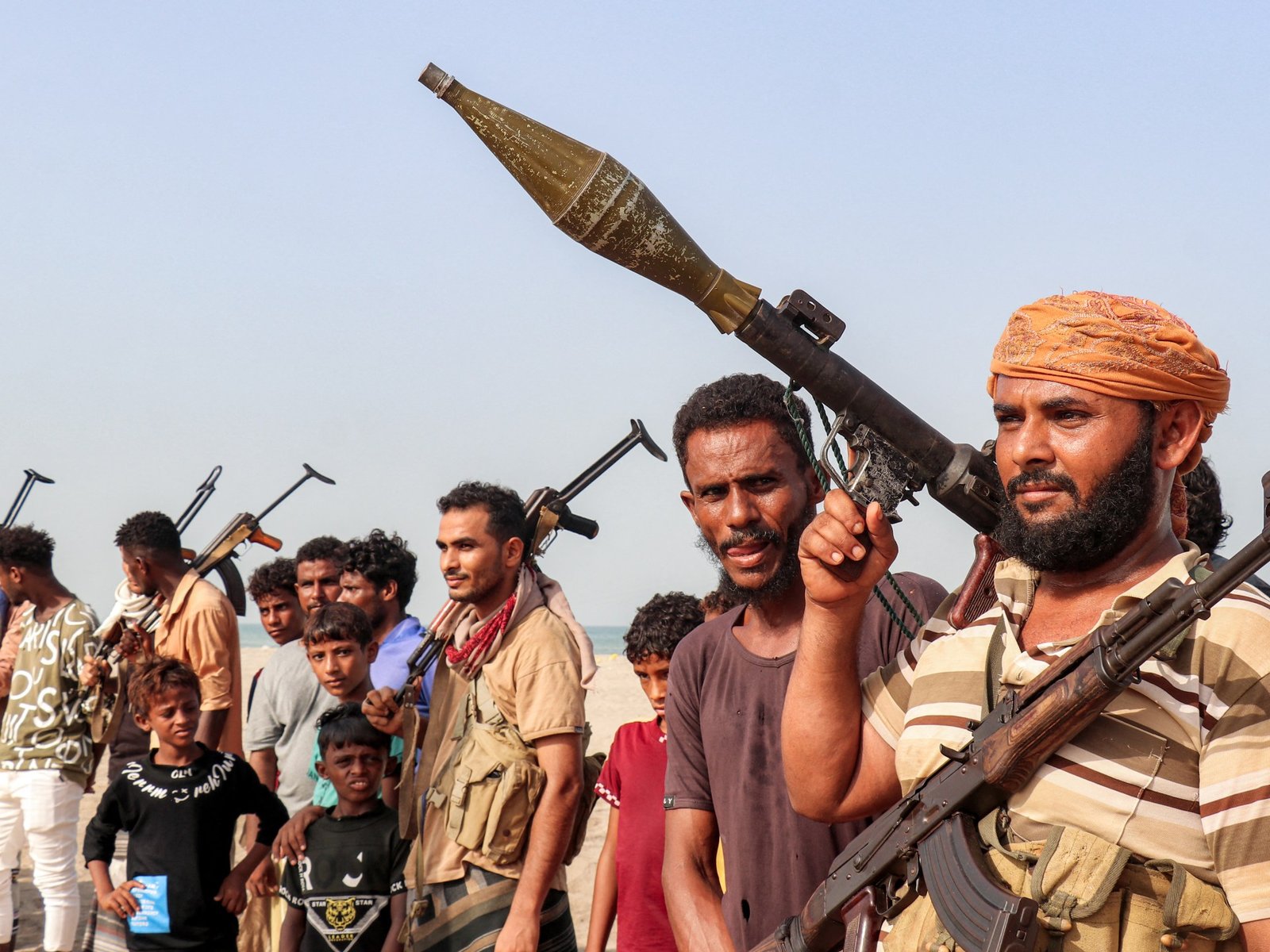
The conflict in Yemen has entered a new chapter with the announcement of the Houthis that they are forcing all ships bound for Saudi Arabia to be blockaded at sea.
Yemen’s militant group, also known as Ansar Allah (or supporters of God), has said attacked several Saudi tanks in the Red Sea.
list of things 3end of series
This development has put the Bab al-Mandeb channel, a waterway that connects the Red Sea and the Gulf of Aden with the vast Indian Ocean, at the center of the conflict between the United States and Iran, and increases the pressure on international trade routes.
The Iran-backed Houthis, who seized the Yemeni capital Sanaa in 2014, have threatened to block the route, a route through which many European powers pass. It is also the most important shipping channel in Saudi Arabia.
The decision of the Houthis to announce the closure of the sea cannot be separated from the chaos created by the ongoing war between Washington and Tehran, which began on February 28 when the US and Israel attacked Iran.
On Monday, Yemen’s internationally recognized government claimed responsibility for airstrikes at Sanaa airport, saying it was a way to prevent an Iranian plane from landing in Yemen’s Houthi-controlled capital. But the Houthis blamed Saudi Arabia for this.
The Houthis responded by firing missiles at Saudi Arabia – a key supporter of the Aden-based Yemeni government – and later escalated the threat by announcing a naval blockade of the kingdom.
These events mark a major escalation in the civil war in Yemen. Saudi Arabia, which has sought in recent years to avoid a new war on its southern border, is facing serious challenges and threats from land to sea, targeting one of its most important oil export routes.
All this raises the question: will this escalation lead to a new conflict between the Yemeni government and the Houthis? And if so, what does the balance of power look like between the Houthis and the government after more than a decade? Has the change made enough of a difference to increase the chances of resolving the dispute?
In recent years, there have been more and more stories, but this seems to be possible, especially because it overlaps with local, regional and international events and the return of the US-Iran war.
The Yemeni government has reorganized its army with a single election center, and local reports indicate that the military decision has not been changed, as previously thought.
So, is retaking Sanaa back on the table as a military objective worth serious consideration, and what does that really mean? And how prepared are the parties, especially the Yemeni government, for war?
The anti-Houthi camp today has the National Army as the official structure of the Ministry of Defense, in addition to new formations with independent orders, such as the Giants Brigades, and the Guardian of the Republic forces in al-Makha, or Mocha, in the west.
These different groups – all on the opposite side of the Houthi conflict – have emerged over the years due to the weakening power of the central government, the growth of independent people, and the support of regional countries.
The number of National Army personnel in the field is estimated at around 400,000, according to the Ministry of Defense. Its structure includes the seven military districts of Yemen, but the deployment of troops is concentrated in Marib, Taiz and the southern and eastern governorates of the country, due to the Houthi control of large areas in the northwest of the country, including Sanaa.
Also supporting the army are the Emergency Forces, which are between 30,000 and 40,000, and the Homeland Shield Forces, which were created in 2022 with between 30,000 and 40,000 recruits, and were given the responsibility of capturing the camps in Hadramout by the southern rulers who were already defeated in December 2025. those areas.
Fighting at the end of last year between the Yemeni government and allied forces on the one hand, and separatists in the United Arab Emirates on the other, has led to changes in Yemen in the south and west.
After the defeat of the 75,000-strong separatist Southern Transitional Council, following Saudi intervention on the side of the government and the removal of the UAE from Yemen, the unity of the group has been affected. But they were not disarmed, and remained in many places in the south, with some things imported – albeit nominally – into the states.
Another former UAE militia, the Tariq Saleh-led Guardian of the Republic, is said to have around 20,000 fighters. They stand mainly on the coast of the Red Sea and are considered one of the most armed groups, thanks to the old Emirati support.
The Giants Brigades are one of the most prominent fighting groups in the anti-Houthi camp, with about 20,000 fighters and a presence on the Red Sea coast, in Aden, and in other areas in the south.
Therefore, the total size of the armed forces allied to the government and the anti-Houthi camp is estimated at more than 500,000 people, although there are clear differences in training, discipline and organizational integration.
The types of tools used by these forces do not differ much in terms of their operation and movement. The International Army relies on conventional weapons taken from the Yemeni army before the warincluding light and medium weapons, armored vehicles, tanks and field artillery, along with various means of communication and transportation.
The Homeland Shield Forces, supported by Saudi Arabia, are considered one of the most modern armed forces. They rely on smart vehicles, light armored vehicles, and advanced communication systems that need to be deployed quickly and protect organizations.
The Contingency Force relies on light-to-medium equipment that focuses on urban operations and rapid deployment operations, similar to an army with rapid intervention operations, including security with military capabilities.
The Giants Brigades rely on medium and heavy artillery, armored vehicles and fire support, and are known for their ability to perform devastating ground operations compared to other forces.
As for the formation of the Southern Transitional Council, they rely on different instruments, although the preparations differ due to the changes in the organization that they have experienced.
In recent years, many government forces have also developed their own aviation capabilities, both in fixed units and in other irregular systems. These assets are now used for research and surveillance, and sometimes for limited intelligence support.
Military records in Sanaa show that the Houthi-allied forces have more than 200,000 fighters and are able to mobilize thousands of members from the Popular Volunteer Committees for immediate action and support.
However, these figures, like the military forces in the government camp, may not reflect the true strength of the armed forces on the ground due to the inclusion of reserved or inactive names in the registers.
Although government-aligned groups may have more personnel, the level of power in Yemen is not determined by numbers alone.
Although its weapons have been severely damaged by US and Israeli strikes over the past few years, the Houthi movement benefits from a centralized legal system and has the ability to conduct unlimited warfare.
These include missile defenses, drones and maritime threats that have proven their influence in the Red Sea and the Bab-al-Mandeb Strait. It seems that the military in Yemen is focused on organizational management and warfare rather than weapons and numbers.
Indications are that government forces may be engaged in defensive operations, holding territories or monitoring mass security. However, they face serious problems if they decide to start a big conspiracy.
The most difficult part of this problem was the number of military decision-making centers – before Saudi Arabia began to control these decisions after the removal of the UAE – and the diversity of training and control, which was exacerbated by the complexity of the administration.
Geography is also a factor, as the Houthis’ control of the mountains in the northwest gives them a defensive advantage, while government forces are dispersed in several areas, hindering their ability to gather in the right place.
So far, there are no clear public indications that any international power, including the US, has taken up any announced plan to support a major military operation to take Sanaa.
Although the attack of the Houthis in the Red Sea has raised the level of international attention on the Yemeni file, the international strategy has been focused on reducing the power of the Houthis in relation to the sea and smuggling, instead of destroying it on the ground. However, reports have emerged from parts of Yemen about the possibility of fighting the Houthis with the support of the US.
If the operation to Sanaa is considered, its success will require challenges, especially to unite the government’s army, provide cover for local and regional politicians, and ensure that you can control the city after taking it. Some of these must have already been fulfilled.
The Yemeni government’s military decision-making is largely linked to Saudi political and military support, and any intransigence against the Houthis depends on Riyadh. But Riyadh has tended to focus on securing the kingdom’s southern border, protecting shipping lanes and preventing the spread of the Houthi threat to Saudi territory.
It seems that the Saudi strategy has already leaned towards managing the conflict rather than resolving it, by combining limited military pressure, diplomatic moves and moderate measures to reduce security and military spending.
The Saudi position may have changed recently based on international and regional developments, especially regarding maritime security in the Red Sea. Riyadh may be pushed to reconsider its options regarding the Yemeni file, and the one on the table may be military.



