Physical Address
304 North Cardinal St.
Dorchester Center, MA 02124
Physical Address
304 North Cardinal St.
Dorchester Center, MA 02124
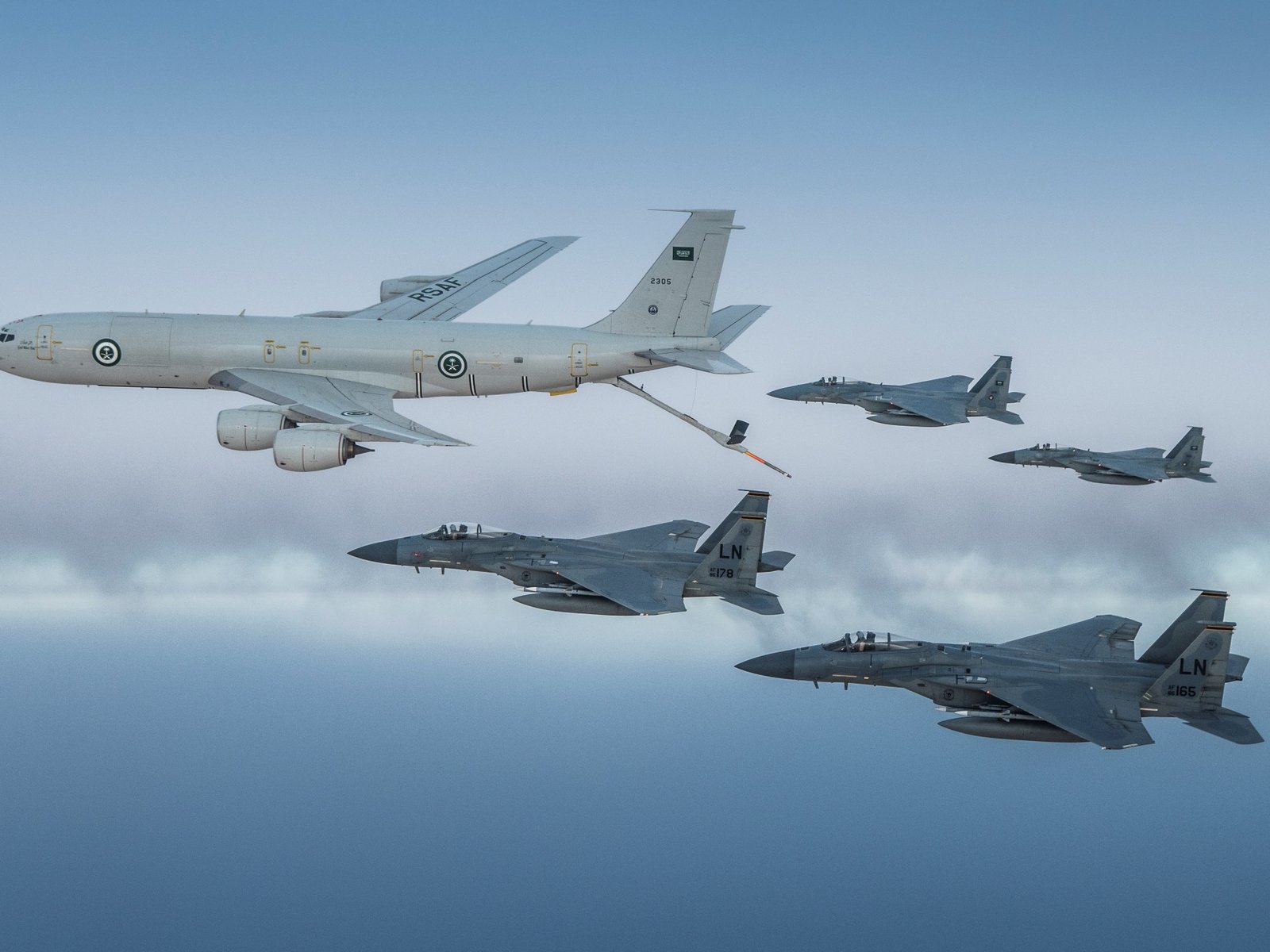
The announcement by the Houthis that they intend to block Saudi ships and vessels going to Saudi ports in the Red Sea is not another revolutionary event. It is the latest attempt by Iran to test the patience of Saudi Arabia through one of its most capable proxies. This is a risky gamble because Riyadh has spent almost a decade avoiding the kind of regional war that Tehran seems to want to start.
The Saudi ban did not show military weakness. It has been a deliberate decision aimed at preserving stability in the region and allowing the kingdom to focus on its economic reforms. Unable to compete with Saudi Arabia through conventional means, Iran has turned to military, maritime coercion, and economic intimidation.
The Houthis have been the main tool of this strategy.
By threatening shipping in the Strait of Hormuz and Bab al-Mandeb, Tehran wants to force Saudi Arabia from its eastern and western sea gates and raise the price of regional stability. The goal is not military victory but economic disruption: undermining business confidence, threatening energy exports, and highlighting the instability of the Middle East’s largest economy.
This approach has ramifications for the entire region. Saudi Arabia is still the world’s largest exporter of crude oil, the leading producer in OPEC, and the only country with sufficient energy production capacity to stabilize the global energy markets in times of crisis – as it did in the first phase of the Iran war through the 7 million barrels per day East West Pipeline. The constant disruption of Saudi exports can be caused by international shipping, insurance markets, inflation, and the global economy.
Iran tried to prepare for the same escalation by trying to restore the Tehran-Sana’a bridge. Air travel was no longer just about connecting two heads. They would have provided a direct route through which operational advisers, missile specialists, aviation experts, and intelligence officers could move into Houthi-controlled areas. Such a strategy would allow Tehran to transfer not only weapons but also operational technology and command capabilities.
This explains why the Royal Saudi Air Force (RSAF) at Sana’a International Airport was more important than refusing permission for the plane to land. The aim was to prevent Iran from establishing a permanent infrastructure that could advance a campaign against Saudi Arabia’s naval and economic interests.
It is clear that Tehran’s calculations are relying heavily on old assumptions about Saudi military power. The group led by the Saudi Joint Forces Command (JFC) bears little resemblance to the army that first invaded Yemen a decade ago. Years of hard learning from past mistakes and past experiences have evolved into an integrated alliance built around continuous intelligence, command and control, precision strike, air defense, and cyber operations.
Rather than serving as a special command of the military, these capabilities now serve as a decision-making process that can disrupt the time between intelligence gathering and action.
This shift extends beyond just the Saudi military. The Saudi-led JFC now has more than 650,000 employees from Saudi Arabia and its Yemeni, Pakistani, Sudanese, and small but symbolic GCC allies. Its main advantage is not limited to numbers but its ability to coordinate military operations in several sectors while saving operational time and average elevation.
The JFC’s growth came into question during the RSAF campaign that recaptured control of southern Yemen in less than a week in January. Built on an advanced command and control (C2) integrated infrastructure that supports continuous intelligence, electronic warfare, precision targeting, and coordination systems, it has demonstrated a level of operational consistency and command integration not seen in earlier phases of warfare.
The same sophistication of C2 was evident during Iran’s drone attacks launched from Iranian territory and its allies in Iraq, where the RSAF conducted precision strikes in multiple theaters while controlling the airspace.
The consequences were far reaching beyond the battlefield. The Saudi intervention helped create what Pakistan managed to prevent the end of the war between the Saudis and the Iranians while also promoting a new method of sanctions in which the pressure on the Iranian military was at great operational and political risk. Tehran’s subsequent warning signaled not only negotiations but a realization that the kingdom had entered a very different phase of military maturity.
None of this means that the Houthis can’t give money. Their missiles, drones, naval attacks, and tactical systems remain capable of causing disruptions disproportionate to their size. But disruption is very different from a long-term confrontation with an enemy that has vast advantages in intelligence, air power, maritime surveillance, and operational endurance.
Each escalation increases the likelihood of a Saudi response. Such a campaign would not be limited to missiles or drones. It will seek to eliminate the command and control networks, operational infrastructure, communication channels, intelligence equipment, and logistical support that support the Houthi forces.
This is why this current method is so dangerous.
Saudi Arabia has shown that it prefers stability to conflict because its priority is economic reform and long-term development of the country. But no government can tolerate forever an Iranian-backed proxy threatening its economy, infrastructure, and sea lanes.
Ultimately, the Houthis are not testing Saudi military might. Years of performance improvement have already answered this question. They are testing Saudi Arabia’s intellectual patience.
History shows that even great patience has its limits. If Tehran continues to use the Houthis as a tool to pressure the kingdom, Riyadh may decide that the cost of deterrence outweighs the cost of immediate action. When that time comes, the campaign that follows will resemble the war in Yemen ten years ago. It will reflect years of collaborative efforts through C6ISR infrastructure to be strategically prepared for such a war. Iran, and the Houthis, are likely to test the limits of Saudi Arabia’s intellectual patience.
The views expressed in this article are those of the author and do not reflect Al Jazeera’s influence.



