Physical Address
304 North Cardinal St.
Dorchester Center, MA 02124
Physical Address
304 North Cardinal St.
Dorchester Center, MA 02124
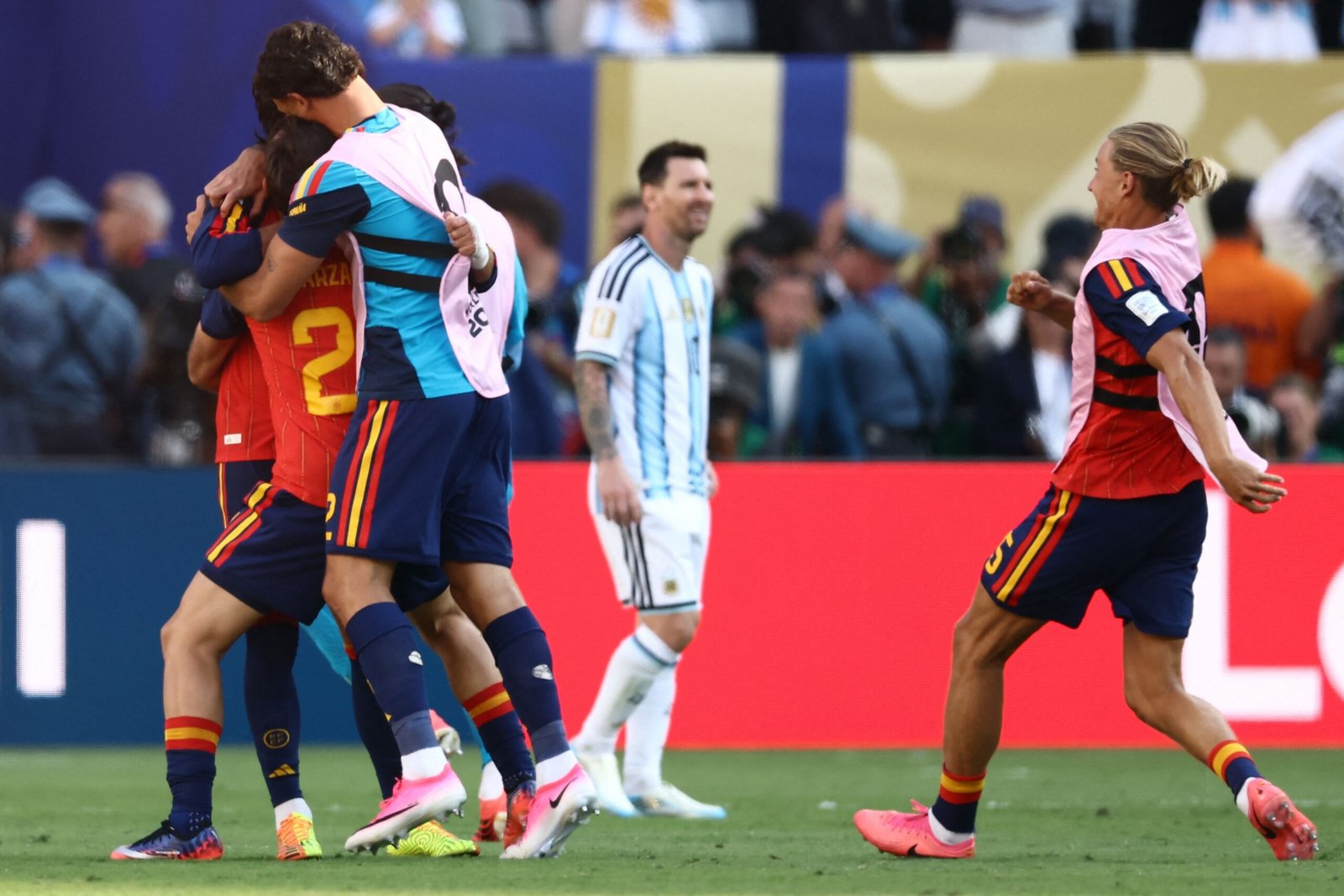
Total Spanish control… and total Argentinian incompetence
Spain deservedly ascended to the throne of world football by winning the World Cup, beating Argentina 1-0 after extra time in a game in which Luis de la Fuente’s men controlled the game for 120 minutes, confirming that they are the best and most complete team in the tournament.
Despite the Spanish’s clear dominance and constant possession, La Roja faced an exceptional goalkeeper named Emiliano Martinez, who blocked a flurry of chances. He kept Argentina in the match for long periods, delaying the title decider until extra time.
Spain continued to look for a loophole to break Argentina’s stability, continuing to press and build attacks from all sides, while the tango side were content to defend and retreat, relying on their goalkeeper’s brilliance and attempted counter-attacks that did not pose enough of a threat.
In the 106th minute, the moment the Spaniards had been waiting for arrived, after Ferran Torres turned a complete advantage into the decisive goal that gave Spain a deserved world title, at the end of a game that embodied a clear tactical and technical advantage for the new world champions.
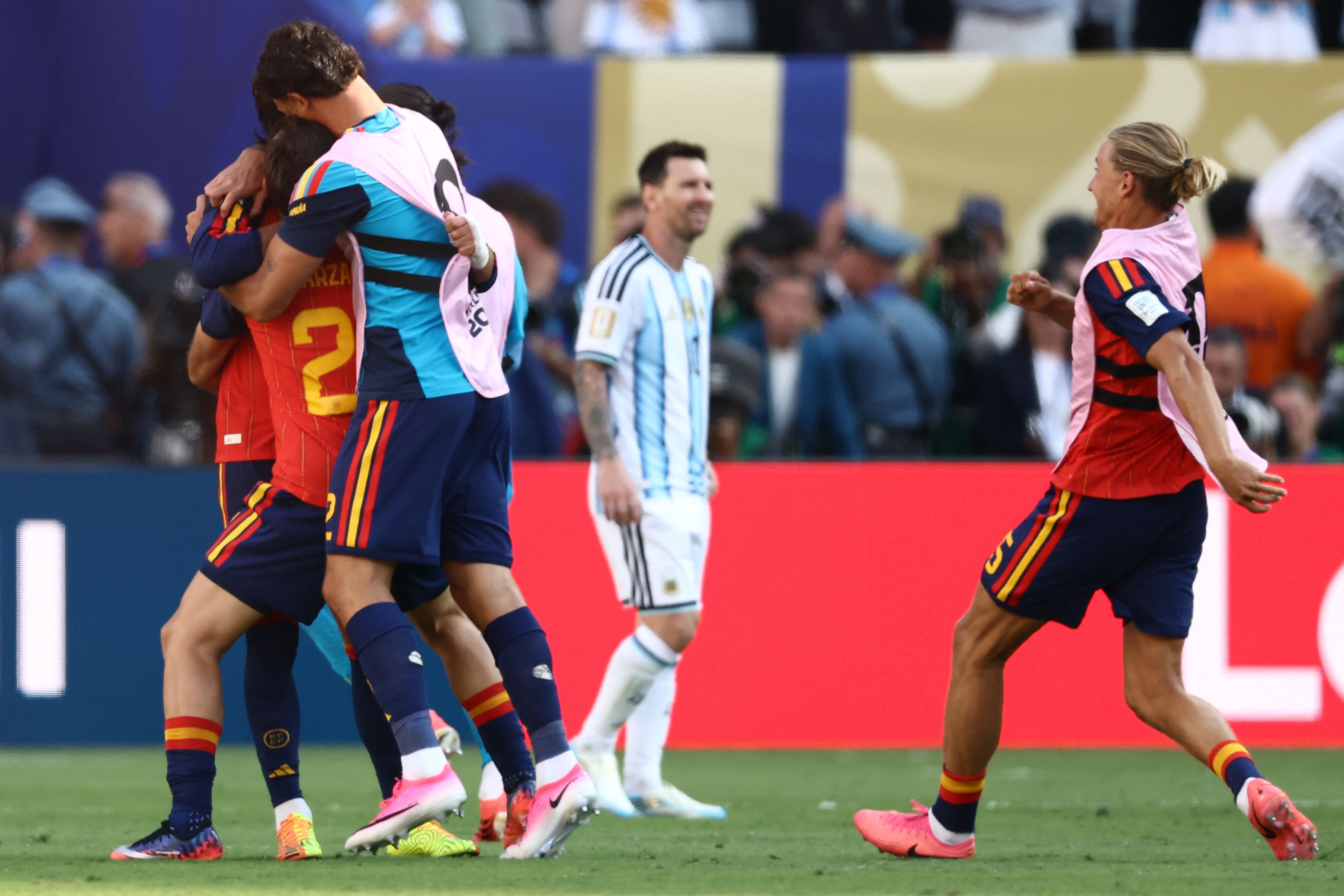
One only needs to look at the shot statistics before the end of the first extra time to understand what happened in the World Cup final, as Spain had 20 shots compared to Argentina’s zero, a rare number that reflects the huge difference between the two teams over 105 minutes.
The Spaniard’s advantage was not just passive possession or passing, but real control, which translated into constant pressure and repeated attempts on goal with Emiliano Martínez, who played the biggest role in delaying the game’s decision, when he blocked several chances that were enough to end the match in normal time.
Argentina, on the other hand, were completely unable to deal with Spain’s system and were content to retreat into their defensive areas without even being able to counter-attack, leaving Lionel Messi and his team-mates to attack in unusual fashion after the Spanish pressure managed to isolate them and deprive them of any organized attack.
Argentina didn’t make an attacking move until the second extra-half after conceding a Ferran Torres goal, but they settled for just two shots wide of Unai Simeone’s goal in numbers and a performance that confirmed Spain were the dominant side and most deserving of the crown to limit their style throughout the game. teammates.
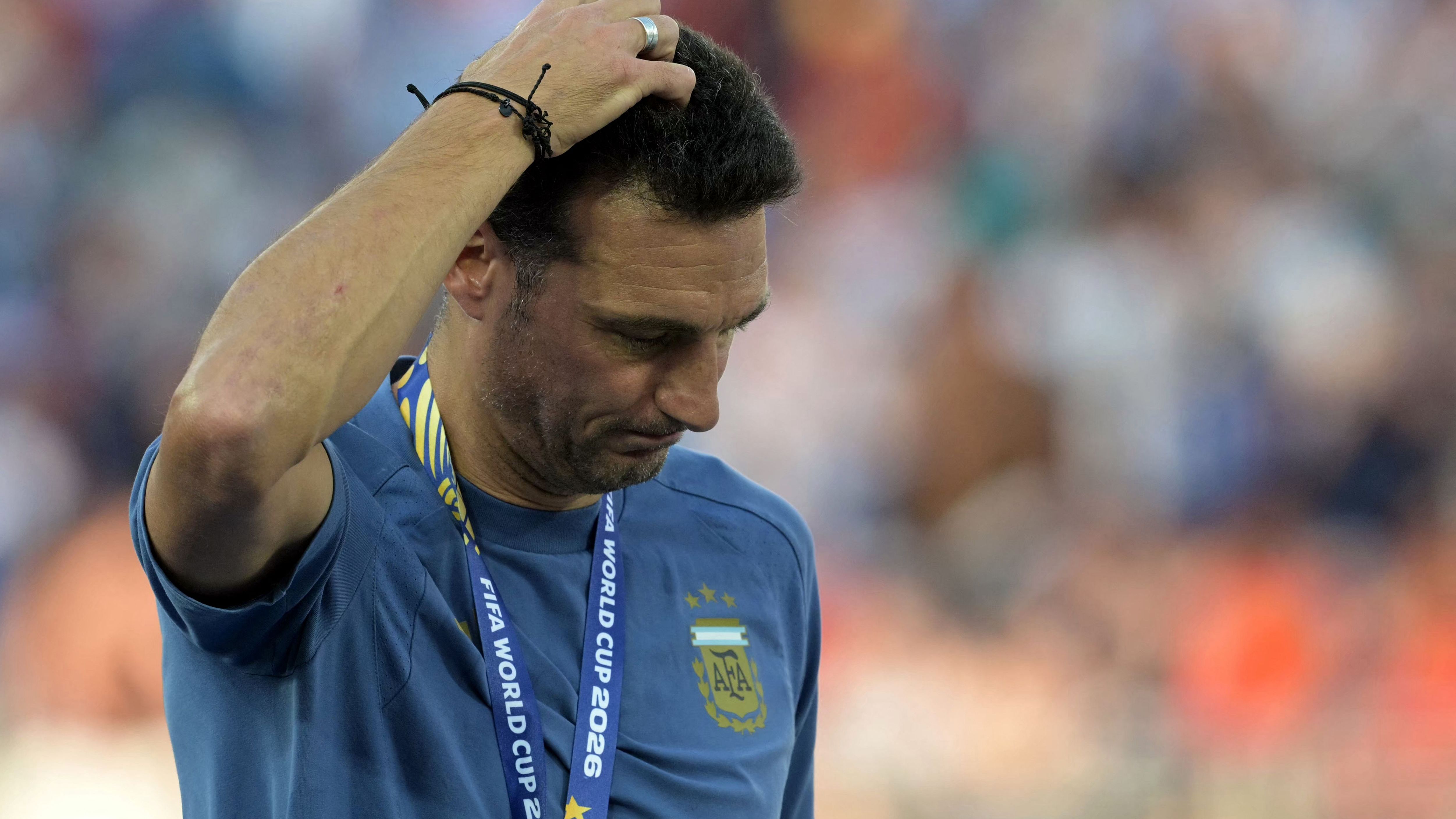
From the first minute, it seemed clear that Lionel Scaloni, the coach of the Argentinian national team, entered the game with the mindset of keeping the score negative rather than trying to win. Argentina were largely positioned in their own half and almost gave up any attempt to exchange attacks with Spain, while relying entirely on the solidity of the back line and the brilliance of Emiliano Martinez to hope to hold out until the penalty shootout.
Scaloni’s substitutions confirmed this philosophy as injuries to Cristian Romero and Lessandro Martinez forced two changes. Then the Argentinian coach continued to strengthen the defensive side, bringing Molina, Medina, Paredes and Sensi to the field in extra time.
Giuliano Simeone was the only substitute with a relatively attacking bent, but he didn’t get enough support or balls to allow him to make the difference, while Lautaro Martinez was restricted to the bench throughout the match, in a clear message that the priority is defense and not attacking the Spanish goal.
On the other hand, Spanish coach Luis de la Fuente managed the match with a completely different mentality. He wasn’t content with the control imposed by his key players, but rather kept it to the substitute bench that made the difference. Each substitution brought new energy to the team without slowing down or reducing the pressure on the opposition, so Spain remained the dominant side until the final moments.
It was no coincidence that the goal came from the substitutes, with Neco Williams scoring the decisive goal that Ferran Torres converted in the 106th minute, while Pedri, Mikel Merino and Martin Zobimendi were influential in keeping the ball going and wearing down Argentina’s defence.
Between a coach who bet on penalties and another who kept looking for the winning goal until he found it, it was only natural that the trophy would smile on Spain.
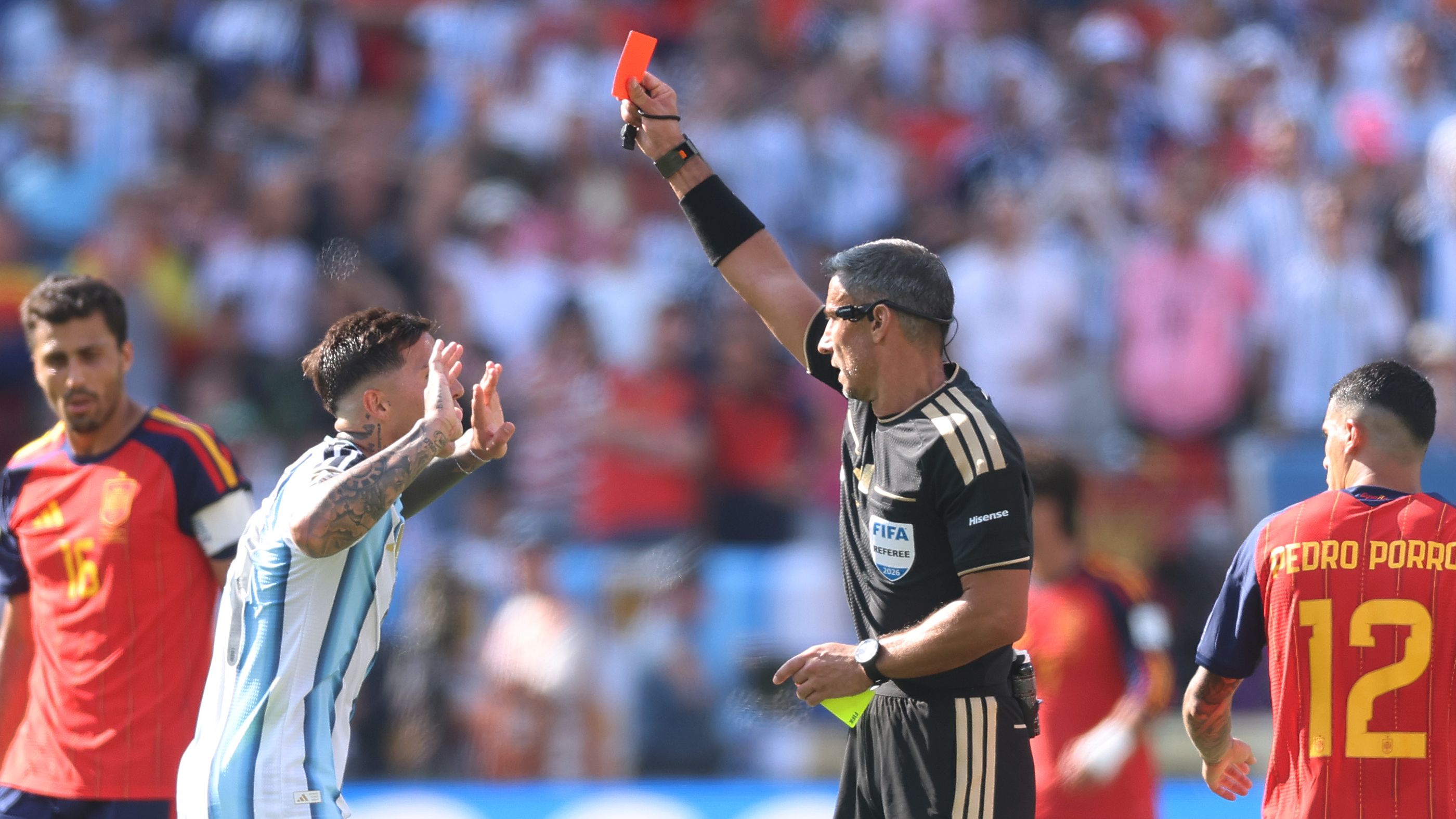
Although Argentina did not show much attacking presence in regulation time, the end of the second half saw a moment that complicated their task after Enzo Fernandez was sent off in the third minute of stoppage time following a second caution, forcing the Tango side into extra time with ten men against a team that was already in control.
It’s true that Enzo’s presence on the pitch didn’t change the attacking image of Argentina during the ninety minutes, who failed to create a real chance or even put a single shot on Unai Simon’s goal, but the difference between playing with 11 men and playing with ten men remains very large, especially as the game reaches extra time and fatigue begins to show.
Spain made the most of this numerical disadvantage by increasing the turnover rate and widening the spaces between the lines for Argentina, who were now required to redouble their efforts to compensate for the missing player, resulting in further retreat inside the penalty area and losing the ability to get the ball out or relieve pressure.
As time ticked on, the Spanish goal seemed more a matter of time than a surprise as Argentina could no longer withstand the sustained pressure until Ferran Torres converted Spain’s dominance into the title-winning goal, so Enzo’s red card became one of the most famous turning points that paved the way for Spain to win the World Cup.

Lionel Messi waited until the second period of extra time to make a difference, after he began to move between the lines and ask for the ball in the spaces he had missed during the match, trying to create any chance that would bring Argentina back into the match.
On the other hand, Spain did not make the mistake that many teams made against Argentina during the qualifiers. It did not back down to defend its advantage and did not completely give the ball to the opponent. Rather, it continued to impose its character through possession and successive short passes, forcing Argentina to run after the ball instead of building attacks.
Luis de la Fuente’s side also took advantage of the wide spaces created by his late push in Argentina’s defense and continued to threaten Emiliano Martinez’s goal until the final minutes and scored another goal through Torres, but it was disallowed for offside, proving that the best way to protect a lead was not with a defensive formation, but with a team-mate and save from Messi. a scenario that repeated itself more than once on their journey to the finals.



