Physical Address
304 North Cardinal St.
Dorchester Center, MA 02124
Physical Address
304 North Cardinal St.
Dorchester Center, MA 02124
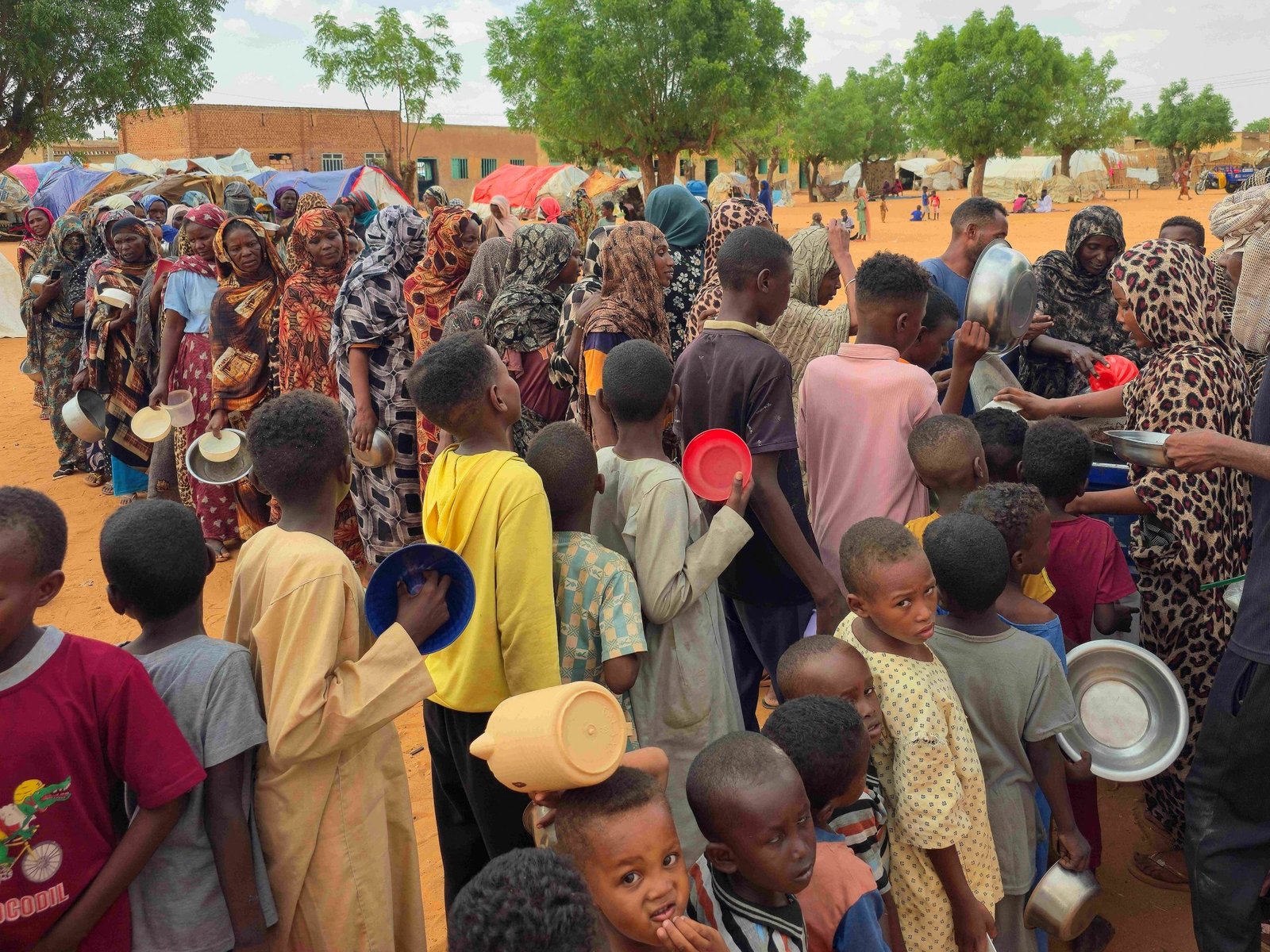
More than 11,000 people, including more than 5,500 children, have fled the escalating fighting in the Sudanese city of El-Obeid in the past two weeks, according to Save the Children, with the United Nations warning that 500,000 civilians could be at risk if the violence escalates. The city has become the latest flash point in a war that has already created the world’s worst refugee crisis.
For three years of the civil war in Sudan between the Sudanese Armed Forces (SAF) and the paramilitary Rapid Support Forces (RSF), international attention has been focused on Khartoum and the Darfur region. However, in recent weeks, attention has grown on El-Obeid as fighting has escalated in Kordofan, prompting UN officials and aid agencies to warn of another humanitarian crisis.
Francesco Lanino, the deputy director of Save the Children in Sudan, said that the consequences of displacement are only compounded by the loss of housing.
He said: “For children, displacement is more than the loss of a home. “It often means losing access to school, health care, clean water and the support networks that keep them safe and secure.” Many have already been displaced multiple times, and without immediate action to protect civilians, ensure humanitarian aid reaches those in need and prevent further violence, thousands of children may be forced to flee as they face threats to their safety, health and well-being.
El-Obeid, the capital of North Kordofan, is located 360km (224 miles) southwest of Khartoum on the road connecting Sudan with Darfur and the southern countries of the country.
This location has made it one of Sudan’s most important commercial hubs as well as an important military and humanitarian base.
The city is still under the control of the SAF, making it one of the most important areas in western Sudan. Military analysts say that El-Obeid’s control helps to improve the administration.
The battle of El-Obeid marks a turning point in the Sudanese war.
After the SAF regained ground in Khartoum earlier this year, fighting intensified in western Sudan, particularly in the Kordofan region and Darfur.
The RSF has increased military pressure around El-Obeid as the military strengthens its position inside the city. United Nations officials have warned that the troop build-up increases the risk of a larger attack, although neither side has announced plans for a major attack.
The debate has changed again. Drone warfare has become a prominent part of this conflict, targeting both military and civilian infrastructure, including oil reserves, power grids and water resources.
The civilians in El-Obeid are facing increasing hardships as the fighting escalates and the humanitarian crisis continues.
Aid agencies and the United Nations say the repeated attacks have disrupted electricity and water supplies, contributed to fuel shortages and driven up prices of food and other essentials. Deterioration of water infrastructure, combined with limited humanitarian aid, has increased concerns about water-borne diseases, including cholera.
Many of those now fleeing El-Obeid had already been displaced by the war in Sudan, meaning they are being displaced for the second or third time. Save the Children said that more than half of the people who have fled their homes are children, which shows that the conflict is affecting young people and their families.
The same concern extends to the fighting itself to the extent that El-Obeid could be the next city to experience protracted urban warfare, with civilians trapped between armed forces.
According to the United Nations, 500,000 civilians in and around El-Obeid could be at risk if violence escalates. This number includes long-term residents and people who have already fled the city after fleeing other fighting in Sudan.

Aid agencies warn that continued fighting could hamper the delivery of aid to North Kordofan at a time when many areas are already facing shortages of food, medicine, fuel and clean water.
The UN has also raised concerns over the rise in drone strikes, warning that repeated attacks on civilian infrastructure are exacerbating poverty and making it harder for people to access essential aid.
Officials fear El-Obeid could follow suit in El-Fasher, the capital of North Darfur, where months of fighting have left civilians trapped, aid severely restricted and essential services disrupted.
The comparison does not mean that el-Obeid has reached the same level. In fact, United Nations officials say it presents a risk that the city could follow a similar path if the fighting escalates and civilians are unable to leave or receive aid.
El-Fasher has been one of the best examples of the human cost of the Sudanese war. Since the fighting began in 2024, repeated clashes, shelling and attacks on refugee camps have forced thousands of people to flee, while hospitals, markets and other civilian facilities have been damaged or destroyed. Aid agencies have repeatedly warned that restrictions on human rights have exacerbated hunger and disease, leaving many without food, clean water or medical care.
UN officials fear that the same could happen to El-Obeid if military forces continue. The city has become a haven for refugees from other parts of Sudan, meaning a major attack could catch many civilians while disrupting aid operations in Kordofan. They said that to avoid another urban war that lasts for a long time, it is very important to avoid a major humanitarian problem.
The next phase of the conflict will depend on whether El-Obeid’s military pressure will be disappointing or whether diplomatic efforts will help reduce hostility and improve humanitarian opportunities.
For the Sudanese Army, capturing el-Obeid is essential to maintain its position in North Kordofan and maintain access to western Sudan. For the Rapid Support Forces, the city’s increased power can strengthen its military base in the region, although the outcome of any attack is uncertain.
As the fighting escalates, aid agencies warn that more families could flee as shortages of food, clean water, fuel and medicine worsen. An extended war could also hamper humanitarian efforts in Kordofan, an area that serves as an important channel for aid to those affected by the conflict.
In general, the El-Obeid war marks a turning point in the Sudanese war. As the front lines move away from Khartoum, Kordofan is seen as one of the theaters of conflict, which has huge implications not only for the military but also for the thousands of people caught up in the conflict.
As the recent wave of migration shows, the effects of humanitarian aid are already being seen. Whether el-Obeid becomes another battleground that has been growing in urban areas, or whether international efforts prevent a major offensive, could determine the next phase of Sudan’s war and the fate of the thousands of people trapped along the way.
“El-Obeid’s signs are clear and unmistakable: another human rights tragedy is unfolding in Sudan,” UN High Commissioner for Human Rights Volker Turk warned late last week. “This is not a drill. It is a red alert that should land on the desks of world leaders and governments around the world.”



