Physical Address
304 North Cardinal St.
Dorchester Center, MA 02124
Physical Address
304 North Cardinal St.
Dorchester Center, MA 02124
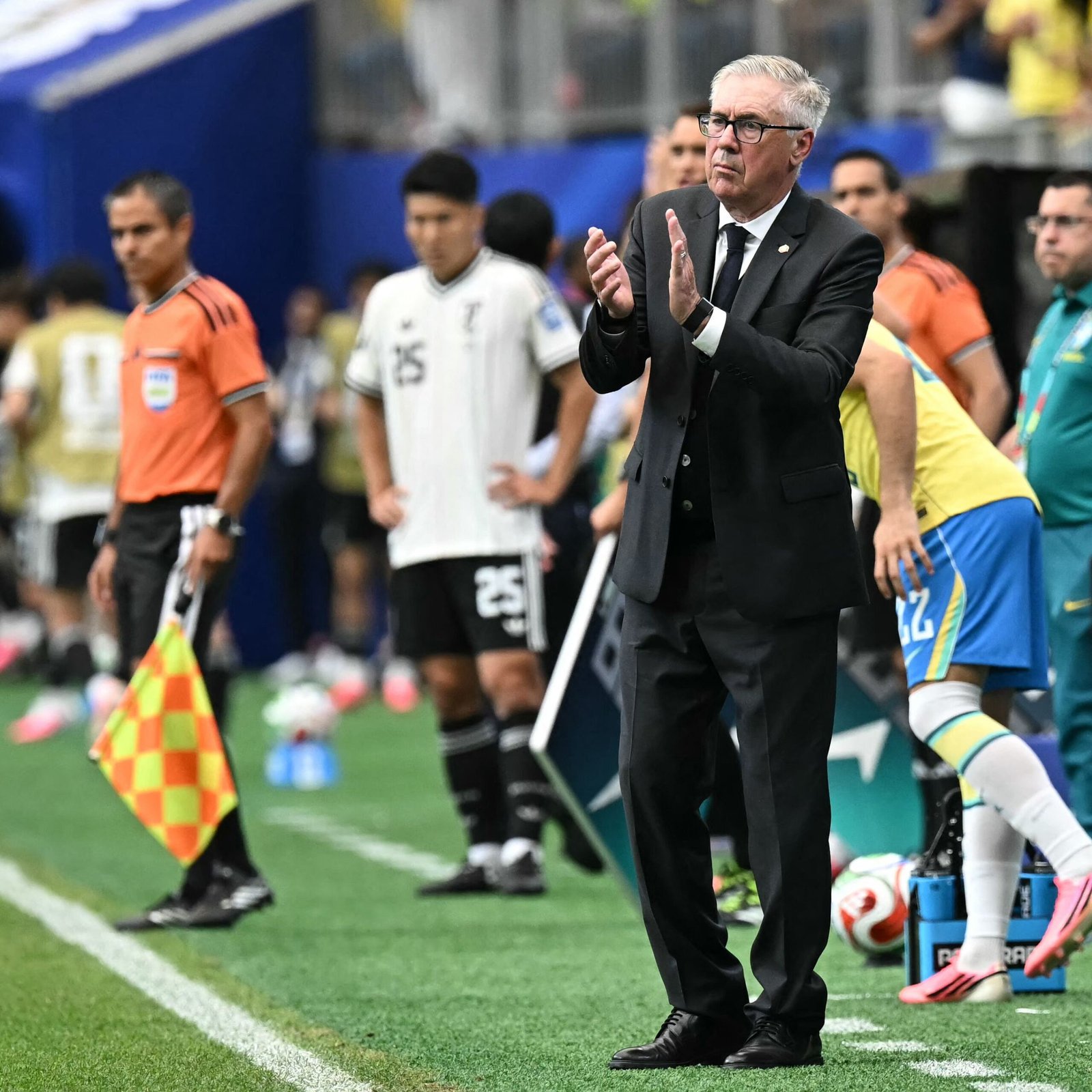
Japan crumbled and Brazil smiled
On a night that will be etched in the memory of football fans, Brazil turned a goal deficit against Japan into a dramatic victory, scoring the winner in the sixth minute of stoppage time to book their place in the round of 16 of the 2026 World Cup in one of the most exciting games to date.
Although the victory was collected, the balance of the match gradually tilted towards one star, Vinicius Junior, who played the role of the real balance in the Brazilian system, with his constant movement, a constant threat to the Japanese defense and a presence of mind that gave his country a clear advantage in the most difficult periods of the game.
After a perfect first half, the Japanese team’s ability to press high with the same efficiency waned, and as time went on the physical differences began to become apparent.
The Japanese team became more fragile, and its players could not hold the ball for a long time. They also lost most of the fights, which allowed Brazil to take complete control of the match.
Samba’s players made the most of this slump, stepping up their attacks with winging and passing, and Bruno Guimaraes was able to break through the Japanese defensive block with a clear, determined pass, paving the way for Gabriel Martinelli to score the winning goal.
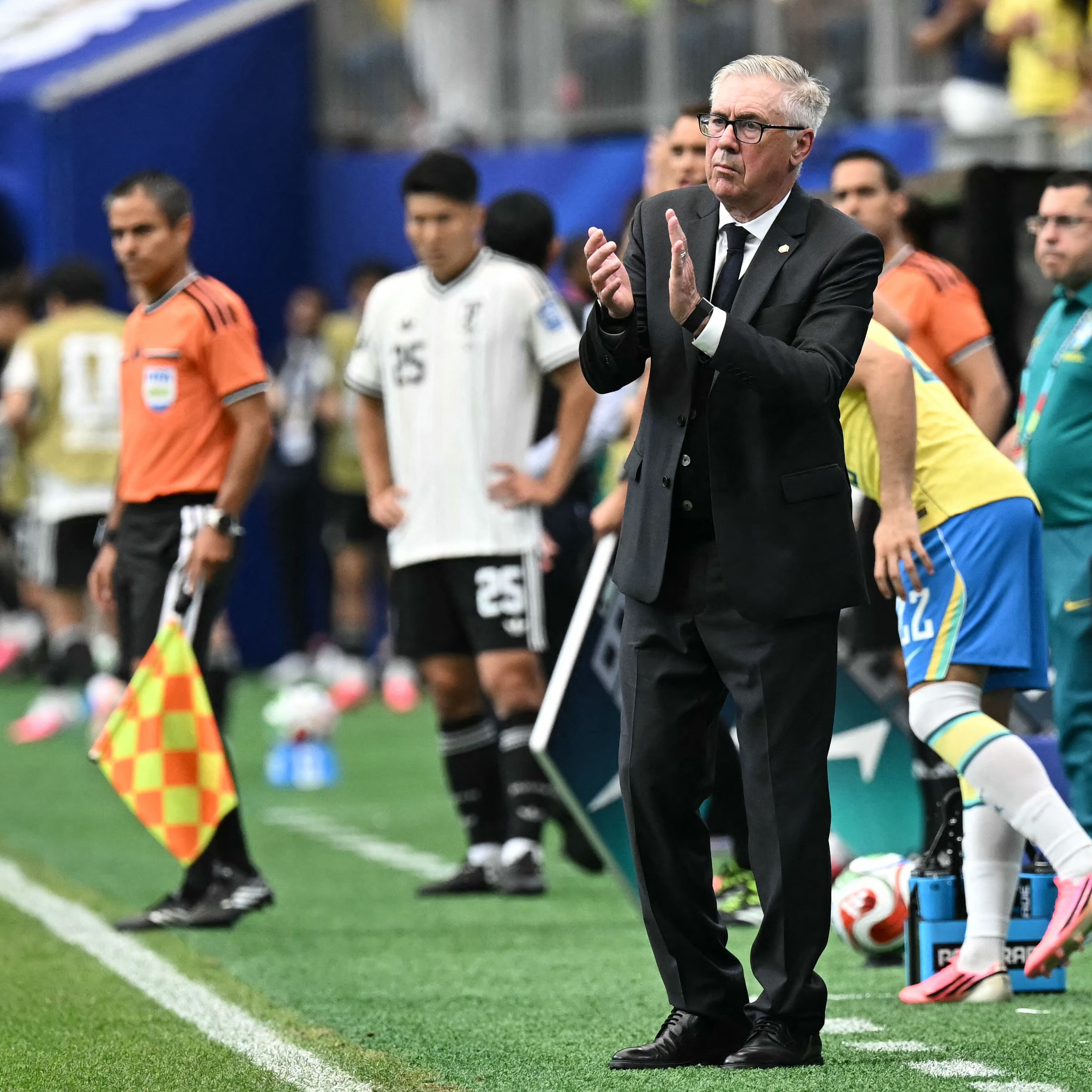
The language of numbers reflected the wide gap between the two teams throughout the match. Brazil had 69% of the ball to Japan’s 31% and the Expected Goals Value (xG) was 1.72 compared to Japan’s just 0.23, a difference that shows the extent of the attacking dominance imposed by Carlo Ancelotti’s men.
The Brazilian team created four scoring chances, while the Japanese national team could not create any dangerous moments throughout the match.
Brazil’s players also had 19 shots, compared to Japan’s 5, and the Japanese goalkeeper had to make four dangerous attempts, while the Brazilian goalkeeper intervened only once.
At the bases, the Brazilian national team took six corner kicks, compared to just two shots by the opponent.
Brazil’s dominance wasn’t limited to attacking, but extended to completely controlling the tone of the match.
The Samba players made 682 passes compared to just 315 for Japan, reflecting the huge difference in possession and build-up.
Brazil also recorded 12 defensive tackles to Japan’s ten, while committing just four fouls to Japan’s 13 fouls.
As for discipline, Brazil’s players received two yellow cards compared to Japan’s three.
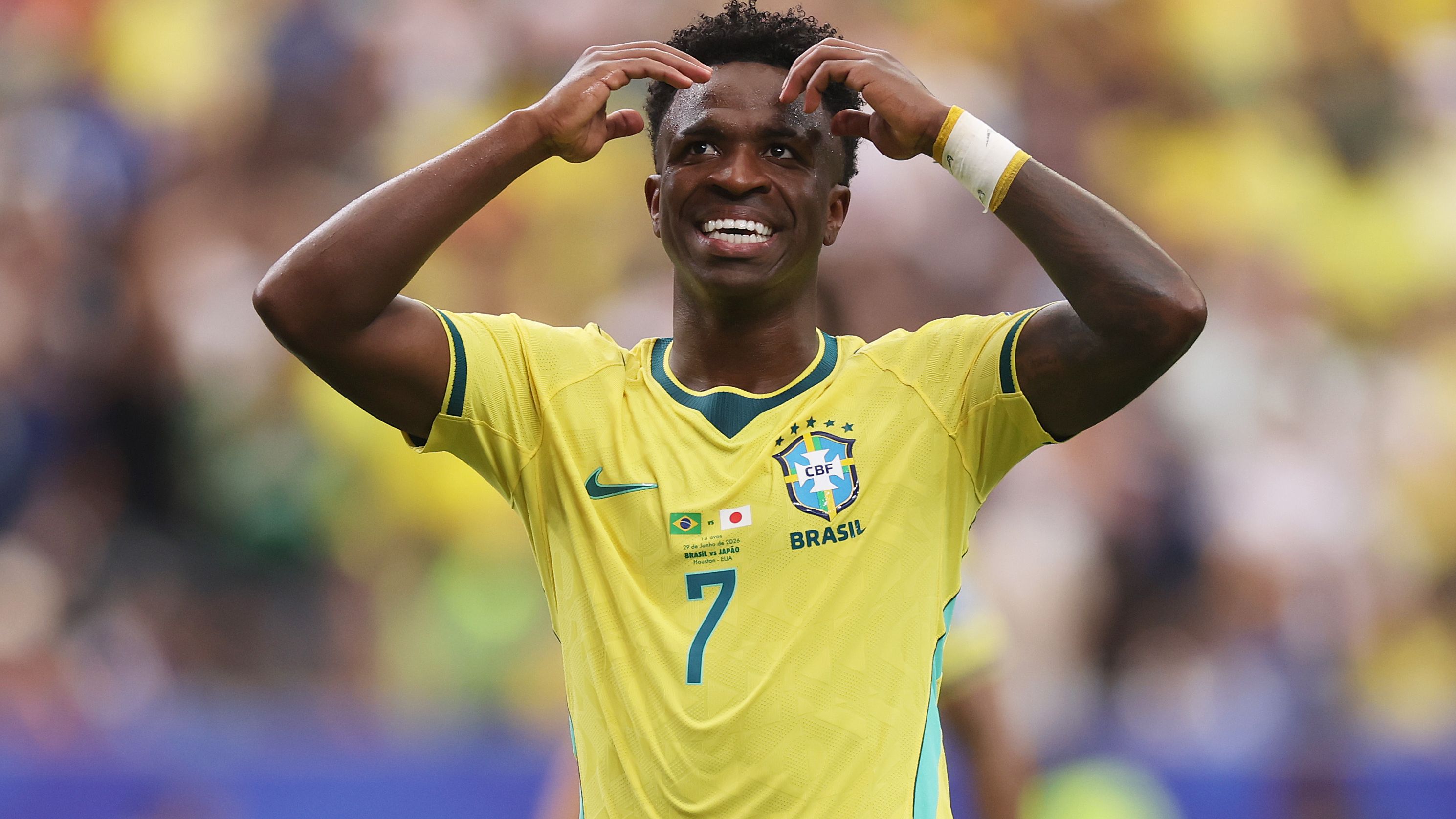
Vinicius Junior proved once again that he is a player who can change the face of a match, even when his name is not on the register.
The “Real Madrid” winger received a rating of 7.6Sofascore:“After he played the whole match and put in a performance that reflects his real impact in the Brazilian system.
Although he didn’t score any goals, his expected goals (xG) rate was 0.22, while his expected goals on target (xGOT) was 0.65.
He scored three goals, two of which ended up between the posts and the crossbar, and one of his attempts hit the post and the Japanese keeper stopped another attempt and he missed a clear chance to score.
Vinicius was the main source of anger for the Japanese defense. He touched the ball 62 times, failing only one touch. He also attempted to dribble six times, succeeding in three of them. He was fouled three times despite losing the ball 15 times as a result of continuous attempts to penetrate the defense.
Suzuki and the goal post prevent Vinicius from scoring Brazil’s second goal #WorldCup2026 |: #WorldCup2026 |: #World Cup#FIFAWorldCup2026 |: #fifaworldcup |: #beINWC26 pic.twitter.com/van4JxmPLL
— beIN SPORTS (@beINSPORTS) June 29, 2026
He carried the ball 25 times, covering a total distance of 204.7 metres, of which 123.6 meters were carried forward, while his actual progress was 57.9 meters and his longest run was 16.3 metres.
Vinicius’ influence was not only offensive, but he played an important role in creating opportunities. He made two key passes and sent seven crosses, one of which perfectly reached his teammate.
He also completed 35 of 39 correct passes for a 90% success rate, most of which came in the Japanese team’s half of the pitch, in addition to completing two long balls with complete accuracy.
Despite his attacking nature, Vinicius did not miss his defensive duties. He recorded a successful interception, one possession and had 11 ground battles, winning six of them, while he dribbled only once in the entire match.
Before the start of the World Cup, Vinicius made a statement that caused a lot of controversy when he claimed that if he scored four or five goals and led Brazil to the World Cup title, everyone would change their view of the international career and consider the above just a prelude to the real explosive moment.
Today, this promise seems to be gradually becoming a reality. He scored 4 goals in the first 4 games and became the most influential player in Brazil’s front line and made a decisive impact in the team’s most difficult moments.
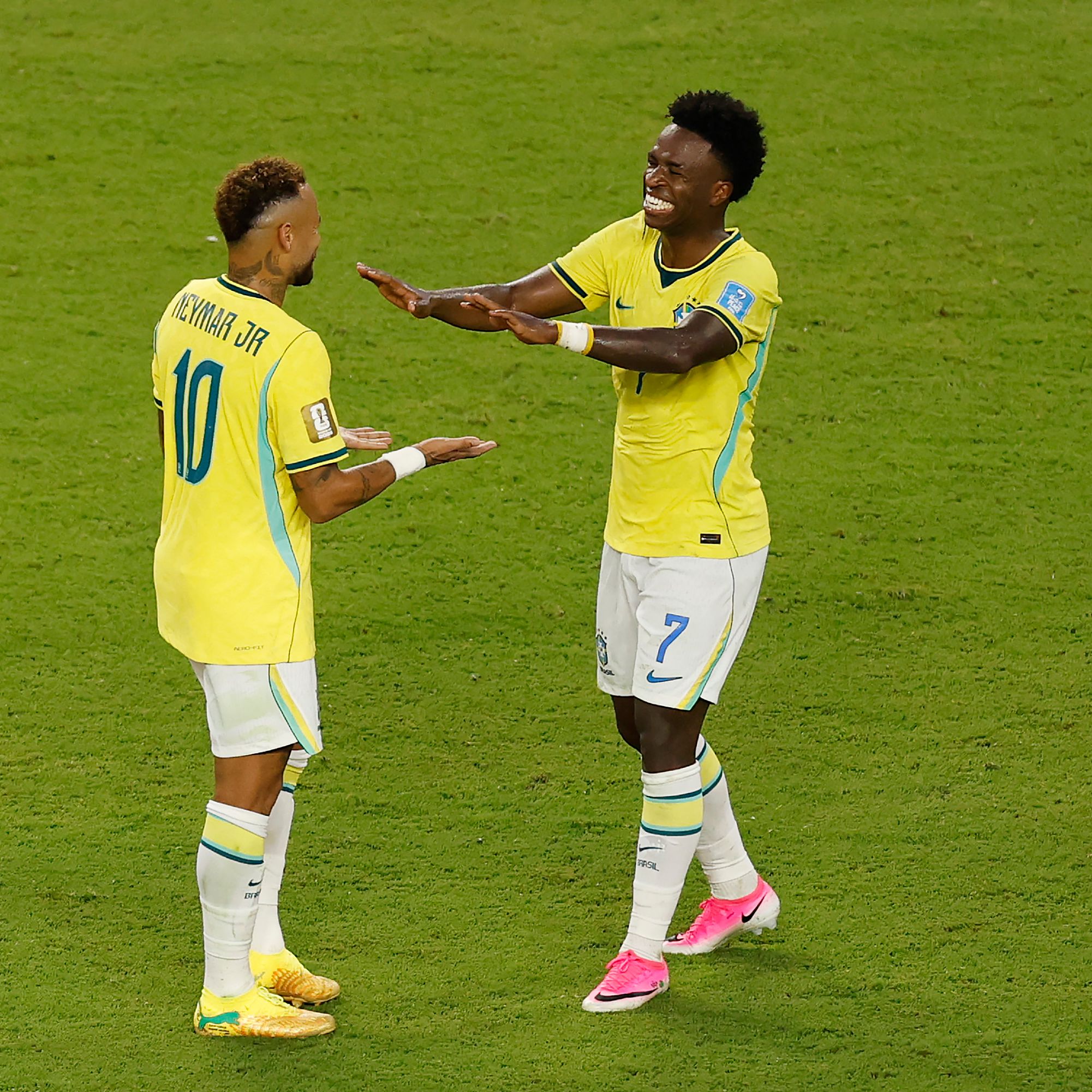
Vinicius also became the first Brazilian player to score four goals in one World Cup game since Neymar in 2014, clearly signaling the passing of the flag of offensive leadership to the national Samba team.
Neymar himself even admitted this after the victory over Scotland in the group stage, emphasizing that Vinicius has become the first star of the team and the player who gives Brazil solutions when the matches are difficult.
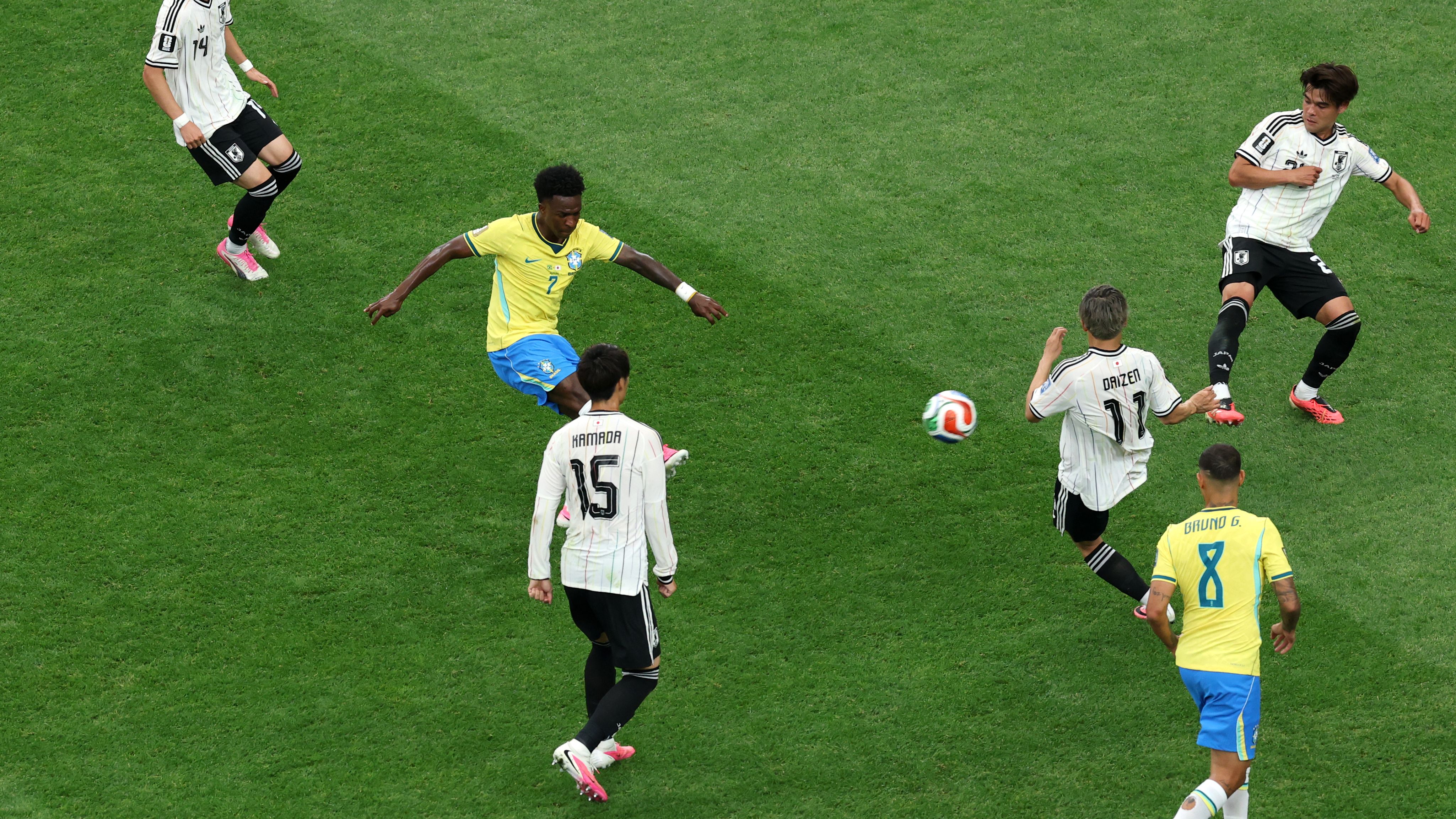
Vinicius has often been criticized for his performance with the national team compared to what he offers with Real Madrid. But this World Cup looks to be the breakthrough moment he has been waiting for.
The player has confirmed more than once that he has gone through periods where he has not been able to show his true potential in a Brazilian shirt, but he is confident that the right moment will come and what he learned at Real Madrid will eventually be reflected at international level. It seems that that moment has already arrived.
Vinicius’ value is not just in his goals, but in his overall impact on the way the game is played. It forces opponents to commit more than one player to control him, creates spaces for his teammates, and also transmits his confidence to the rest of the team, giving Brazil a psychological and technical advantage at the same time.
Therefore, Vinicius is no longer just a speedy winger or goalscorer, but has become the star that Brazil leans towards when the matches get intense.



