Physical Address
304 North Cardinal St.
Dorchester Center, MA 02124
Physical Address
304 North Cardinal St.
Dorchester Center, MA 02124
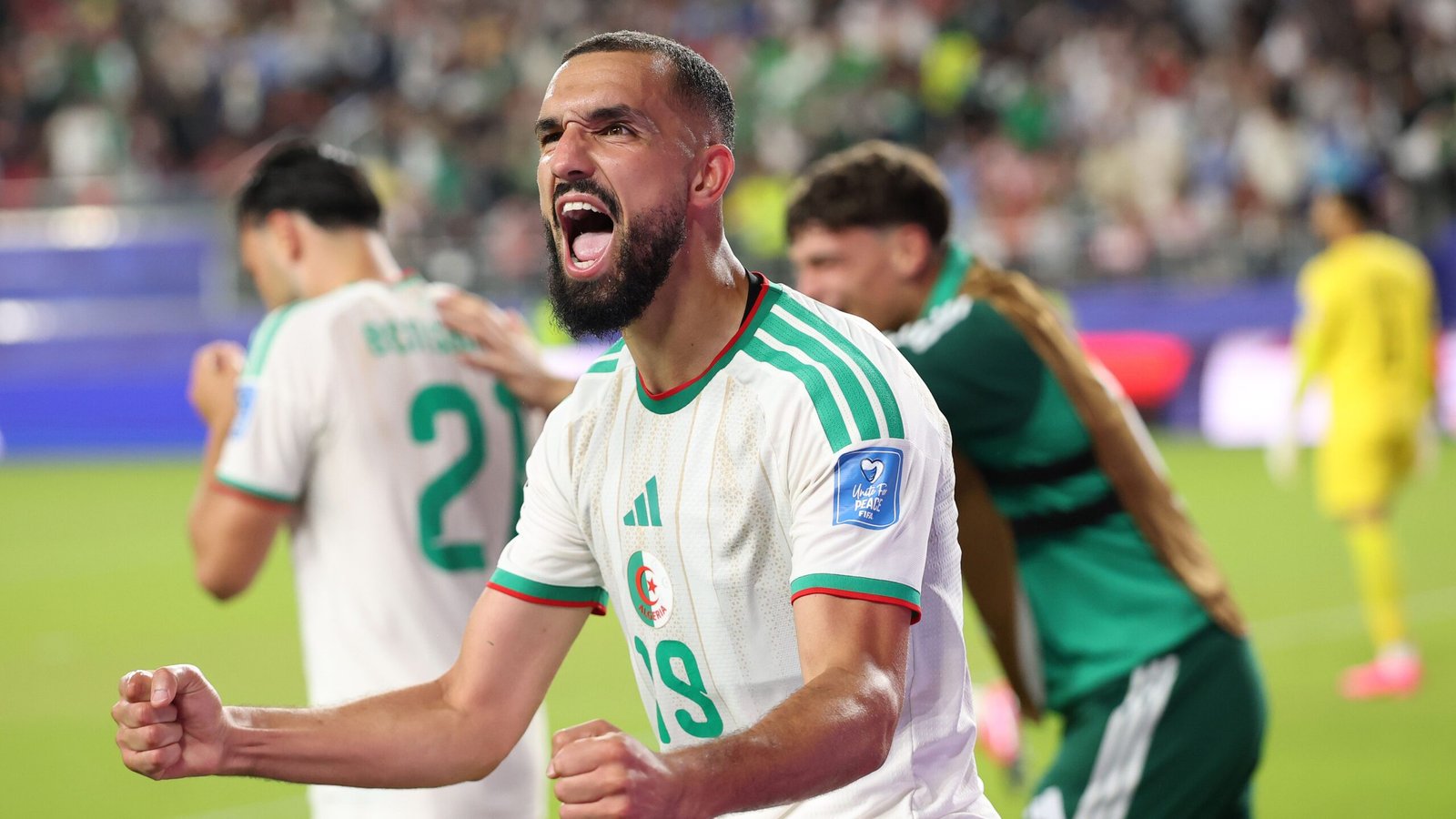
The Desert Warriors still remember the conspiracy that changed the rules of the World Cup
Attention is drawn to the upcoming clash between Algeria and Austria tomorrow, Sunday morning, in the final round of the 2026 FIFA World Cup group stage, due to its importance in the qualification race for both sides, as well as the fact that it recalls one of the most controversial incidents in the tournament’s history, known as “the saddest chapter in the history of Gijon”. Algerian football.
According to the message published by the network.Africa Photo:The story goes back to the 1982 World Cup finals in Spain, when West Germany entered the tournament as one of the most popular contenders for the crown thanks to a group of stars led by Karl-Heinz Rummenigge, Paul Breitner and Lothar Matthaus.
Ahead of facing Algeria at the start of the group stage, the German camp was overconfident and it went as far as making sarcastic statements belittling the status of the Greens.
One of the players said at the time that the seventh goal would be dedicated to their wives and the eighth to the dogs, while coach Jupp Derval confirmed that he would return to Munich if Algeria lost.
This confidence was based on the fact that no African team had ever made it past the first round of the World Cup, in addition to Algeria’s reliance on a large number of local players due to laws that prevent players from playing professionally outside the country until they are 28 years old.
But the Algerian team was enjoying its best period after recording strong results before the World Cup.
On June 16, 1982, the Desert Warriors suffered one of the biggest setbacks of the World Cup.
Rabah Majer opened the scoring before Rummenigge equalized before Lakhdar Belloumi gave Algeria a historic 2-1 victory to become the first African nation to beat a European team in the World Cup finals.
That historic victory gave Algeria a special place in world football history, but it was not enough to guarantee qualification.
After the historic victory, the Algerian team lost 2 unanswered goals in their second match against Austria, before regaining the balance by beating Chile 3-2 in the last round.
The “Greens” increased their score to 4 points with the two-point system at that time, so they were waiting for the result of the last match between West Germany and Austria.
The calculations were simple. If Germany wins by just one or two goals, both teams will qualify, leaving Algeria out.
On June 25, 1982, at Gijon Stadium, Horst Hrubesch scored Germany’s only goal in the tenth minute. From that moment the meeting practically stopped.
With the result in favor of both teams, the players were content to exchange passes for more than 80 minutes without any real desire to attack or score, to the displeasure of the stadium’s fans, who started chanting for both teams to leave.
Even the TV commentators expressed their displeasure with the scene, many described it as having nothing to do with football, and some remained silent in protest until the end of the match.
The match ended with Germany winning 1–0, qualifying both teams together, while Algeria exited the tournament despite two historic victories.
From then on, the match was known as “Aar Gijón” or “The Match of Shame” and became one of the most controversial matches in World Cup history.
Algeria filed an official complaint and demanded a replay of the match, but FIFA rejected the request.
Despite this, FIFA implicitly acknowledged the seriousness of the situation and made a historic change to the tournament system, as from the 1986 World Cup onwards, it decided to hold all finals matches in each group at the same time, so that no team could know what result was needed before their match.
This system is still used today in world championships and major international tournaments.
After 44 years, the two teams meet again in the World Cup, but the scene is completely different.
The Algeria-Austria match of the 2026 World Cup will be held at the same time as the other group match, which makes a repeat of the 1982 scenario practically impossible.
Algeria go into the game needing a win to secure a place in the second round from the runners-up spot, while a draw could be enough to qualify via one of the top eight teams in third place. As for the defeat, the African team will enter into difficult calculations with the third place of the remaining groups.
Algeria sit third in Group 10 with 3 points, behind leaders Argentina (6 points) and second-placed Austria (3 points) on goal difference, while the Greens are ahead of fellow Arabians Jordan, who have no chance of qualifying (0 points).



