Physical Address
304 North Cardinal St.
Dorchester Center, MA 02124
Physical Address
304 North Cardinal St.
Dorchester Center, MA 02124
Royal can’t hold off Barcelona on La Liga crowning night
Barcelona did not need to be at their best to win El Clasico against Real Madrid at Camp Nou after quickly taking control and scoring two early strikes to decide the match (2-0).
Barcelona came into the match strongly, scoring twice before the first twenty minutes had passed, taking advantage of the apparent disarray in Real Madrid’s ranks, who seemed unable to get their act together at the start of the match.
Real Madrid looked defeated for most of the gameWith a lack of organization and cohesion between his lines, while his attacking attempts were timid and without any real threat to Barcelona’s superiority.
On the other hand, “Barcelona” played clearly confident and calm and controlled the course of the match with minimal effort, taking advantage of the opponent’s mistakes and asserting their complete superiority in one of the most important matches of the season.
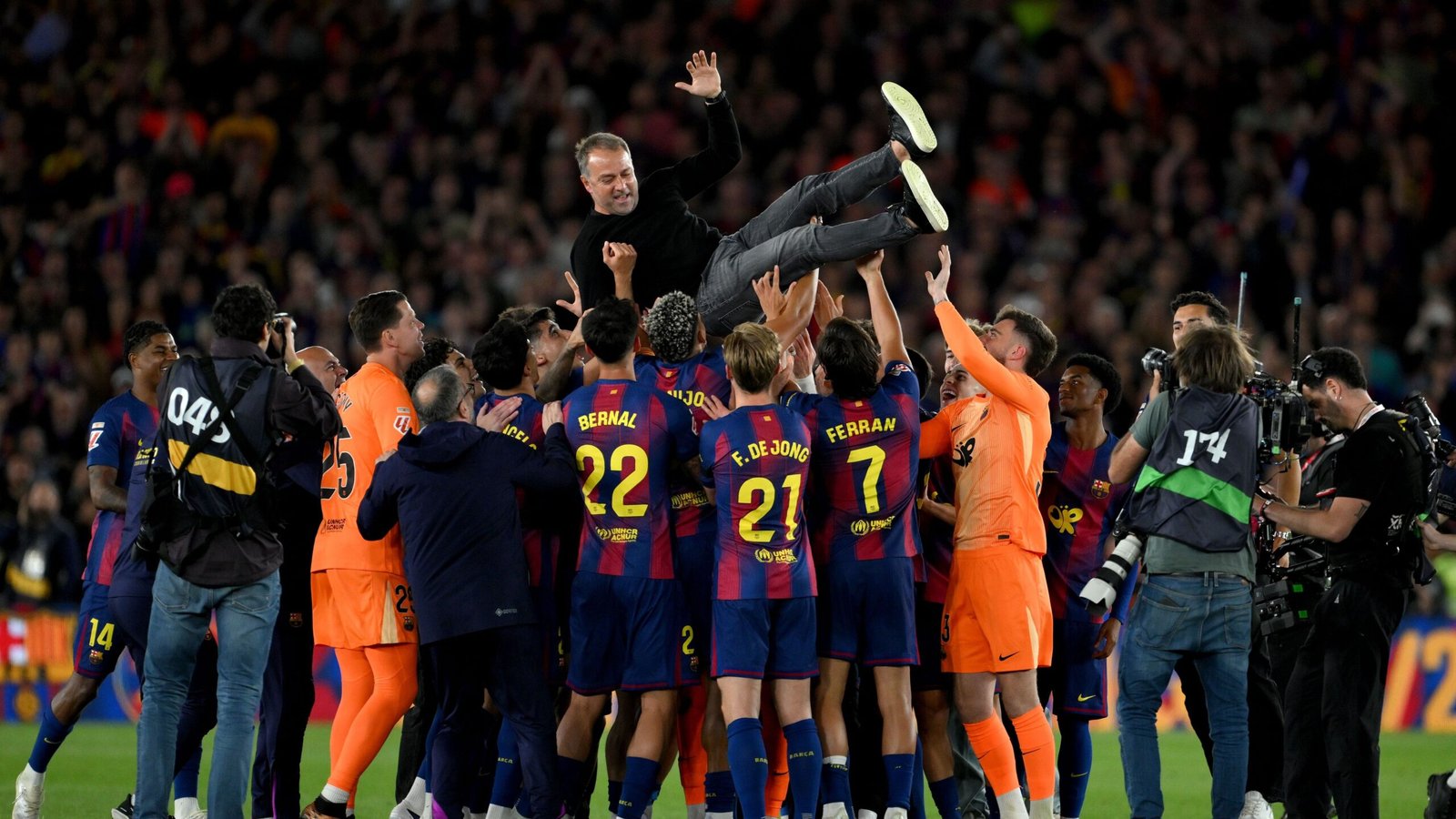
The victory was not only a victory at the summit, but carried with it the joy of winning the Spanish league title for the second time in a row and the 29th in Barcelona’s history.
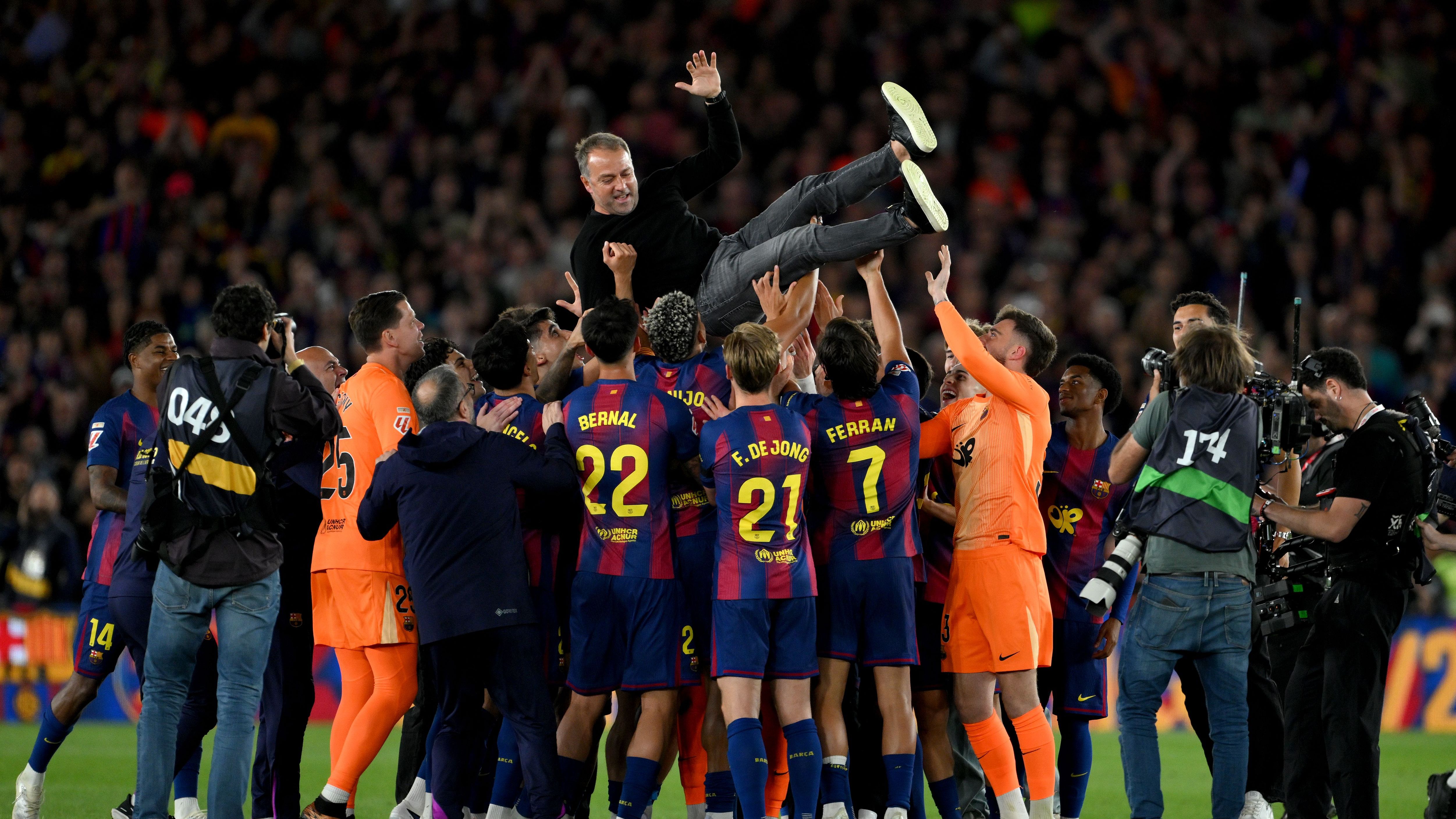
Despite the great sadness he experienced today after his father’s death, Hansi Flick wanted to attend the El Clasico matchFrom the bench, he was completely focused during the whole event of the match.
Flick managed the match with great composure, whether in his starting line-up or through the changes he made during the game, to help settle the confrontation early and lead his side to a valuable win that saw them clinch the La Liga title.
The German coach relied on his usual formation (4-3-3) with three in midfield and three in attack, but the most notable change was the inclusion of Marcus Rashford on the right wing.
In the first half, Rashford was a constant worry for the Real Madrid defense after he used spaces well, but he often missed the final touch and also missed a successful spot-kick that could have doubled the lead early on.
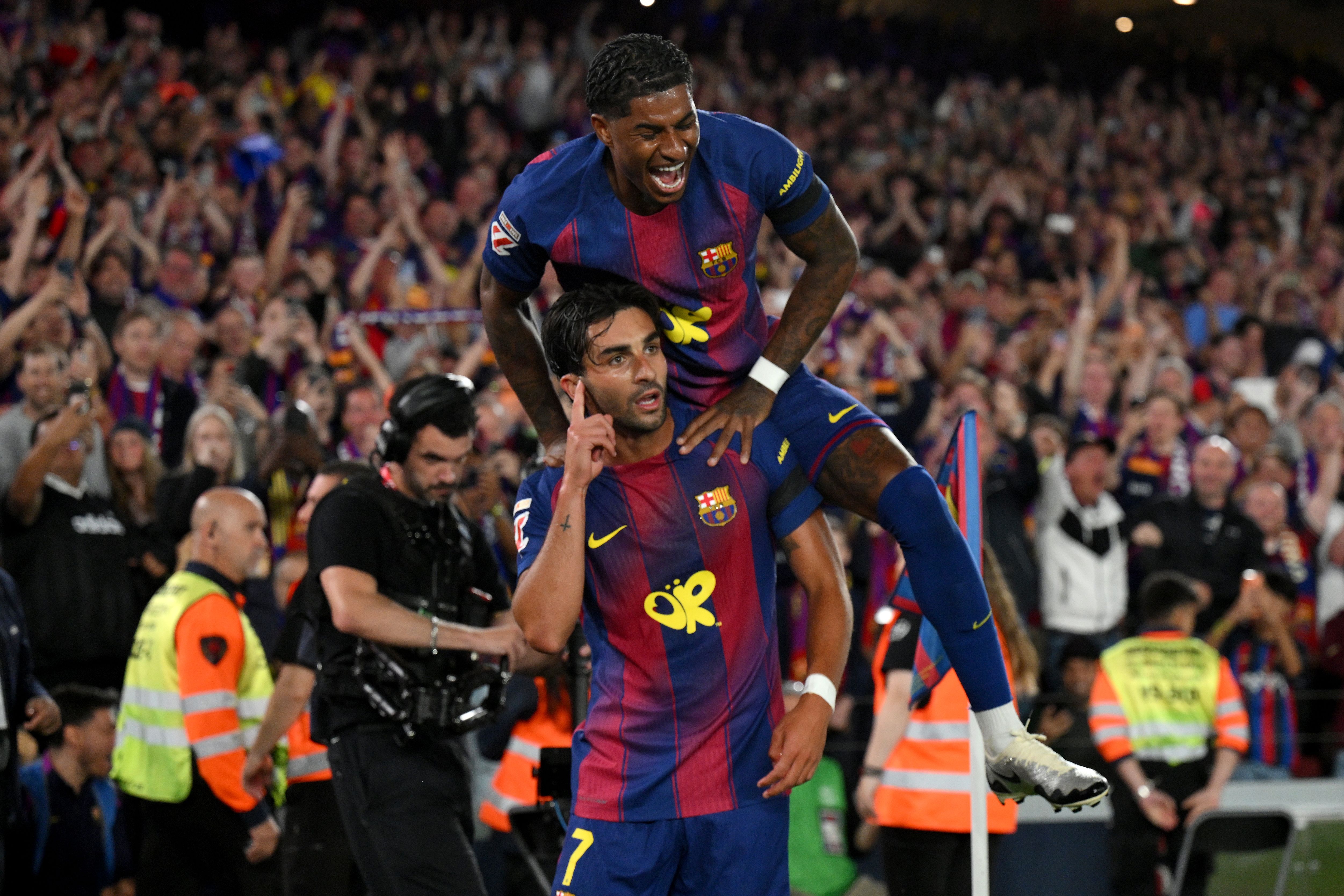
Despite the missed opportunity, the Englishman managed to score the first goal after taking a perfect free-kick to open the scoring to give his side an early lead that eased the task of controlling the match.
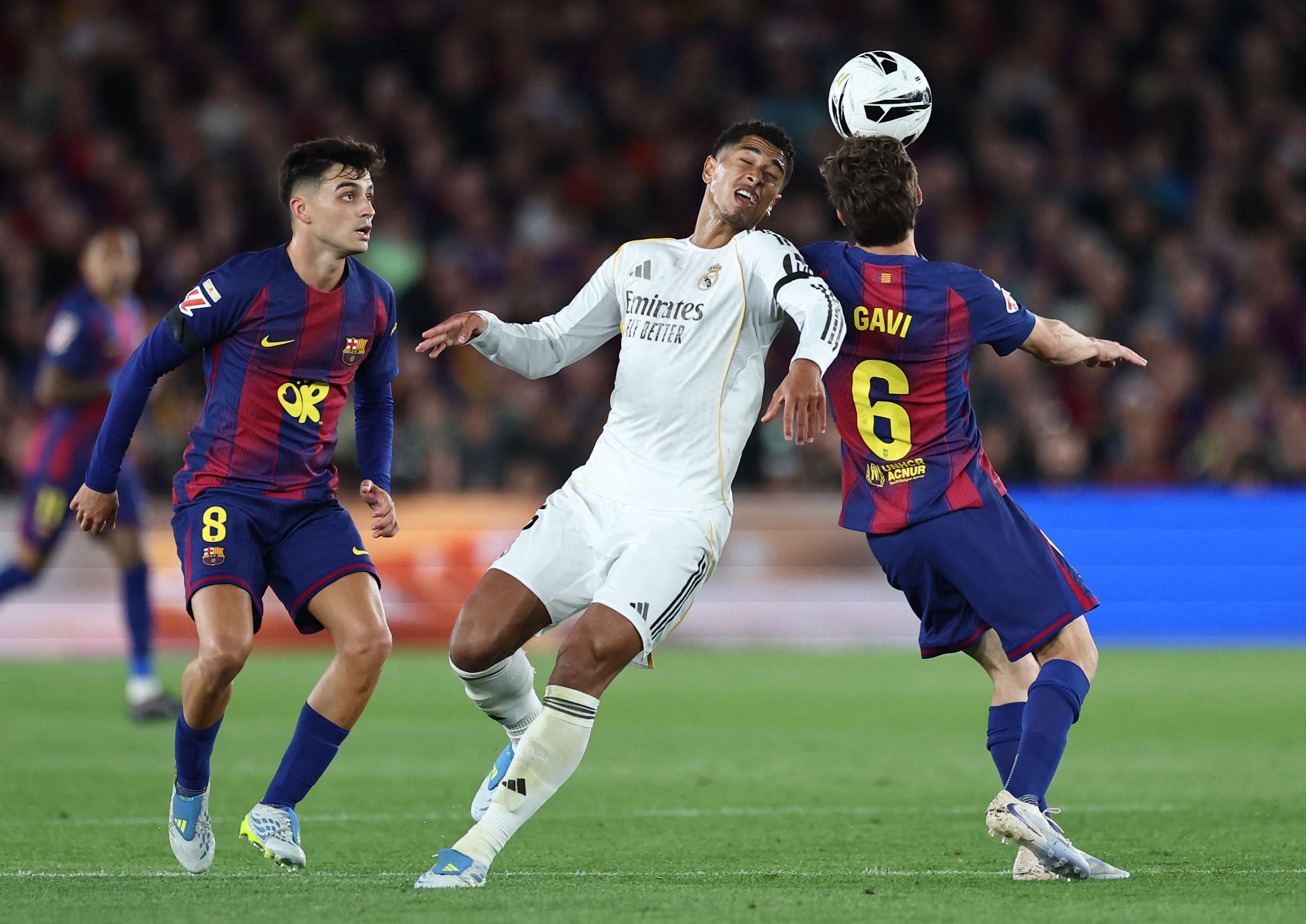
Barcelona’s midfield trio of Pedri, Gavi and Dani Olmo were in complete control of the first half after the players managed to control the tempo of the game with short passing and smooth movement all over the pitch.
Barcelona relied on moving the ball wide in the middle of the pitch while making unexpected passes in behind the Real Madrid defence, which was evident in Ferran Torres’ second goal after an organized and quick attack that confused the opposition defence.
Barcelona also continued their usual method of progressive pressure on Real’s players, taking advantage of the team’s apparent struggle to clear the ball out of the backline under pressure.
This pressure forced Real to rely on long balls many times to avoid Barcelona’s pressure, but they often looked easy on the Catalan side’s defense, who handled them with great consistency.
Real Madrid failed to threaten the Barcelona goal with these balls, except for two occasions in the first half, so Barcelona continued to dominate and were able to stifle the opposition in the first 45 minutes.
In the last quarter of an hour of the first half, and then during the second half, Real Madrid tried to push forward more in search of a comeback, relatively abandoning their defensive caution.
Real Madrid’s attacking rush led to clear spaces in the back lines, which Barcelona exploited well thanks to the speed of their forwards.
The accurate and quick passing of Barcelona’s midfielders also helped more than once to attack Real’s defense, turning the Catalan team’s attacks into a constant source of danger every time they moved forward.
During the second half, “Barcelona” reached the goal of “Real” several times, taking advantage of the large distances left by the opponent, especially in quick offensive transitions.
Despite the many chances presented to Barcelona, their players could not increase their goal output after missing more than one chance that would have been enough to give the Catalan side a bigger victory.
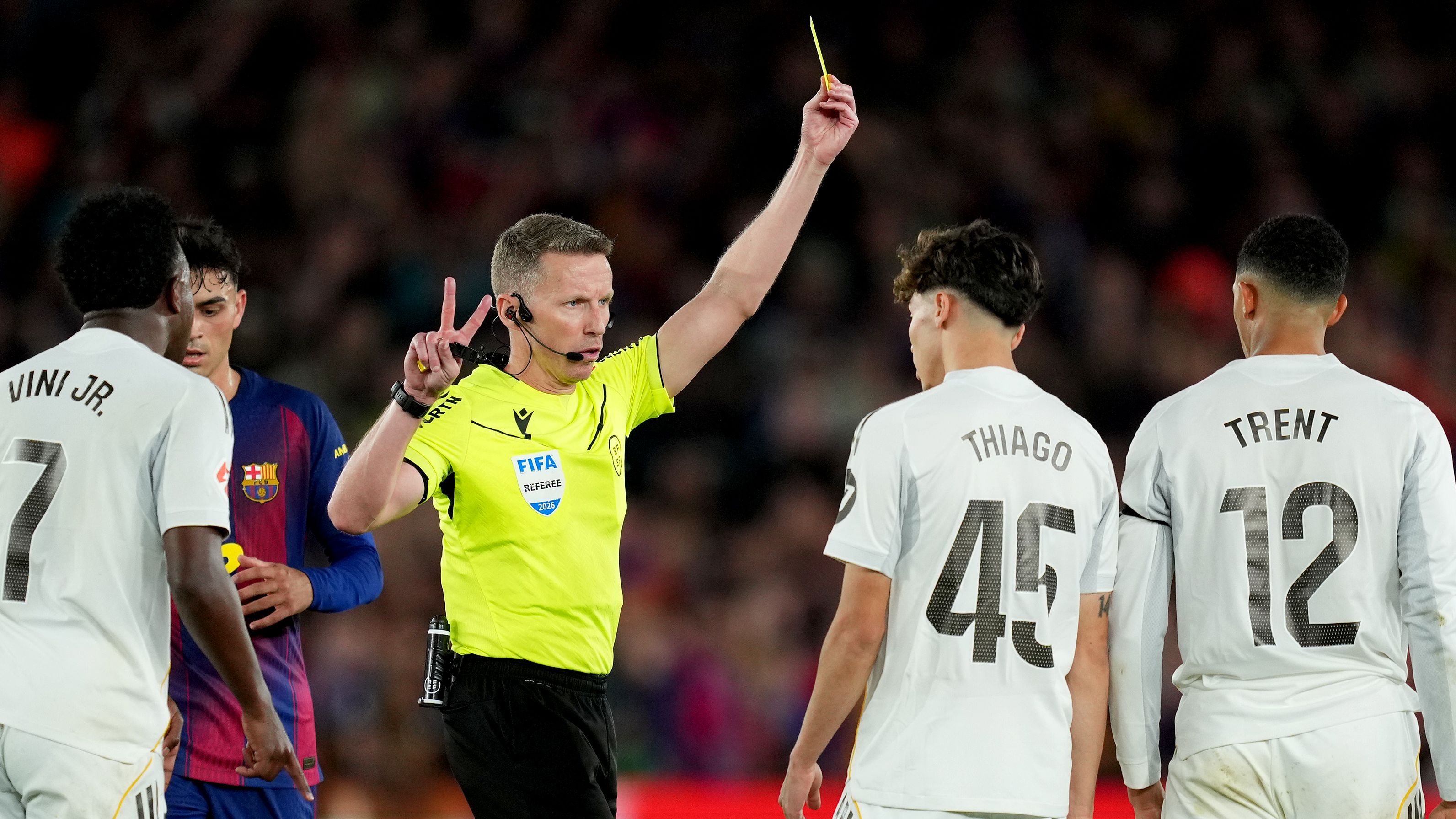
Real Madrid coach Alvaro Arbeloa has relied on the 4-4-2 formation he often uses, with Vinicius Junior and Gonzalo Garcia in the front line.
This method came in a defensive situation with the aim of narrowing the spaces in front of Barcelona’s midfield and trying to reduce the danger of quick passes and continuous movements of the Catalan team’s players.
With possession of the ball, Ibrahim Diaz moved to the right wing, so the game changed to three players in midfield and an attacking three, trying to give the team more attacking solutions.
Ibrahim Diaz was active in the first minutes and tried to move between the lines and create some spaces, but his attempts did not find enough support from the rest of the Real Madrid players.
All of these ideas failed given Barcelona’s clear control of the game, given the disorientation that dominated Real’s players in the absence of any organized attack or real threat throughout the match.
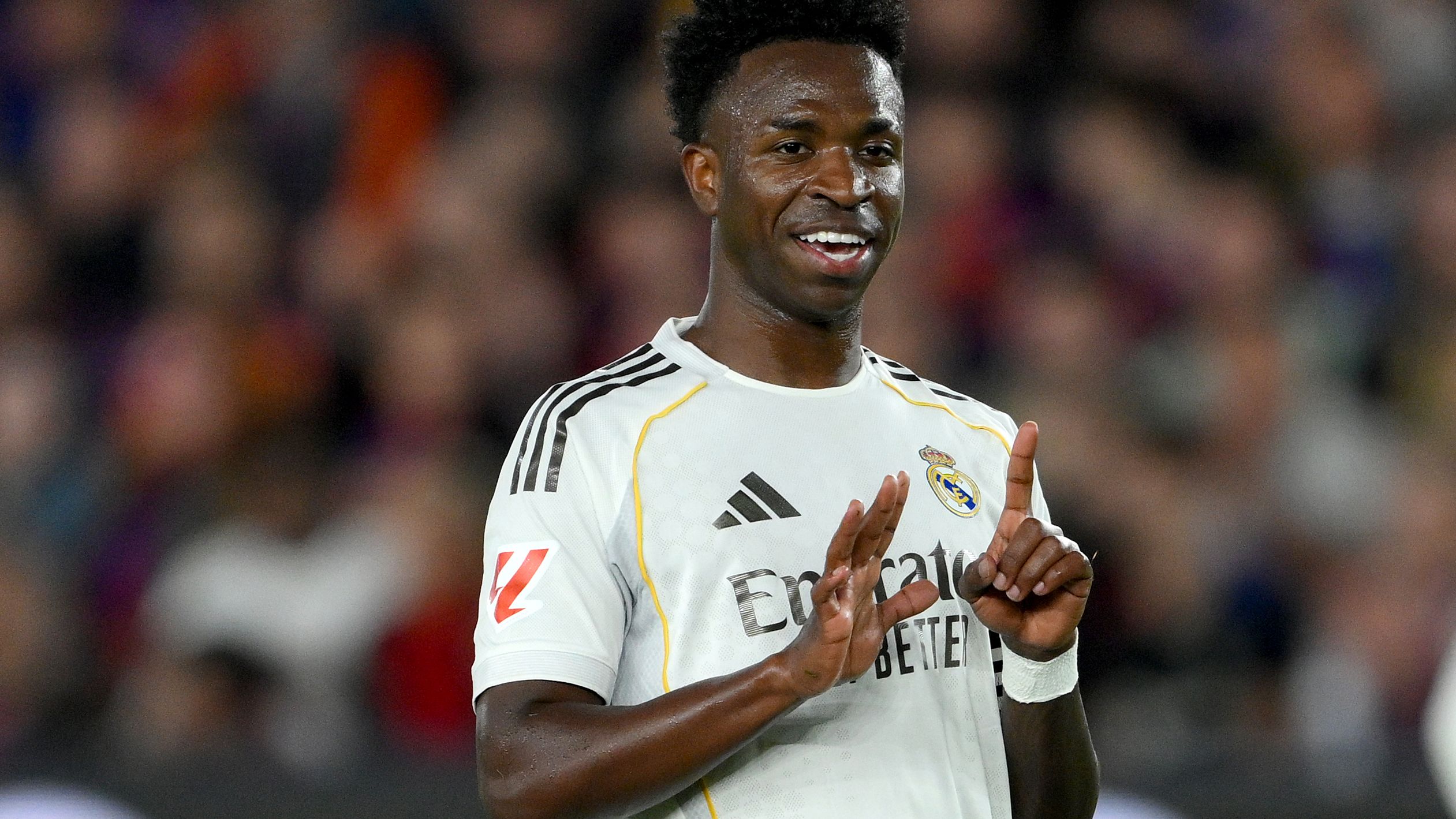
Vinicius Junior, who captained Real Madrid, did not make any significant technical additions during the match after appearing to be far from his usual self and unable to pose any real threat to Barcelona’s defence.
and:The Brazilian player has been busy responding to Barcelona fans more than once On the pitch, he also gave a thumbs up, showing the number 15 in reference to Real Madrid’s number of Champions League titles, instead of focusing on the progress of the match.
Real Madrid fans had high hopes for Vinicius to lead the team offensively in the absence of Kylian Mbappe, but the player disappointed the team’s fans after he completely disappeared in one-on-one confrontations and failed to make a difference.
Things were no better for Jude Bellingham, who suffered heavily throughout the match under heavy pressure and clear control from Barcelona’s midfield.
Bellingham lost his usual attacking influence and failed to find spaces or provide the solutions Real Madrid fans were hoping for, so the pair looked lackluster in one of the most important matches of the season.
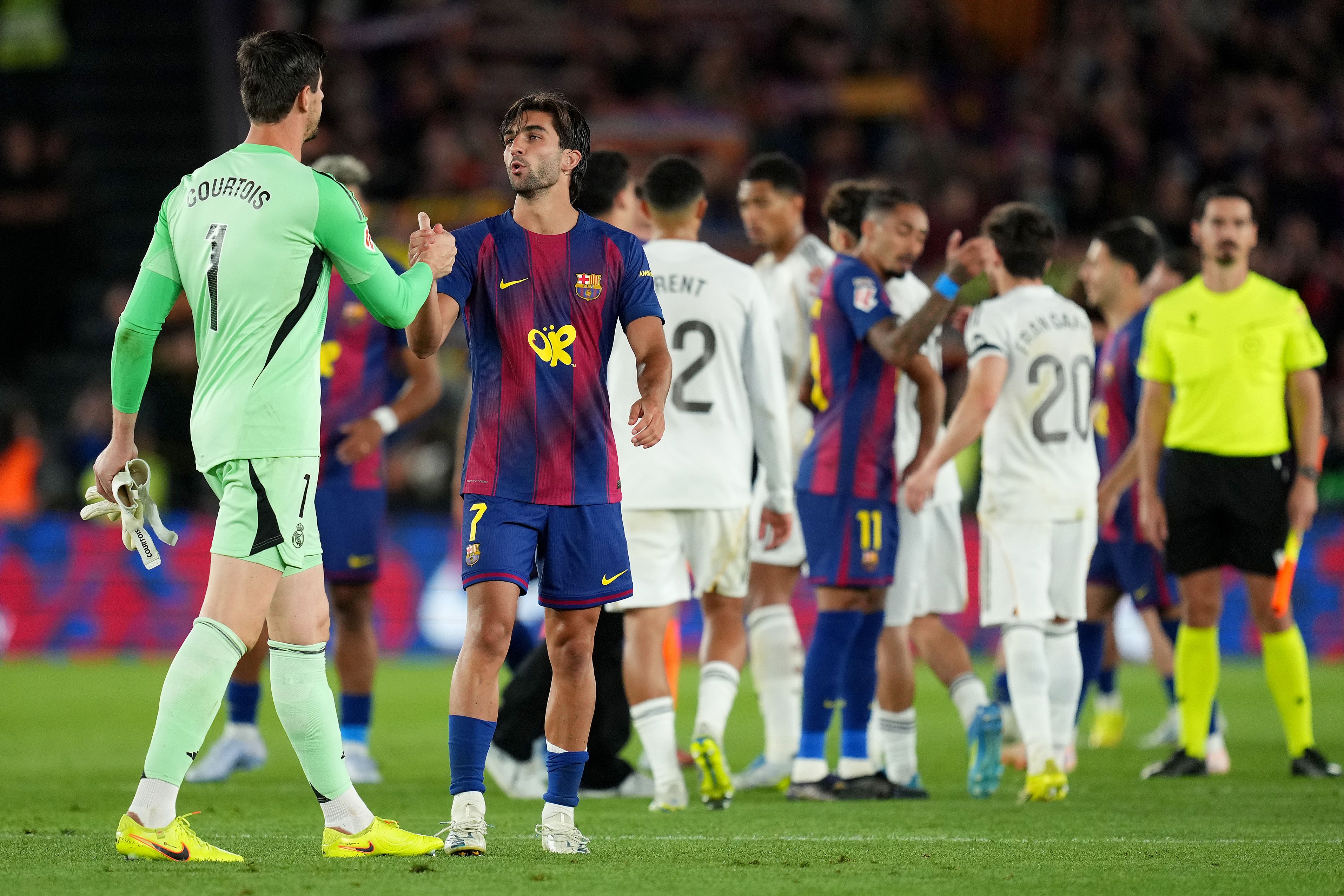
The only upside to Alvaro Arbeloa’s selection during the game, despite not backing down on Flick’s ideas, both at match and substitute level, was the prospect of Thibaut Courtois at goal in place of Andriy Lunin.
The decision to bring in Courtois came despite his recent return from a long injury layoff in an attempt to give the Madrid squad a big element of experience in the face of Barcelona’s constant attacking pressure.
Although Courtois bore some of the responsibility for Rashford’s first goal from a free-kick, he was one of Real Madrid’s most prominent elements in the match after the ball settled into his own corner.
Courtois saved more than one opportunity, especially in honest confrontations with Barcelona forwards, so that the score did not get worse several times during the game.
Had it not been for his decisive interventions, the encounter could have ended with a much bigger goal difference given Barcelona’s clear superiority in play throughout the match.



