Physical Address
304 North Cardinal St.
Dorchester Center, MA 02124
Physical Address
304 North Cardinal St.
Dorchester Center, MA 02124
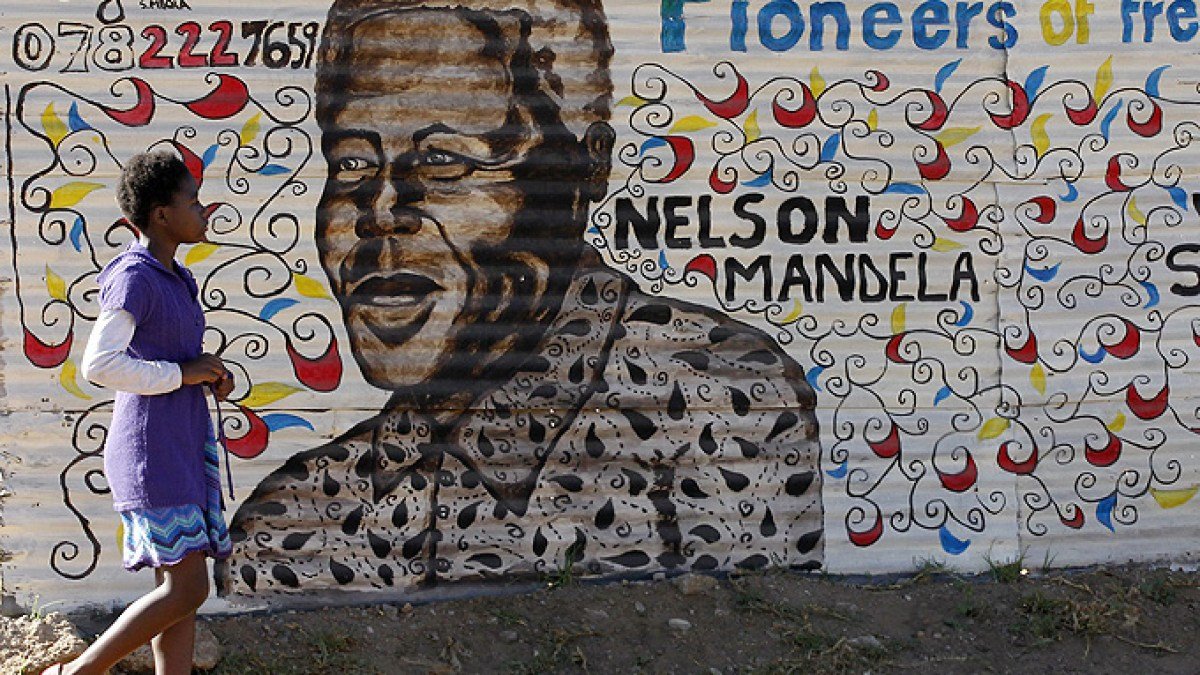
Johannesburg, South Africa – Nelson Mandela Day has become the basis of a great debate in South Africa on the principles that the former president stood for, when the country is struggling with inequality, economic depression and great disagreement on how to solve people’s problems.
The conflict has intensified this year with the idea of March by March, an anti-immigrant group that has protested in South Africa in recent months, to use Mandela Day events to target businesses in towns in the Eastern Cape, Mandela’s home province, and identify undocumented workers and businesses they say are operating illegally.
This has drawn criticism from the Nelson Mandela Foundation, which says using Mandela Day to fight against refugees undermines the principles of dialogue, constitutionalism and human dignity that shaped Mandela’s life.
Instead of devoting 67 minutes of Mandela’s day to social work, March and March will use the opportunity to remove undocumented immigrants and workplaces.
The group says that the government has failed to protect the country’s borders, implement immigration laws and prioritize job opportunities for South Africans.
Nelson Mandela International Day, celebrated on July 18, was established by the United Nations in 2009. 67 minutes of service is a tribute to Mandela’s 67 years of dedication to people’s lives and the fight for justice.
Mbongiseni Buthelezi, director of the Nelson Mandela Foundation, told Al Jazeera that groups that use the event to fight immigration are turning the day into a divisive one.
“What we’re seeing here is divisive and counterproductive, and that’s something we oppose,” he said. “We have seen some groups say that they will use Mandela Day to stop people coming into the cities. We oppose this unequivocally. This is unacceptable.”
The conflict comes as South Africa is facing serious economic problems, including unemployment, disunity and disillusionment with public services.
March and March argue that undocumented immigrants increase competition for jobs and pressure people who are already less fortunate. The group has called for stricter border controls and stricter immigration laws.
Critics say immigrants have been the focus of anger over government failure.
Buthelezi said the economic and social problems of South Africa should not be blamed on immigrants.
“We are living in a very difficult time where many opportunists are targeting real grievances that many people have about government failures,” he said. “But we have to separate these two things. The failure of the government is not the responsibility of the people who come to South Africa.”
The government has criticized xenophobia as it steps up immigration enforcement. Officials say more than 53,000 foreign nationals have been deported or repatriated since the nationwide migration campaign began, mostly in neighboring countries including Zimbabwe, Malawi and Mozambique.
Authorities have also warned communities not to take the law into their own hands, but anti-immigrant groups have continued to organize their own campaign.
Former president of the African National Congress (ANC) Veterans’ League, Snuki Zikalala, who served alongside Mandela, said the former president would not have tolerated the abuse of African migrants.
“Not in Mandela’s name. People should not use Mandela’s name. We cannot drive people out of South Africa as if they were animals. They are people,” he said.
Zikalala said the ANC, which Mandela led until 1997, was responsible for failing to remain active in the communities and allowing poor leadership to take hold. This party has come to a standstill and is running the country through a multi-party coalition.
“It is disappointing that we have not done our job as the ANC to inform the citizens and the government to allow border crossings.”
He said the ANC believes that March and March are a group that is being used to destabilize the country.
The leaders of the organization have repeatedly criticized these issues saying that their campaign is only to put the people of South Africa first.
The controversy has revived a major debate about how Mandela is remembered and used today in South Africa.
Neeshan Bolton, director of the Ahmed Kathrada Foundation, told Al Jazeera that Mandela’s reputation as a freedom leader has been overshadowed by a simplistic image of public service.
“What we’ve seen over the years is a distortion of what Mandela meant to this country,” Bolton said. “His identity as a fighter was gradually stripped away and replaced by something that could be used in any service.”
Bolton said Mandela’s name was often mentioned by groups holding competing political positions.
This year’s Mandela Day theme, “The fight against poverty and injustice is still in our hands,” comes as South Africa continues to grapple with questions of inequality, belonging and responsibility.
For the Nelson Mandela Foundation, using Mandela’s name to justify immigration goes against the values he fought for. For March and March, the campaign is expressing frustration with a government they believe has failed to act.
As Bolton warned: “Anyone can say it and interpret it in a way that suits them.”



