Physical Address
304 North Cardinal St.
Dorchester Center, MA 02124
Physical Address
304 North Cardinal St.
Dorchester Center, MA 02124
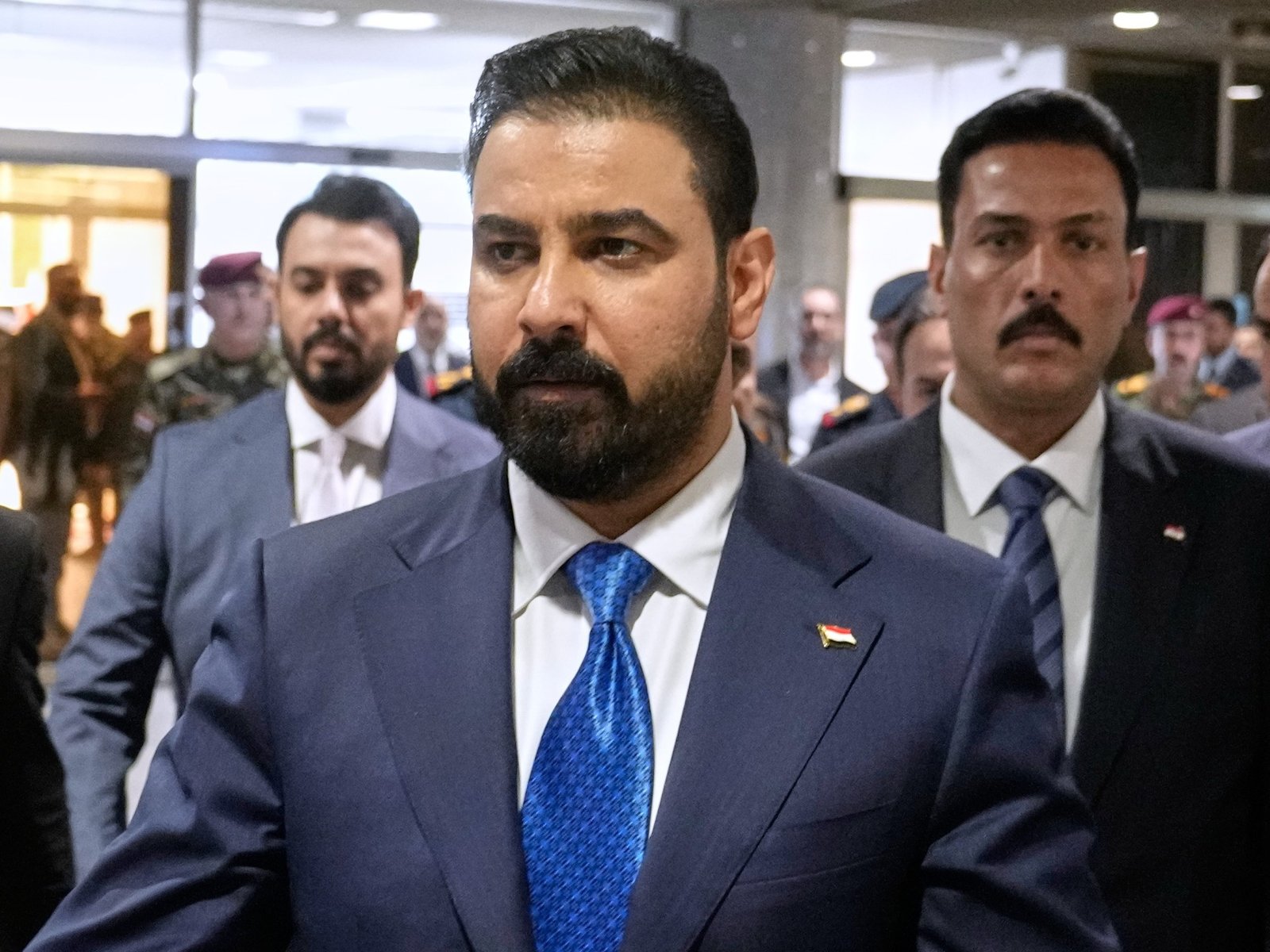
Prime Minister of Iraq Ali al-Zaidi is heading to the United States for talks with President Donald Trump, which will be his first trip abroad since taking office in May.
In this week meetingsal-Zaidi is expected to sign deals on energy and trade and boost investment with US companies.
Iraqi government spokesman Haider al-Aboudi told reporters on Sunday that the visit to Washington, DC, would mark a shift in international relations “from crisis management to economic cooperation”.
His aim, he said, would not be to create a “temporary” agreement but to establish a “permanent, long-term agreement that meets the interests of both countries”.
Al-Aboudi said that oil will be “the most important” part of the trip as the Iraqi government wants to increase production and find other export facilities to mitigate the effects of the future closure of the Strait of Hormuz.
Iraq was one of the countries most affected by the closure of the critical waterway in recent months as a result of the US-Israeli war on Iran, where nearly 90 percent of its 3.4 million barrels per day (bpd) exports pass through it.
Al-Aboudi said that Iraq’s proposal to establish an energy and development fund with the US will be on the table to provide funding for joint projects, especially in the energy sector.
Al-Zaidi previously said that the fund was designed to export 500,000 bpd of oil with the aim of increasing it to two billion bpd.
The prime minister also said that Iraq wants to increase oil production to 7 million bpd in the next three years, from its current production of about 4.5 million bpd.
“Iraq needs this kind of cooperation, especially with a partner like the United States to develop and strengthen its power, especially in the fields of energy, oil, gas, electricity and petrochemicals,” said Abdulrahman Almashhadani, an Iraqi economist and professor.
“However, the most important question remains whether Iraq can provide a safe and stable environment that will encourage US companies to come to Iraq,” he said. “This issue is complex and intractable; it depends very much on the government’s ability to achieve its goals of disarmament.”
Sources told Al Jazeera that the Iraqi delegation to the US consists of more than 70 people, including prime ministers, the head of the central bank, the national security adviser, lawmakers and businessmen.
A well-informed source said meetings with US officials and the International Monetary Fund (IMF) were also scheduled. According to the source, who asked not to be named, Iraq wants to get an IMF loan of up to $8bn.
A well-known source told Al Jazeera that the disarmament of Iraqi forces from Iran and the ban on weapons under the government’s control, as well as the relationship between Baghdad and Tehran, are expected to be among the issues that the US side will raise during the visit.
In his own first speech in parliament as prime minister, al-Zaidi promised that the government would have control over weapons in a country where armed forces, including many backed by Iran, have grown stronger since the 2003 US-led war in Iraq.
Some armed groups said they would follow the prime minister’s announcement, but others – notably the powerful group that launched missiles and drones at US war sites during the Iran war – refused.
In a statement released a few hours before al-Zaidi’s visit to Washington, the Islamic Resistance Army in Iraq, an Iranian-backed militia in the region, including Iraq, rejected the Prime Minister’s visit and its consequences.
“We are not going to give a blank check to all government laws. We are warning not to replace the military with an economy that is very dangerous,” he said.
“A way to protect Iraq and its interests will remain on the table,” it added.
Al-Zaidi has said that his government is keen to establish a 2024 agreement with the US-led coalition in Iraq to end its military presence by the end of September.
Some of the groups that rejected the Prime Minister’s decision to hand over weapons said they will wait to see what happens on September 30 and then take action.
Ehsan al-Shammary, a professor of international studies at Baghdad University, said the economic measures and support al-Zaidi is seeking from Trump in Monday’s talks will not be overshadowed by the issue of Iran’s influence in Iraq.
In the end, he added, it is a matter that will show the success or failure of a “very important” trip that can “renew” the relations between the two countries and “push”.
“Al-Zaidi has limited room for action. He must choose to align with the United States or to get closer to Iran,” al-Shammary said. “I do not believe that Washington wants to accept the division of Iraq together with Tehran. This is why the job of the Prime Minister seems impossible.”



