Physical Address
304 North Cardinal St.
Dorchester Center, MA 02124
Physical Address
304 North Cardinal St.
Dorchester Center, MA 02124
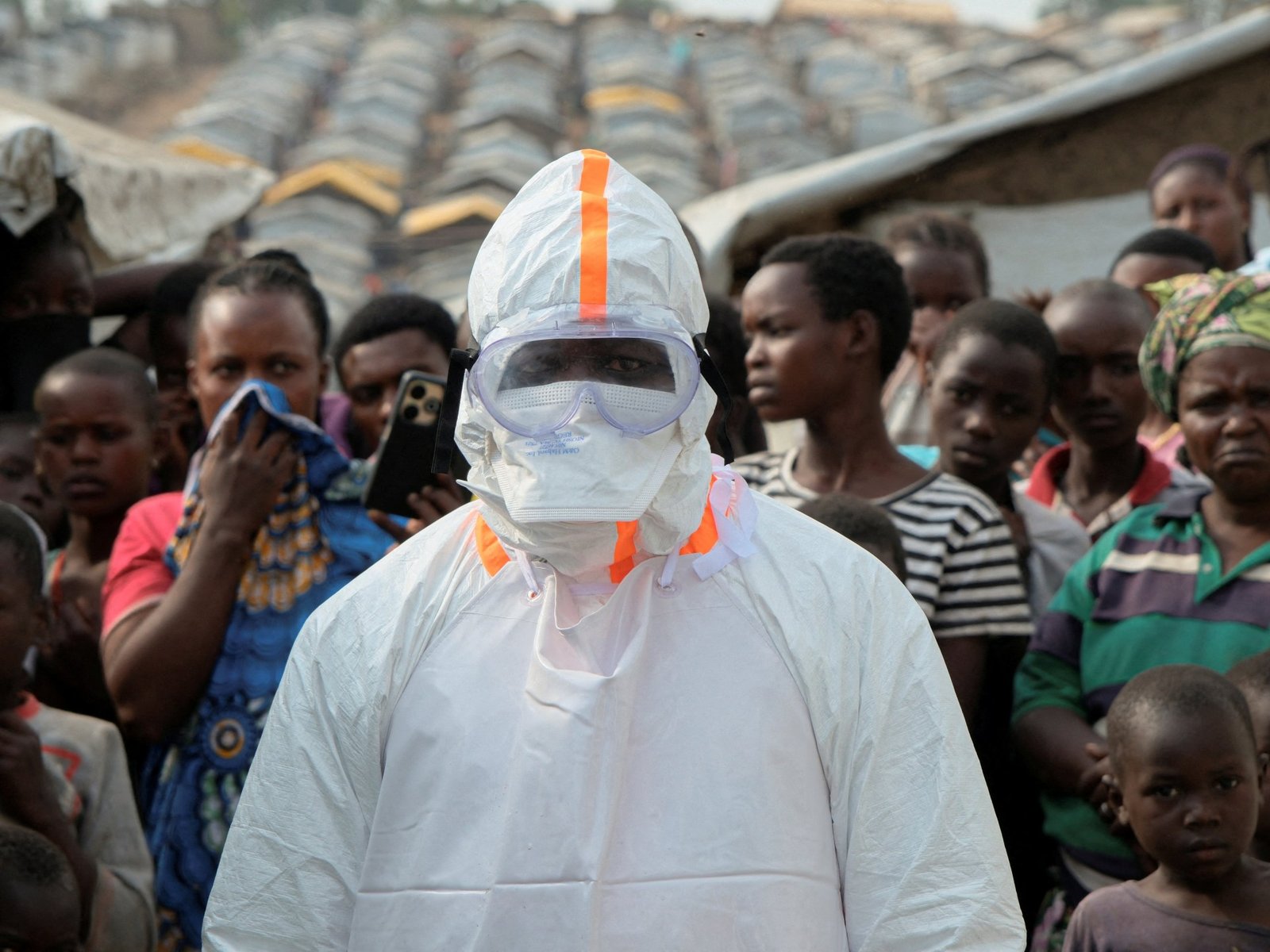
Bunia, Democratic Republic of the Congo – From the moment you arrive in Bunia, the capital of Ituri district, it is clear that this is not a normal time.
Departure from the airport takes longer due to the mandatory health check. On the way to the hotel, posters carrying anti-Ebola messages line the streets. On the radio, health programs encourage people to protect themselves.
By the time the World Health Organization declared the outbreak a Public Health Emergency of International Concern in May, the virus had already been spreading for weeks through the mining town of Mongbwalu, Rwampara and Bunia before reaching neighboring districts.
The epidemic is caused by the Bundibugyo strain of Ebola. It is generally considered more deadly than other strains, but there is no approved vaccine, making early detection important.
Our first stop was the Ebola clinic at Bunia General Hospital.
Built to accommodate 50 patients, it was already full. Construction was underway to add another 86 beds.
Mr John Katabuka, who heads the hospital, says this problem seems different from previous epidemics.
“Medical, it passes through your body silently without you noticing.” We thought Ebola meant bleeding and fever.
We also met Tresor, who asked us not to identify him. His wife was recently diagnosed with Ebola, and he only saw her from afar. He is waiting for his test results.
“People need to be educated. They need to understand that this is a virus. We need to accept it. I don’t want to take the disease lightly.”
The Congolese government is leading the response with partners including the Africa Centers for Disease Control and Prevention (Africa CDC) and the United Nations.
Diedone Mwamba, head of the National Institute of Public Health, is leading the project. He is no stranger to the Ebola epidemic. They say they are dealing with more than just emergencies.
More than 1.3 million people live in refugee camps after years of war.
“The fight against the crisis is still difficult. To stop the Ebola epidemic, we have to search the people in the camps, and sometimes we have to reach the difficult areas.
Then we left for Rwampara, an hour’s drive from Bunia.
It is a densely populated town where most of the people are cattle farmers, who provide Bunia with milk and meat.
The local medical center also serves as an Ebola clinic run by the Alliance for International Medical Action (ALIMA).
Gabriel Tshiwisa showed us.
It is estimated that one person dies of Ebola every day.
But fear, mistrust and rumors are making the epidemic even more difficult to contain. Some people still do not believe that this disease exists. Some say it was brought in by outsiders who want to profit from the crisis.
Dr Tshiwisa said: “The main challenge is to help the community understand the epidemic and what we are doing here. We are working hard with the community to get more information.”
Several aid stations, along with medical personnel, have been attacked.
In mid-May, separatists’ tents in Rwampara were set on fire by angry relatives and friends of a young man believed to have died of Ebola after they were prevented from taking his body for burial.
The body of a person who has died of Ebola is highly contagious and safe burial is necessary to prevent further transmission.
We accompanied a group of Red Cross volunteers to bury a woman outside the city of Bunia.
Marie was 60 years old. She died at home. His family said he had been ill for some time, but each death was treated as suspected Ebola until tests were completed.
David Benga, his father-in-law, said: “People are dying every day, it scares us, so when someone dies we report to the Red Cross, that’s why we asked them to come and help.”
Funerals are scary and emotional.
The volunteers are wearing all protective gear. A man walks forward, spraying insecticide as he walks.
In most cases, the preparation of the funeral took several days, following local customs and traditions. The event itself would attract a large number of people.
There were only a few mourners that day.
A Red Cross volunteer, Richard Lifungula, said that more than 22 people have been buried since the outbreak began.
This work is dangerous. Most attacks on responders occur at funerals.
He said: “When we get to the cemetery, sometimes we meet cruel people – who do not understand the disease or the importance of our work.”
Alex Lock, who heads communications at the International Federation of Red Cross and Red Crescent Societies, says volunteer safety remains a major concern.
“Three weeks ago, we had volunteers who were injured.
Those leading the response say there is more to be done.
Yap Boum is leading the preparation and response for the Africa CDC and is working closely with the Ministry of Health in Congo.
“We have seen great improvements in laboratories, observation centers and treatment centers, but at the same time the number of deaths and deaths continues. We are looking at how we can speed up regionalization, send more medical workers and expand medical services.”
But there is hope: Many people are surviving Ebola.
We went with them to the thanksgiving prayers, where we met Gladys Munguromo.
He lost three of his family members in just one week.
He contracted the virus after attending a funeral in Mongbwalu, where the outbreak began, and was treated at Rwampara Hospital after becoming ill.
Today, he is the founder of Ebola, taking the message to every village, every house and every person.
Some have returned to hospitals to care for the sick. Survivors can no longer be identified, which makes them vital to the response.
Their message is simple: If you stay home sick, you will die.



