Physical Address
304 North Cardinal St.
Dorchester Center, MA 02124
Physical Address
304 North Cardinal St.
Dorchester Center, MA 02124
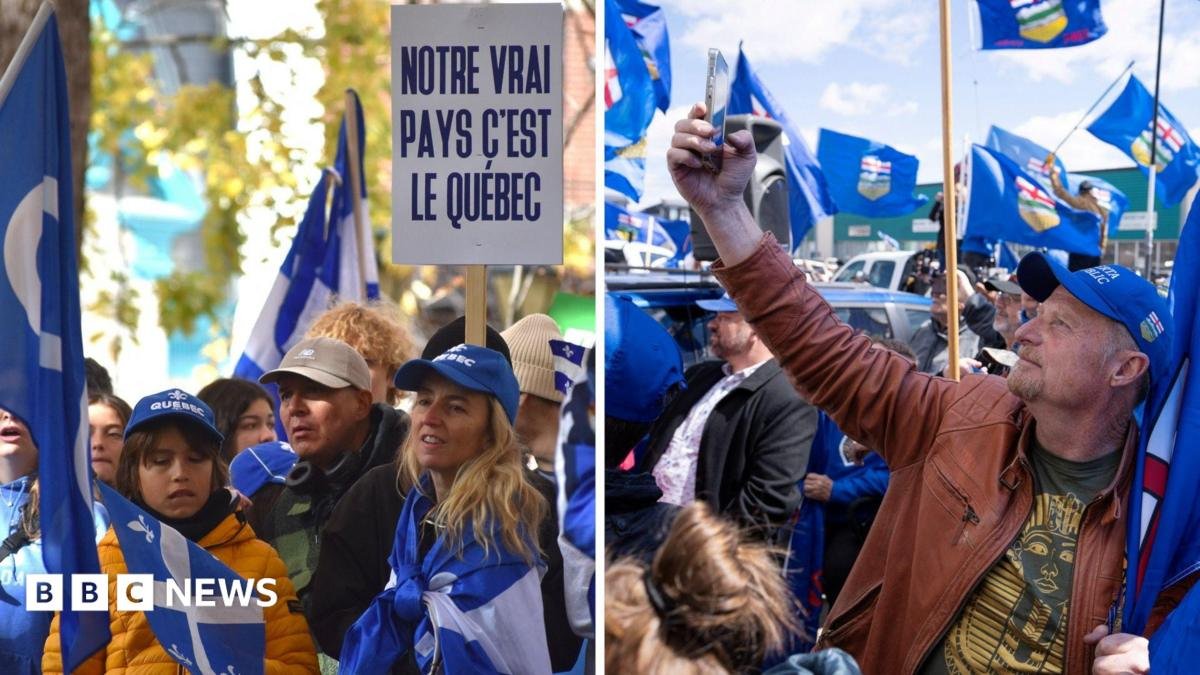
Canadians are gathering across the country to celebrate Canada Day, commemorating the nation’s birth 159 years ago. But underneath the celebration, twin challenges are testing the nation’s unity.
In the western province of Alberta, the secession movement is beginning to pick up steam, and in a few months Albertans will vote in a referendum on provincial sovereignty.
In Quebec, the sovereignist Party Quebecois is currently leading the polls in the upcoming provincial election. The party has promised to hold a third independence referendum in 2030 if it wins.
“This is a year of pressure on Canadian national unity,” said André LeCours, a political science professor at the University of Ottawa.
Prime Minister Mark Carney is at the center of those tensions, seeking to hold the country together and balance the states’ competing interests.
Canada is “worth fighting for,” he said last month and vowed to campaign for a united country in the coming months.
On Wednesday, Carney will travel to Edmonton, his hometown, to make a symbolic visit on the country’s birthday, where he is expected to make a case for national unity.
Historian JDM Stewart says Canada’s vast geography and strong regional identities pose unique challenges.
“Because it’s so big and so regional, it creates tensions that we’ve had with us from the beginning and we still struggle with them today,” he says.
Quebec, which is predominantly French-speaking, is fiercely protective of its identity and culture as a distinct community. It held two referendums – in 1980 and 1995 – to seek independence.
Polls suggest support for independence is around 30%, unchanged over the past few years.
Even so, the Parti Québécois got an early cut ahead of the October 5 provincial election. The leader has released a more than 500-page Quebec independence plan and promised a third referendum.
Alberta faces another debate.
Following a citizen-led push, Albertans will vote on Oct. 19 in a binding vote to remain part of Canada or secede.
Polls suggest that support for the “Leave” side is between 25% and 30%.
Many supporters of the movement argue that the energy-rich province has long been overlooked by decision-makers in the capital, Ottawa, and that federal environmental policies have prevented Alberta from building pipelines and developing its natural resources.
But Prof. LeCours argues that this push for separatism is different from the Western degradation that has long been felt in the region, and that the current movement is the rise of right-wing populism.
“All of these organizations in Alberta, not coincidentally, they all popped up around the time of the pandemic,” he said.
He pointed out that the movement “supports openly and freely in the absence of any elected representative.”
Carney, who served as governor of the Bank of England during Brexit, said he saw the danger of separatist movements as the country debated whether to leave the European Union.
What’s happening in Alberta is “remarkable,” he said.
“I see firsthand what is being sold in these referendums. That everything will be easy. That you can keep your passport, you can keep your currency, you can stay in the country and leave at the same time.”
He said such arguments could jeopardize Canada’s future “at a time when we are seen as one of the most reliable and trustworthy countries in which to do business – and we must not undermine that.”



