Physical Address
304 North Cardinal St.
Dorchester Center, MA 02124
Physical Address
304 North Cardinal St.
Dorchester Center, MA 02124
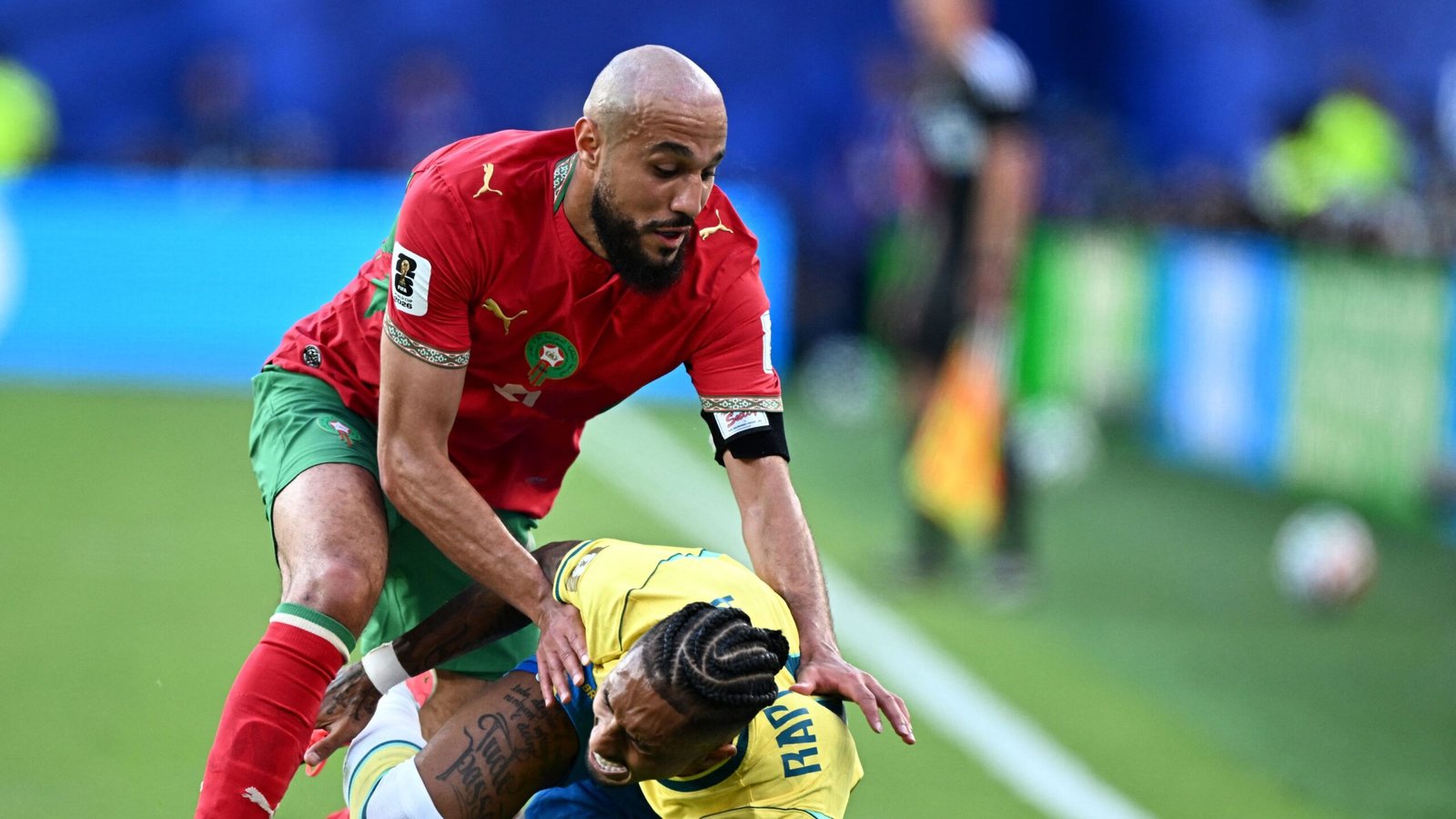
The Netherlands are preparing for a unique showdown that goes beyond the green rectangle as they take on Morocco in Monterrey, Mexico, at the World Cup tomorrow, Monday, in a game that carries deep cultural and social dimensions between two countries with close human relations, represented by 420,000 Dutch citizens of Moroccan descent.
According to Spanish newspaper Marca, security authorities in Amsterdam and The Hague, which contain the largest concentration of the Moroccan community, will take strict precautions to prevent possible disturbances, especially if the match kicks off at 3am local time.
The clash takes on an extra symbolic dimension in light of the silent “talent war” between the Dutch and Moroccan federations to attract players of Moroccan origin, as recent years have seen a remarkable shift in the balance of power in favor of the Atlas Lions.
Dries Boussata was the first Dutch player of Moroccan origin to pull on the Windmills shirt in 1998, followed by the likes of Khaled Boulahrouz, Ibrahim Afelai and Ousmane Bekal, before the Moroccan federation embarked on an ambitious plan to repatriate its sons, opening offices in the Netherlands, France and Belgium.
Morocco’s strategy has led to the addition of stars such as Hakim Ziyech, while the current World Cup roster includes three Dutch-born players in Anas Salah Al-Din, Sofiane Amrabat and Nusair Mazroui, a testament to the success of the policy of polarization.
The issue is not limited to the current generation, as a promising generation of young talent is set to bolster the ranks of the Moroccan national team, led by Abdullah Ouazani, Sami Bouhoudani, Adam Tahoui, Iman El Hani, Omran Talayi, Ibrahim Faik and Marouane Bentaleb, all born in the Netherlands but represented by their father.
The transformation reflects Morocco’s symbolic victory in the battle of identity before the actual confrontation on the pitch, as the number of Dutch players in the Atlas Lions ranks now outnumbers the Moroccans in the Orange team, a phenomenon that reflects the depth of the ties between the two nations and the complexity of the second-generation children of immigrants.



