Physical Address
304 North Cardinal St.
Dorchester Center, MA 02124
Physical Address
304 North Cardinal St.
Dorchester Center, MA 02124
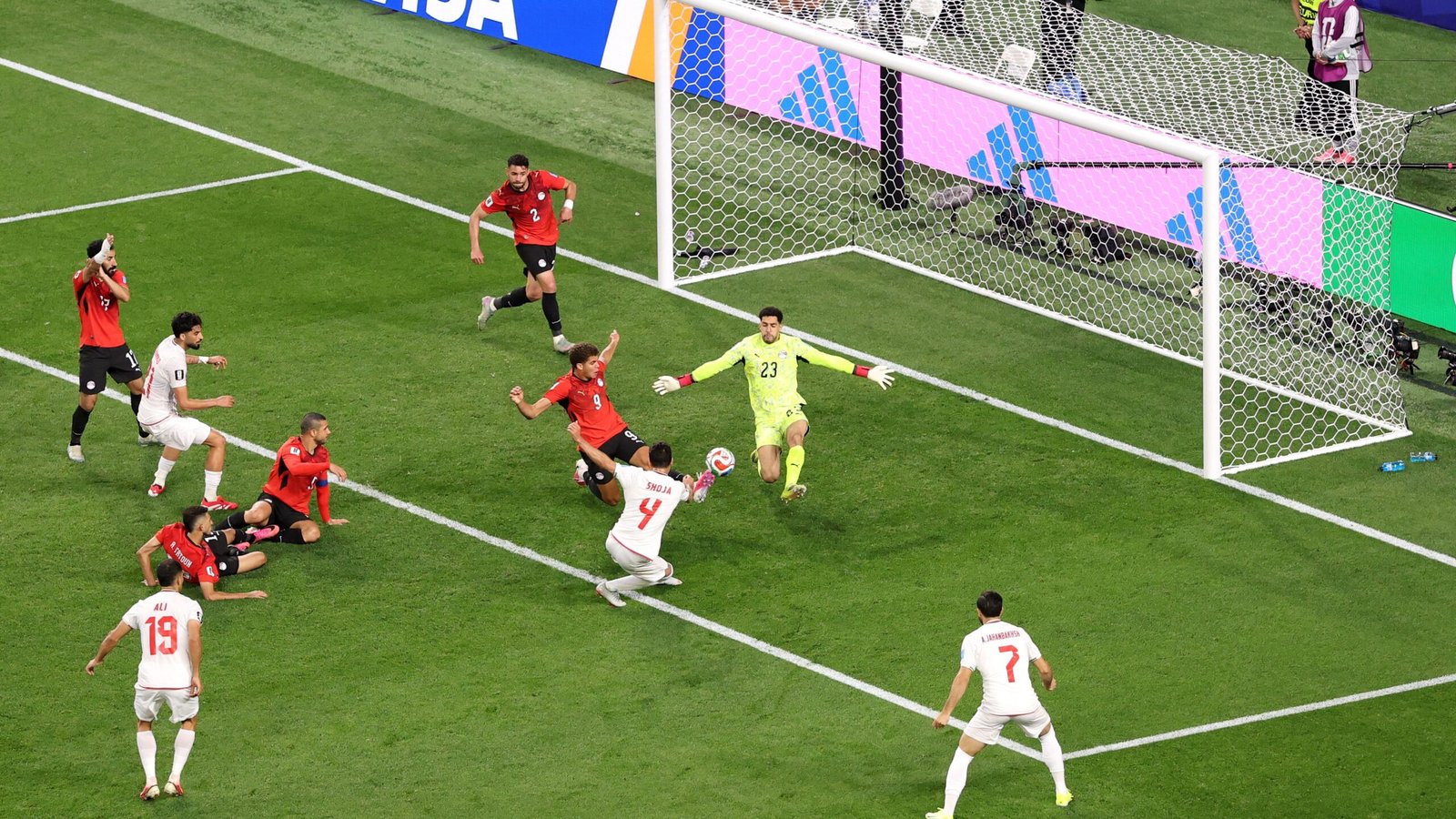
The Polish referee relied on clear legal grounds to disallow the goal
Referee expert Andy Davies has confirmed the correctness of Poland’s Simon Marciniak’s decision to disallow a late goal by the Asian team due to offside in the Egypt-Iran 2026 World Cup match.
Iran’s disallowed goal in the final minutes of the 2026 World Cup group stage 3 match against Egypt sparked widespread controversy, as many believed that the presence of an Egyptian defender closer to the goal line than an Iranian forward meant the goal was valid.
In turn, S. Swedish legend Zlatan Ibrahimovic attacked the referee’s decision on the air of the American Fox Sports network.He considered it unfair to Iran.
He said in an angry tone. “I replayed the goal kick over and over and I still don’t understand what it’s called offside. When you decide to disallow a goal that can decide the fate and future of an entire country in the World Cup, you have to be 100% sure, not guessing from a digital screen.”
Khalilzadeh scored a crucial second-half goal that would have given Iran a valuable win that would have secured them second place in Group Seven, but the tie ended 1-1 on cancellation, leaving Egypt in second place and the Iranians awaiting top-three qualification.
Former England referee Andy Davies, one of England’s elite former referees, confirmed that VAR’s decision was correct according to the laws of the game.
Davis explained via the network ESPN: The US outlet said the review was “straightforward” as the offside lines showed Iran defender Shoja Khalilzadeh’s foot was ahead of the second-last defender when the ball was passed, requiring the video room to intervene and disallow the goal.
The refereeing expert noted that many have focused on the presence of the Egyptian defender closer to the goal line than the Iranian one, believing that this eliminates the offside, but the law depends on the presence of two defenders between the striker and the goal line when the ball is passed, not just one defender.
He added that it is common for these two defenders to be the goalkeeper and one of the defenders, but it is different if the goalkeeper moves forward away from his own goal, as one of the defenders can become the last player, and there must be a second defender behind him to avoid an offside situation.
Davies confirmed that the Egyptian goalkeeper was well ahead of his goal during the attack, making the Egyptian defender shown above the screen the last player to actually defend.
Thus, only one defender remained between Khalilzadeh and the goal line, so the offside situation was ensured by law, even though one of the defenders was closer to the goal than the Iranian striker.




