Physical Address
304 North Cardinal St.
Dorchester Center, MA 02124
Physical Address
304 North Cardinal St.
Dorchester Center, MA 02124
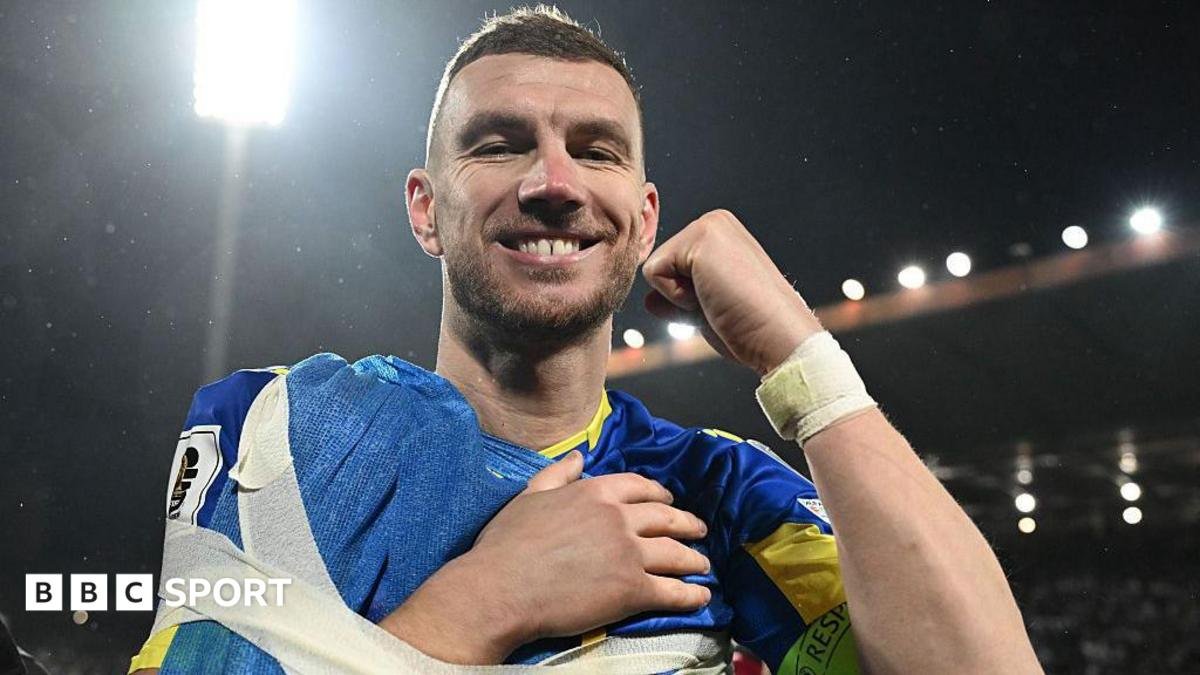
Dzeko made his international debut in 2007, and now holds the record for most appearances (148) and most goals (73) for Bosnia.
After losing to Portugal in the play-offs of both the 2010 World Cup and Euro 2012, Dzeko helped Bosnia qualify for their first major tournament since independence.
The 2014 World Cup in Brazil proved to be the first and last for Bosnia’s so-called golden generation, as play-off heartbreak at Euro 2016, 2020 and 2024 struck again.
Then, 12 years later, Bosnia overcame their play-off monster, beating Wales and then Italy on penalties.
Ibrulj said: “2014 felt historic because it was the first generation that truly gave Bosnia international sporting legitimacy after independence.
“This second qualification feels even heavier emotionally. Bosnia has spent more than a decade failing to come back, and in those years there has been frustration, disappointment and a growing sense that the country has missed its moment.
“For many younger supporters, this is the first team that feels like their team in the same way that the older generation emotionally supports Dzeko, Miralem Pjanic and Amir Spahic.”
For musician Alen Dokic – who created a World Cup song under the alias Doppelgänger – Bosnia’s qualification is an example of ‘bosanski inat’, the cultural mindset of overcoming adversity.
“Never forget, never forgive – it’s a principle that reminds us of who we are, what we’ve been through and how resilient we Bosnians are,” Dokic said.
Dokic, born in Rome to Bosnian parents, is part of the Bosnian diaspora of what he considers to be twenty million people.
Sergej Barbarez’s World Cup squad blends experience with youth and vibrancy. 17 of the 26 players were born outside of Bosnia and Herzegovina.
“It’s a unique dynamic to have players growing up all over the world but coming back to represent Bosnia,” former Bosnia goalkeeper Asmir Begovic said.
Esmir Vajraktarević, the scorer of the penalty that sent Bosnia to the World Cup, is one such player. The 21-year-old was born and raised in Wisconsin after his parents fled Srebrenica.
“That common interest, the common goal, the passion to represent Bosnia plays a big role,” he says. “What the country has gone through, there are still conflicts and effects of the past.
“When everyone comes together in Bosnia, it’s a pretty unique feeling and really special. It’s really big for such a small country to compete at this stage.”
After the Italy match, thousands of fans took to the streets and partied until dawn.
“This is still a country shaped by political divisions, economic uncertainty and the long shadow of war, so moments of collective joy carry unusual weight,” said Ibrulz.



